Every summer, gardens and farms across Europe come alive. Tomatoes ripen in the sunshine, berries turn sweet and juicy, and courgettes grow faster than people can pick them. Local markets and supermarkets overflow with fresh produce, but not all of it makes it to our plates.
What happens to all that abundance? How much is eaten, and how much is lost? And what are people doing to save summer’s harvest from going to waste? Let’s follow the journey of fresh summer produce and uncover why some of it never gets eaten.
The journey of summer produce
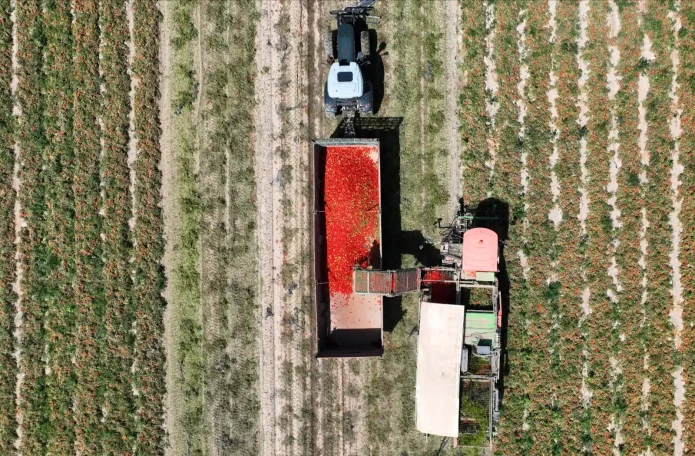
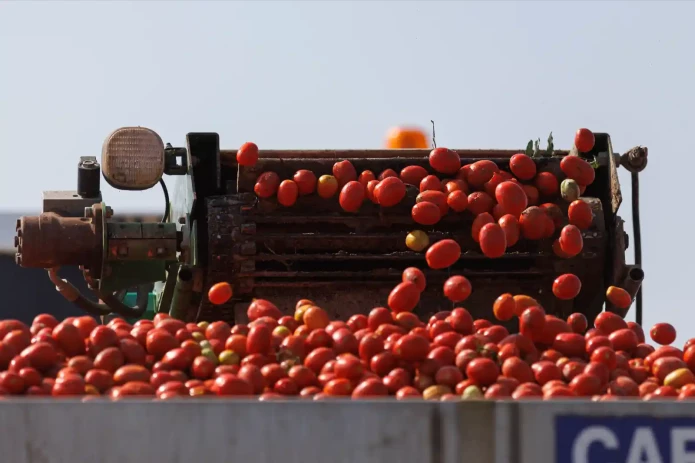
Let’s take the example of a ripe and nutritious tomato, picked in July from a sunny farm in Italy or Spain. It could be sent to a farmer’s market, a factory for processing, or go on a long journey abroad. But it might never leave the field where it grew. Here’s why:
- Not enough labour. European farms often rely on seasonal workers to help pick the crops. But in recent years, there haven’t been enough people to do the work. This is partly because fewer people are willing to do hard, low-paid farm work, especially in the summer heat. In other cases, people are willing to work but find it hard to get the necessary visas.123
- The price isn’t right. Even when there are plenty of people to pick the tomatoes, it might not be worth it for the farmer. If there’s a very good harvest with tomatoes thriving everywhere, it can create an oversupply. This means there are more tomatoes than people want to buy. When that happens, prices fall.45 Sometimes, it can cost the farmer more to harvest fruits and vegetables than they’d earn by selling them.
- Pests and diseases. Sometimes, pests like the tiny tomato leaf miner or plant diseases can damage the crop before it’s picked. In that case, it won’t ever make it to market.
- Weather conditions can also play their part. If a farm has been under extreme rain, the ground can become too wet for the machinery to come in and harvest the crop.
But what about those lucky tomatoes that have someone willing and able to pick them? From here, there are a couple of routes they could take.
1. Straight to the market
Tomatoes from small farms are more likely to be sold locally within days of being picked, often at farmers’ markets or vegetable shops. That’s because small farms are more likely to grow a mix of crops, which suit local customers who want a bit of everything: fresh, tasty, and seasonal.
Larger farms tend to sell to supermarkets or big companies. That’s because they usually grow a lot of the same crop, and need to move large volumes quickly, over longer distances.
Did you know? In Europe, around two-thirds of farms are under 5 hectares.6 These small-scale farms often sell directly to local people through farm shops, markets, vegetable boxes, or small shops.
2. A cold journey abroad
Tomatoes that aren’t sold locally often go to supermarkets or wholesalers, who sell them across the country or even export them abroad. But why send food abroad? Sometimes it’s because that food doesn’t grow well in the destination country. Other times, farmers get a better price or there’s higher demand in those places.
Did you know? Most fruit and vegetables in Europe travel by boat or by road because it’s expensive to ship them on a plane. Fast-spoiling items like berries or green beans may be flown to reach distant markets in time before they go bad, but this comes with a high carbon footprint.7
To keep fresh produce in the best condition, it’s stored in cold places like fridges or freezers. Sometimes, it stays in cold storage for a while so it can be sold in a later season. Other times, it travels in refrigerated trucks or boats to reach its destination without spoiling. Keeping food cold helps reduce waste by keeping it fresh longer, but it also uses a lot of energy.
3. Off to the factory
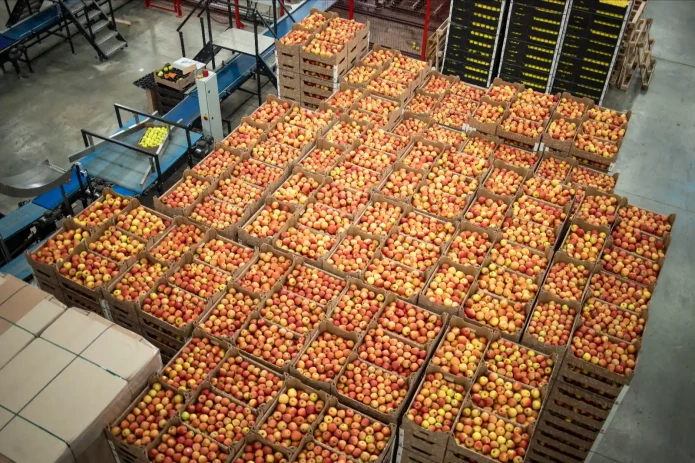
A big chunk of Europe’s summer harvest never makes it to our kitchens as fresh fruit or veg. Instead, it’s sent to factories, where it gets turned into things like sauces, soups, or juice. As well as making food last longer, this is a great way to use up the wonky or bruised bits that might not sell in shops, helping to cut down on food waste. For example:
- Tomatoes can be turned into passata, puree, or canned whole
- Berries like strawberries, blueberries and cherries can become jams, fruit fillings, or syrups
- Cucumbers can be pickled
- Courgettes (zucchini) can be blended into sauces for ready meals
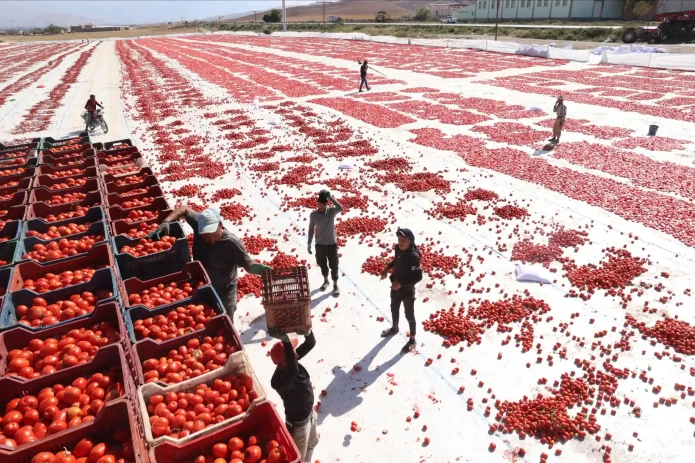
In Europe, roughly 30% of fruit and vegetables never make it to shops because they don’t meet strict cosmetic standards — like size, colour, or shape — even though they are perfectly edible.10 Sometimes these “ugly” crops are fed to animals, but other times they’re thrown away. Turning imperfect summer produce into other products is a great way to reduce food waste.
Where and why food waste happens
Even with all the care it takes to grow, harvest, and transport fresh produce, a lot of it still gets lost along the way. Here’s a quick recap of where food waste happens:
- On the farm. Sometimes crops aren’t harvested because prices are too low or there aren’t enough people to pick them.1112
- During sorting. Supermarkets often reject fruit and vegetables that are too small, too big, or the wrong shape, even if they taste just fine.13
- In transport and storage. Produce can spoil if it’s stored at the wrong temperature or gets bruised on the journey, especially soft fruits like berries.
- In shops. If food isn’t sold in time, it can be thrown away. In many EU countries, shops now donate unsold food to charities instead.14
- In restaurants. Chefs may over-order to avoid running out, and diners don’t always finish their plates.
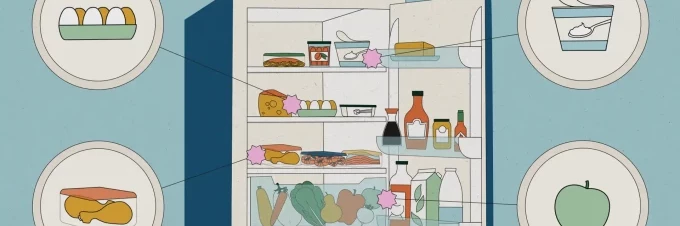
- At home. This is where most of the waste happens. In fact, over 50% of Europe’s food waste comes from households, often because we buy too much, store things poorly, or forget what’s in the fridge.15
Did you know? In Europe, the amount of food that we grow but never eat works out to about 131kg per person per year.16
Why food waste matters
Every bite of food takes energy, water, land, and labour to grow, harvest, transport, and package. When food is wasted, all those resources are wasted too. It’s a big problem which is costing us a lot of money.
We actually grow enough food to feed everyone, yet millions of people in Europe can’t afford a healthy diet.17 At the same time, huge amounts of food are thrown away.
And the hidden costs go even deeper. Food waste contributes to climate change. When food rots in a landfill, it releases methane, a greenhouse gas that’s more than 80 times more powerful than carbon dioxide over 20 years.18 Add to that the emissions from transporting and refrigerating food that never gets eaten, and the impact on climate change grows even bigger.
Admittedly, the problem is huge. But here’s the good news: food waste is not inevitable.
Did you know? If food waste were a country, it would be the third-largest emitter of greenhouse gases after China and the US.19
The good news about food waste
Across Europe, people, businesses, charities, and governments are working hard to put food to the best possible use. From innovative apps to supermarket donations, community fridges, and clever inventions, it’s amazing what we are already achieving.
Food loss and waste solutions
At home:
This is where over 50% of food waste happens, so our personal choices can really make a difference.20
You can:
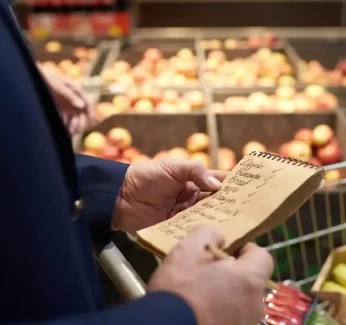
- Plan meals and shopping lists to avoid overbuying.
- Don’t be afraid to adjust recipes. If a curry calls for sweet potato but you’ve got a glut of carrots or courgettes, go ahead and swap them in.
- Store food properly to make it last longer (e.g., keep potatoes away from onions). Discover more here.
- Learn about date labels. “Use by” is about safety, but “best before” often just means peak quality.
- Freeze extras before they spoil. Fruits, bread, and even cooked meals often freeze well
- Keep your fridge organised so you can see what needs using first.
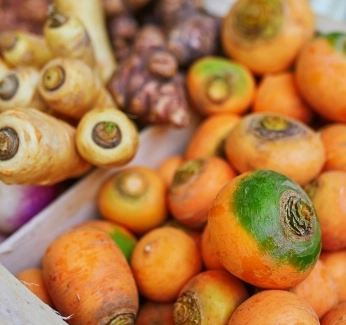
- Buy “imperfect” fruits and veggies. These often taste just as good and reduce waste.
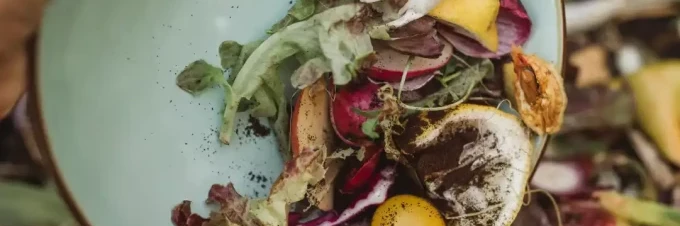
- Compost scraps like vegetable peelings and coffee grounds to give back to the soil, your garden will thank you.
- Share surplus food with friends, family, or neighbours.
Did you know? There are Apps that can also help you track what’s in your fridge and remind you to use it up. For more food waste tips, you can check out this article.
On the farm:
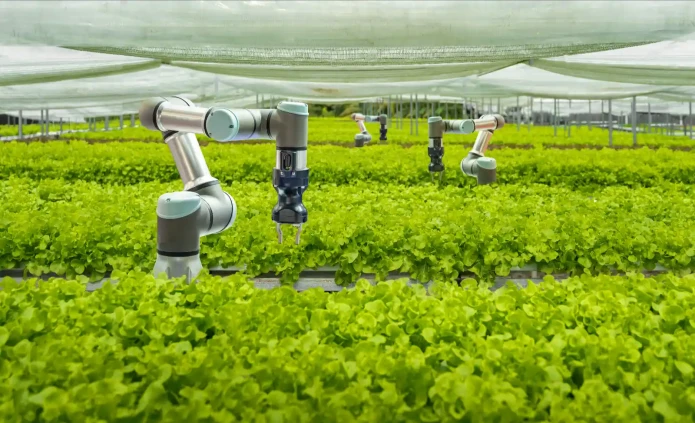
Innovations like robots and AI are helping farmers harvest crops more efficiently, especially for physically demanding tasks like bending over all day or working in hot greenhouses. This can help prevent food from being left to rot in the field.21
Policy changes also play a role. For example, making it easier to get seasonal farm visas could help fill farm jobs and prevent undocumented workers who are vulnerable to exploitation.22
During sorting and processing:
“Wonky” fruit and vegetables that used to be rejected can now be:
- Processed into soups, smoothies, sauces, or snacks.
- Sold directly to consumers as a more affordable, sustainable option, marketed as “wonky veg boxes”.
- Used creatively. For example, carrot tops and beet leaves can become soup stock or even gourmet ingredients.
But what about the food waste that we can’t eat?
If we find a way to collect it and connect it to the right company, we can put all kinds of food waste to good use.
- Used coffee grounds are an ingredient for some beauty products.23
- Citrus peel can be woven into a material similar to silk.24
- Household food waste can be turned into fertiliser and biogas to power homes and vehicles.25
These are all examples of the circular economy in action, where “waste” becomes an important ingredient for something new.
In transport and storage:
Technology driven by AI is helping reduce food waste during transport. Smart sensors can now track temperature and humidity in real time, making sure fresh food like berries or peaches stays in good condition.26
In supermarkets:
Shops are becoming more proactive about food waste. Common strategies include:
- Discounting food close to expiry to encourage quick sales
- Using apps to sell food close to its expiry date at a reduced price
- Donating unsold but edible food to local charities
Did you know? Four EU countries — France, Poland, the Czech Republic, and Belgium (Brussels region) — have legal obligations requiring big supermarkets to donate rather than bin surplus food.27 28 29 30 Many other countries also support donations through tax breaks or simplified regulations.
In restaurants and cafés:
- Some kitchens are using AI tools that photograph and analyse food waste in bins to help chefs plan better and reduce over-ordering.31
- Offering smaller portion options helps people order just what they need.32
- Composting schemes turn unavoidable food scraps into rich soil instead of landfill gas.33
A sustainable food system starts with us
Every tomato, berry or courgette that reaches our plate carries a story of soil, sunshine, labour and logistics. Some produce never completes that journey, but people around the world are finding smart ways to make the most of what we have.
From small farms to supermarket shelves, and from our kitchens to compost heaps, we all have a part to play in reducing food waste and building a fairer, more sustainable food system. By appreciating the effort behind each bite and making thoughtful choices at home, we can help make sure more of summer’s goodness ends up in bellies, not bins.