Have you ever opened the fridge to find leftovers you don’t feel like eating, and just tossed them out? You’re not alone, but this kind of waste adds up. Every year, people in Europe throw away nearly 59 million tonnes of food.1 That’s a huge amount that could feed millions, save money, and help the planet. More than half of this food waste comes from our homes.2 So, we can all play a part in the reduction of food waste.
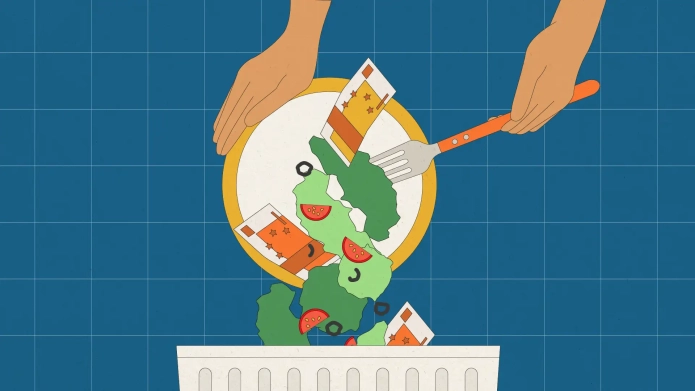
In this article, we’ll examine food waste, why it occurs, what it costs, and most importantly, what steps we can take to waste less at home
What is food waste?
Food waste means throwing away food that was meant to be eaten. This can include dinner leftovers scraped into the bin, yoghurts you didn’t like the taste of, or bread that got forgotten at the back of the cupboard.1
Food waste is unfortunate, but mostly preventable if we change our habits. Food loss, on the other hand, refers to food that gets discarded or disposed of along the food chain from harvest to distribution. Around 13% of the world’s food is lost annually, while around 19% of food is wasted. Food loss is hard for us to tackle, but reducing the disposal of food at home is something we can help with.2
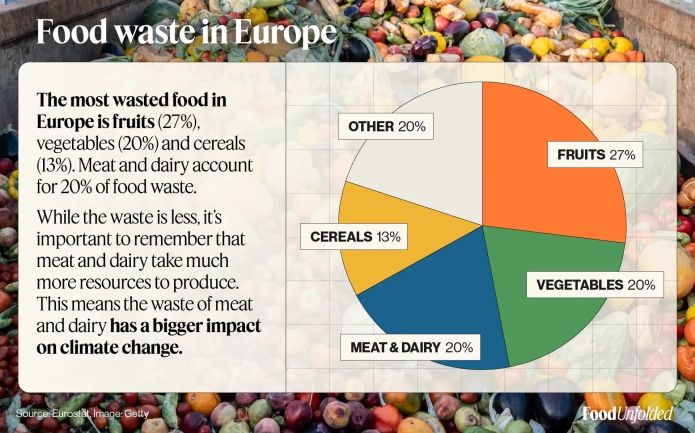
The most wasted food in Europe is fruits (27%), vegetables (20%) and cereals (13%). Meat and dairy account for 20% of food waste. While the waste is less, it’s important to remember that meat and dairy take much more resources to produce. This means the waste of meat and dairy has a bigger impact on climate change.3
Would you throw away a bag of shopping?
Just imagine throwing away one out of every five bags of food shopping you bring home from the supermarket.1That’s one way to think about food waste in Europe: almost 20 per cent of the food we buy from shops and restaurants goes to waste.
How much is it costing us?
In Europe, all the food we waste costs about 132 billion euros every year.1 This amount includes not just the wasted food itself, but also the transportation, storage, and disposal. Managing this effectively could significantly impact a nation’s economy and budget.
Food waste is occurring across all groups in society. But money can be a powerful motivator for change. A 2019 study found that people waste less food if they know it saves them cash.4
Waste less, save more
The European Commission estimates that if food waste in EU households were halved, a typical four-person family could save about 400 euros each year on groceries.5 So, even cutting your food waste in half can save you a decent amount of money. It’s enough for some fun family days out now and then. So, the next time you’re about to toss a brown banana, it’s worth keeping that in mind.
In Europe, food often takes up a much smaller share of people’s income than in low-income countries.6 Yet, we waste more of it. If we try to think about the true cost of food, in terms of how it’s produced and what it takes to get to our plates, we might value it a bit more.
Don’t go bananasFruit is among the most wasted foods in Europe. Bananas are relatively cheap and plentiful, and often end up being disposed of. But bananas are also one of the most versatile foods, and even if they’re a bit mushy, they can still be used. Banana bread is an obvious use of old bananas, but if you are short on time, here are other ideas to use up less-than-perfect bananas.
- Banana waffles: Mix some mashed banana with blended oats, milk and egg for a healthy waffle mix.
- Banana chunks for smoothies: If you have too many bananas and no time to use them up, simply peel them, break them into chunks and freeze them in an airtight container. They will be ready for your next smoothie or banana bread.
- Use it as a healthy sweetener: Stir a mashed banana into hot porridge for a nutrient-rich sweetener.
- Banana oatmeal bites: Mix mashed bananas with oats, cinnamon, and some raisins. Spoon onto a lined cooking tray and bake until set for a healthy snack.
The cost to the planet
All that wasted food isn’t just bad for your pocket, it’s also bad for the planet. Most food waste and the packaging end up in landfills, releasing harmful gases that speed up climate change.
If food waste were a country, it would be the third-largest emitting country in the world.7 It seems hard to imagine this, but food waste has a huge impact on the environment. Throwing away food means using energy, water, and land for no reason.
Food waste is responsible for 16% of CO2 emissions, 12% of water use, and 16% of land use in the EU food system.3 That means huge amounts of natural resources are being used for food that never gets eaten.
We know reducing food waste can benefit our bank balance and help the planet. But it’s also important to know that reducing food waste could help make the world a fairer place. It all starts with taking small steps. A few changes at home can make a big difference.
What can we do?
Nobody wants to waste food on purpose, but it’s easy to do it without even realising it. From forgotten leftovers to confusing food labels, a lot of good food ends up in the bin.
Here are seven easy tips from The EU Platform on Food Losses and Food Waste to help you waste less food, save money, and protect the planet.8
1. Meal planning
We often buy too much, especially when tempted with deals like “buy one, get one free." Before grocery shopping, decide what meals you’ll prepare for the week. This helps you buy only what you need and reduces the chance of food going unused. Stick to a list when you shop and avoid impulse buys.
Find out how to make a smarter weekly shopping list here.
2. Understand food labels
People often throw food out even when it’s perfectly edible because they misunderstand food labels. “Use by” is about safety. Don’t eat food past the “use by” date. “Best before” is about quality. Food might not taste the best past its “best before date,” but it is still safe to eat.
3. Store food properly
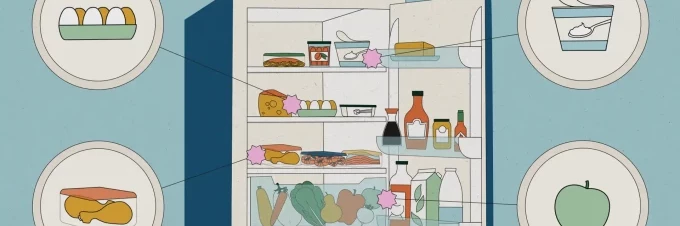
Keep your fridge at the right temperature (4 degrees Celsius) and store food in the correct places to prevent food spoilage. Keep raw meat on the bottom shelf to prevent it from dripping and ruining other food. Keep vegetables in the crisper drawer to keep them fresh.
4. Use leftovers creatively
Pay particular attention to salads, veggies, and fruits. Older vegetables can be used to make stock or soup. Stale bread can be cut up and made into croutons. Leftover carrots, cucumbers, or peppers can be made into a quick pickle.
5. Do a kitchen audit
Know what’s in your fridge and pantry and plan ways to use up food. Rotate your food so that old food in the fridge gets used up first.
6. Freeze surplus food
If you have extra portions of food or have food that’s getting close to its “use by” date, freeze it. This will give you food and ready-made meals on busy days.Learn how batch cooking can save you time and cut down on food waste.
7. Composting food scraps:
Instead of binning peels and scraps, compost them. Even if you don’t have a garden or terrace, you can still make compost with a countertop bin. Community gardens will be more than delighted to take your waste. This reduces landfill waste and creates great soil for gardeners.
Did you know?
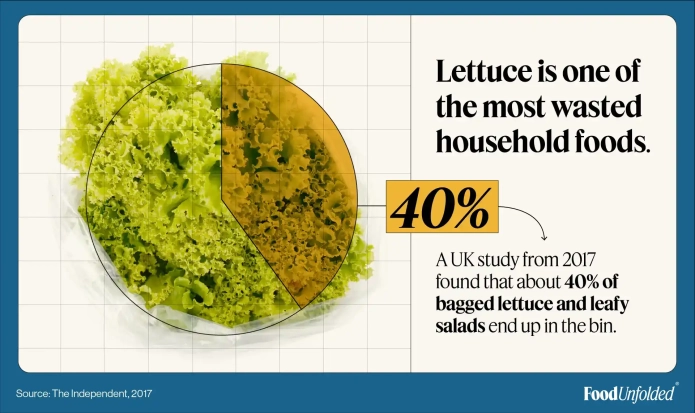
Lettuce is one of the most wasted household foods. A 2017 UK study found that approximately 40% of bagged lettuce and leafy salads end up in the bin.9 But before you throw out that sad-looking lettuce, think of other ways to use it. Lettuce is not just for salads.
- Super in soup: You can chop it up and add it to soup. Stir it in during the last few minutes of cooking for added freshness and nutrients.
- Lettuce tacos: Use lettuce leaves as a low-carb alternative to taco shells. Load them up with taco meat, beans, salsa, and your favourite toppings.
- Blend it into smoothies: Add some extra nutrients without changing the flavour by blending a few torn lettuce leaves into your smoothie.
- Stir-fry lettuce: Chopped lettuce can bring some added freshness to your stir-fry.
How reducing food waste can help others
Food waste hurts our wallets, harms the planet, and isn’t fair for those who don’t have enough to eat. While we’re throwing out all that food, over 42 million people in Europe can’t afford a quality meal every second day.1
Reducing food waste at home means more good food could be shared with charities, food banks, or people in need.
Food for everyone
In 2016, the French government passed a law that forbids large supermarkets from throwing away edible food.10 Instead, they must donate this food to local food banks. This simple idea can help reduce food waste and feed people in need at the same time. If more countries followed this example, we could cut down on food waste and hunger.
Waste less, share more
If you have extra food, consider sharing it to help others and reduce waste. Olio and Too Good to Go are food-sharing apps, currently available in multiple countries, including the UK, France, Spain, and Italy.1112 People can offer up unwanted but edible food.13
Turning leftovers into change
While the mountain of food waste in Europe might seem daunting, remember that creative use of leftovers, clever meal planning, and saving forgotten vegetables from the bin can make a big difference. Working together and teaching others to stop wasting food can make these habits stick.
By taking on a few of the tips, you’ll save money, help protect the planet and contribute to a fairer world where food is valued and shared, not just discarded.
Most viewed
References
- European Commission, Directorate‑General for Health and Food Safety. (n.d.). Food waste. Retrieved June 30, 2025, from
- Eurostat. (2024, September). Food waste and food waste prevention – estimates. In Statistics Explained. Retrieved June 30, 2025, from
- European Food Information Council (EUFIC). (n.d.). Food waste in Europe: Statistics and facts about the problem.
- Phys.org. (2019, October n.d.). Money and food: Why income may not alleviate hunger. Retrieved June 30, 2025, from
- SIAL Paris. (2023, July 21). EU targets major cuts in food waste amid concerns “unacceptable” amounts of produce are thrown away. SIAL Paris Newsroom.
- World Bank. (n.d.). Food Prices for Nutrition. International Comparison Program. Retrieved June 30, 2025, from
- Food and Agriculture Organization of the United Nations (FAO). (2021). The state of food and agriculture 2021: Making agrifood systems more resilient to shocks and stresses.
- European Commission. (n.d.). EU actions: Action platform on food loss and waste.
- The Independent. (2017, November 2). UK households bagged salad food waste throw away 40 per cent (37,000 tonnes) of vegetables.
- Zero Waste Europe. (2020, November 17). France’s law for fighting food waste. Retrieved June 30, 2025, from
- OLIO. (n.d.). Home.
- Too Good To Go. (n.d.). Save good food from going to waste. Retrieved June 18, 2025, from
- Rubio, V. (2023, February 23). Follow the impact: OLIO, the proof that small actions can lead to big change.
Do you care about thefood system?
Take part in our Annual Survey 2025
Take the survey