Mozzarella is a soft, stretchy cheese that so many of us love. It’s perfect melted on a pizza or paired with juicy tomatoes in a simple Caprese salad. It’s a European favourite and a staple of many Italian dishes. But have you ever wondered how this delicious cheese is actually made? And what’s the difference between that creamy mozzarella di bufala and the shredded mozzarella you get in bags?
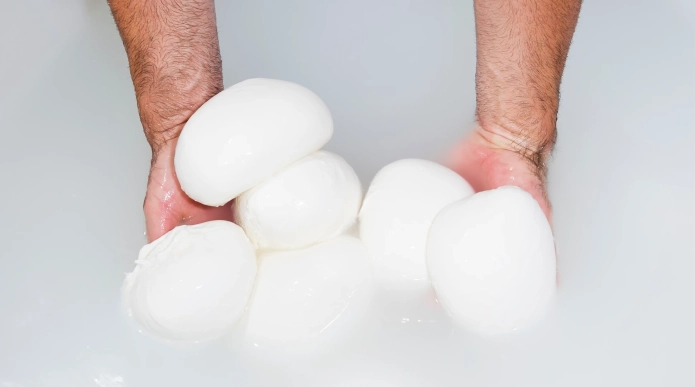
In this article, we’ll look at how mozzarella came to be, how it’s made today and share some useful tips for picking the best one for your needs.
The story of mozzarella cheese
Mozzarella is a fresh, semi-soft cheese. It’s known for its delicate, milky flavour and an elastic texture. Traditionally, mozzarella is made fresh and eaten soon after.
It is one of the most popular cheeses in the world.1 The mozzarella cheese market size was valued at over 36 billion euros in 2024, and the total revenue is expected to grow to about 66 billion euros in 2032. That’s a lot of cheese!
Mozzarella originally comes from southern Italy and was first made in the Campania region. It gets its name from the Italian word mozzare, meaning “to tear.”2 The name refers to the traditional method where the cheesemaker cuts off portions of the stretched curd by hand to form the familiar round shape.
Did you know?
Mozzarella has been around since the 12th century. A bishop in the town of Capua was the first to write about this special fresh cheese, which they called mozza.2 But it wasn’t until the 16th century that mozzarella became popular outside its home region, Campania. A few decades later, mozzarella became a European staple, thanks to better refrigeration and transportation.
Buffalo, traditional, shredded mozzarella? What’s the difference?
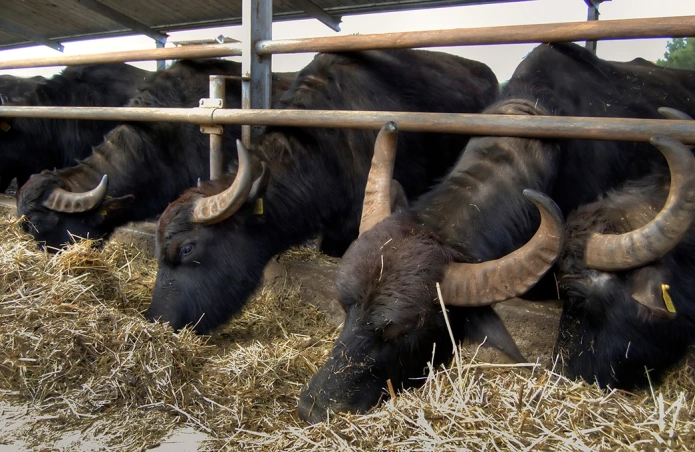
In the beginning, mozzarella was made using the rich milk of the Mediterranean water buffalo, but today most mozzarella you find in the supermarket is made with cow’s milk (fior di latte). There are several types of mozzarella in Europe, and it can be tricky to tell them apart. Here’s a quick guide to the different varieties you’ll find on the shelves.
1. Mozzarella di Bufala Campana (Buffalo mozzarella)
- Mozzarella di Bufala Campana is considered the true mozzarella by most Italians.
- This mozzarella has PDO status (Protected Designation of Origin) from the European Commission3
- It can only be made in certain parts of Italy, and must be made using traditional methods3 5
- It's made from the milk of water buffalo raised in Italy’s Campania region, particularly in the provinces of Caserta and Salerno3
- Its unique flavour comes from the local grass the buffalo feed on in the Campania region2
- Italian producers stretch the cheese curd, often by hand. This helps the artisans get the perfect mozzarella texture. The process of stretching the cheese curd is called ‘pasta filata.’ *
- The taste is creamier and a little zingier than other types of mozzarella
- This mozzarella is ideal as a starter or part of a salad for special occasions
*What is ‘pasta filata’?
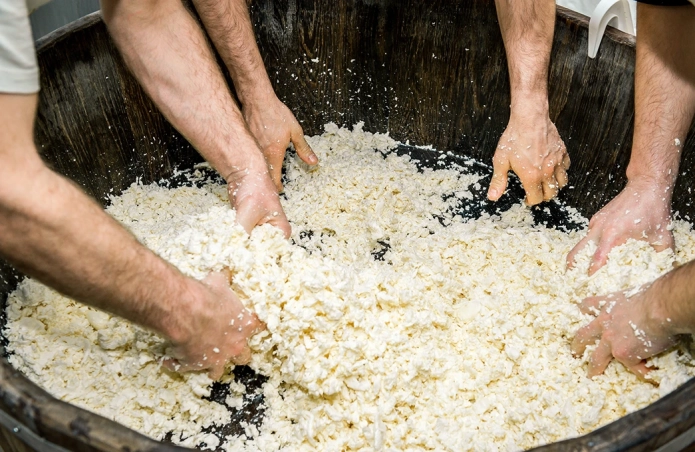
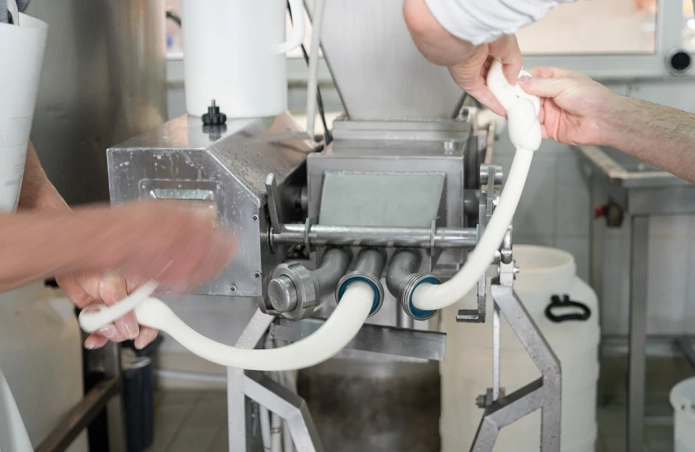
When making most types of cheese, the curds are pressed to make cheese. This is how cheeses like cheddar or Gouda are made. But with mozzarella, the process is slightly different. The curds are stretched instead of just being pressed. This production method is called ‘pasta filata’.2 Pasta filata translates from Italian as ‘spun paste’ or ‘stretched curd’. The pasta filata method can be done by hand or with a special stretching machine.10 Mozzarella gets its unique taste and melt-in-your-mouth texture from this special process.
PDO versus DOP: What’s the difference?
PDO and DOP are the same label, but written in different languages. PDO is the English abbreviation for Protected Designation of Origin, while DOP is the Italian abbreviation for Denominazione di Origine Protetta.4
2. Mozzarella tradizionale (traditional mozzarella)
- Mozzarella tradizionale is protected by the European Commission’s Traditional Specialities Guaranteed (TSG) scheme.4 This protection was granted in 1998 and helps distinguish traditional production from modern, industrialised versions6
- Traditional mozzarella can be produced outside Italy
- It can be made with buffalo or cow's milk
- It must be made using the traditional pasta filata method for fresh cheese. It doesn’t need to be by hand, but it must follow the traditional recipe
- The taste of mozzarella tradizionale is creamy and mild, and the texture is slightly firmer than Mozzarella di Bufala Campana
- Traditional mozzarella melts better on pizza than buffalo mozzarella. It’s often a little less expensive than Mozzarella di Bufala Campana and has many uses in cooking, like lasagna, stuffed cannelloni, and paninis
3. Regular fresh mozzarella
- This is the kind of fresh mozzarella you’ll find in containers and bags in most supermarkets
- It doesn’t have EU certifications like Protected Designation of Origin (PDO) or Traditional Specialities Guaranteed (TSG), but is often still delicious
- This mozzarella is made industrially using milk from many sources
- Companies follow a similar process for making the cheese, but use large machines to stretch and produce the cheese.
- Producers do not need to follow a traditional recipe
4. Low-moisture mozzarella (pizza cheese)
- Often known as pizza cheese, these bags of shredded mozzarella are widely available in Europe7
- This cheese was first developed in the 20th century so that mozzarella cheese could last longer and be transported more easily
- It has a longer shelf life than fresh mozzarella and melts well
- It has a similar taste but a more rubbery texture than fresh mozzarella
- This cheese can be a convenient option for pizza or toasted cheese sandwiches
Keeping it in the family
- Burrata is mozzarella’s creamier cousin. Burrata means “buttered” in Italian. It’s called that because it’s super buttery inside. It is made by turning mozzarella into a pouch after the stretching process. This is filled with mozzarella scraps, then topped off with fresh cream.8 It is delicious on its own or in a salad.
- Scamorza is a stretched curd cheese also made using the pasta filata method. It’s firmer than mozzarella. It’s made from cow’s milk and is shaped like a pear. It’s usually aged for a few weeks to develop flavour and texture. There is also a smoked variety of Scamorza. It’s often used in Italian pizza and pasta dishes, or sometimes served as an appetiser.9
Artisan vs industrial production
While traditional mozzarella is often handmade in small batches by skilled artisans, most mozzarella sold in Europe is produced industrially. Here’s how they compare:
Artisan production
- Uses local milk
- Stretched and moulded by hand
- Limited shelf life, often sold in whey9
Industrial production
- Uses cow or buffalo milk from many sources
- Additives are often used to prolong shelf life
- Pouches, vacuum-packed or shredded
- Made using machines
- Designed for a longer shelf life10
Turning milk into mozzarella cheese
Let’s start with the basics of cheesemaking to explain how creamy milk becomes delicious mozzarella.
- When milk changes into cheese, it splits into solid lumps called curds and a clear, yellowish liquid called whey.
- Whey is the watery part of milk that’s left after the cheese curds form.
- Curd is the soft, lumpy part of milk that forms when it turns into cheese.
- That’s essentially how cheese is made, but mozzarella curds aren’t just pressed and stored; the curds are stretched instead.2
Here’s how it works
1. Start with good milk
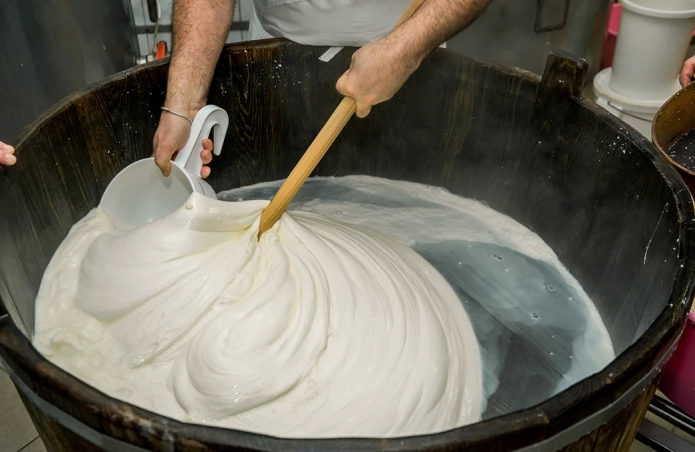
All good cheese starts with high-quality fresh milk. It can be buffalo or cow milk, and it can be raw or pasteurised.
2. Add cultures
Natural lactic acid bacteria are added to kick-start fermentation. Think of it as friendly microbes that help turn the milk sugars into lactic acid, helping the curds to form. The milk is then heated to 34-38°C.2
3. Add rennet
Rennet is a natural enzyme*, (often made in the stomachs of animals like cows.) This special substance is what makes milk change from liquid to solid. It causes the milk to split into solids (curds) and whey (liquid).2
4. Cut the curds
The lumps of milk, called curds, are cut into pieces and left in the liquid part (whey) for a few hours to get ready.
5. Stretch the curd
The curds are dipped in hot water and stretched until they become smooth and elastic. This part of the process is known as ‘pasta filata.’ This is what gives mozzarella its signature stretchy texture.
6. Cool down
The stretched curd is then cooled in water. Once cooled, it is placed in a brine solution (salty water) or whey to stay fresh and tasty.3
The finished mozzarella cheese looks shiny and white, like a smooth porcelain plate. It’s shaped into a small ball. Fresh mozzarella has a very thin skin on the outside and feels soft and smooth when you touch it.
Sustainable dairy production
Like all dairy, mozzarella production has an impact on our environment. When buying a cheese, it’s good to consider the following:
- Animal welfare: Buffalo and cattle need good living conditions. Look for cheese certified by animal welfare standards. Some producers carefully select high-welfare farms where cows are well-treated and graze on pasture.
- Local sourcing: Choose locally made cheese where possible. This helps support nearby farms and reduce emissions. Check the label to see where your cheese comes from.
How to choose better mozzarella
- Check for PDO or TSG labels for cheese made with authentic and traditional methods. These cheeses are usually more expensive but worth the splurge for a special occasion. Buying these cheeses means that you are supporting artisan producers.
- Look for local or regional producers. Mozzarella making is no longer just in Italy and there are now many excellent artisan producers across Europe. Milk from grass-fed cows is often richer in flavour.
- Choose fresh mozzarella when possible. It’s more flavourful and less processed. Freshness is crucial for the best taste and texture, especially for traditional types.
- Read the ingredients list. Avoid cheese with too many stabilisers or preservatives. Good mozzarella contains just three ingredients: milk, rennet, and salt.
- Support brands with animal welfare and sustainability certifications.
- Real smoked mozzarella is hard to find. It’s traditionally smoked using hay. Most smoked mozzarella cheeses are produced with artificial flavours.16
Mozzarella isn’t just cheese. It’s culture, craft, and chemistry rolled into one. Whether you’re a Caprese salad fan or a pizza lover, understanding how mozzarella is made can help you make smarter, more sustainable choices. While Mozzarella tradizionale and Mozzarella di Bufala Campana are usually more expensive, they are made with care by artisan producers using traditional methods and quality ingredients. And even though many mozzarella cheeses are made industrially, some are still made using high-quality, local milk. Next time you’re at the supermarket, look closely at your mozzarella. Now you know how to choose the best kind for your meals. Whether that’s Mozzarella di Bufala Campana for an impressive starter or shredded mozzarella for a toasted sandwich.
Most viewed


References
- Geographical indications and quality schemes explained. (2023, October 24). Agriculture and Rural Development.
- Bufala Campana. (2022, November 7). Consorzio Di Tutela Mozzarella Di Bufala Campana DOP.
- Publications Office of the European Union. (n.d.). Mozzarella Tradizionale [Traditional speciality guaranteed]. In European built‑in geographical indications register (eAmbrosia). Retrieved June 26, 2025, from
- Kindstedt, P. S. (2019). Symposium review: The Mozzarella/pasta filata years: A tribute to David M. Barbano. Journal of Dairy Science, 102(11), 10670–10676.
- Culture Cheese Magazine. (2015, October 13). Style highlight: Burrata. Culture: The Word on Cheese.
- CheesePages.com. (2024, March 24). Scamorza cheese exposed: Everything you need to know - CheesePages.com.
- Inside The Factory. (2025, January 29). How Factories Mass-Produce Mozzarella Cheese | Inside The Factory [Video]. YouTube.
- Website, N. (2024, July 19). Dairy and alternatives in your diet. nhs.uk.
- Louisa. (2025, June 3). Mozzarella types and shapes + a mozzarella imposter. Eating Around Italy. Retrieved June 26, 2025, from
- Finney, C. (2019, December 7). The Italian cheesemakers moving to Britain to make mozzarella | The Independent. The Independent.
- Ramoneta, L. (2024, September 17). Antonini & Co makes the best mozzarella in France. La Ramoneta.
- Carbery Food Ingredients. (2024, November 28). Mozzarella | High Quality Supplier - Carbery. Carbery.
- Slow Food. (2013, September 23). Buying mozzarella: Tips and tricks. Slow Food.
Do you care about thefood system?
Take part in our Annual Survey 2025
Take the survey