Are you ready to keep your food fresher, reduce waste, and save some money? In this article, we’ll walk you through some easy, effective tips to store food in your fridge so that it lasts.
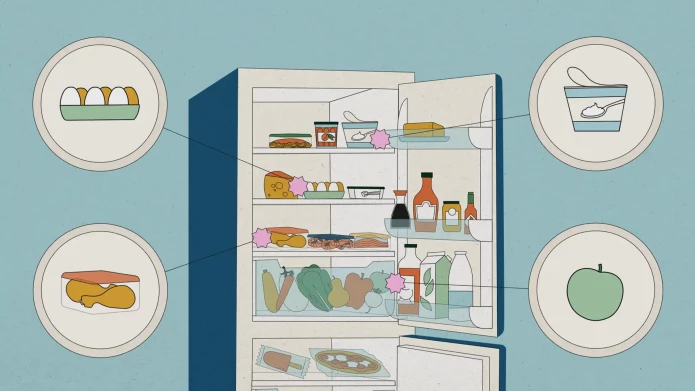
Small adjustments like checking the temperature of your fridge or keeping everything on the right shelf can make a surprising difference!
What’s the best place to store different foods in the fridge?
A lot of food (and money) gets wasted just because we don’t put things in the right spot in the fridge. Yes, it really can be that simple. Take a look at our graphic below to make sure you’re giving your food the best chance of a long and happy shelf life.
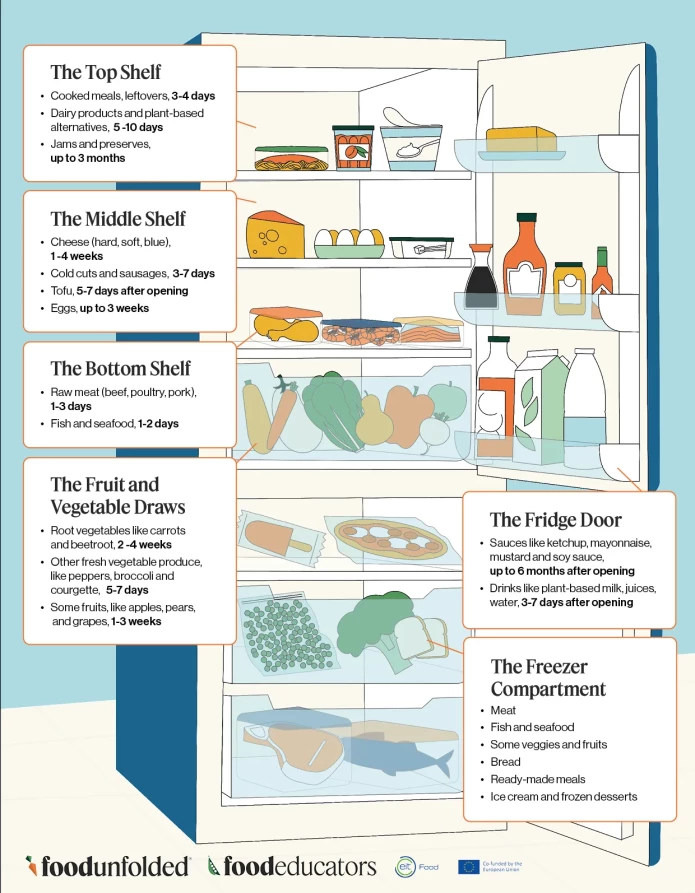
The top shelf…
should be around 8°C. It’s where you want to keep:
- Cooked meals (think leftovers, soups in containers), typically for 3 to 4 days
- Dairy products and plant-based alternatives (think yoghurts, kefirs, cream), typically for 5 to 10 days
- Jams and preserves (after opening), typically for up to 3 months
The middle shelf…
should be around 4-5°C. This is where you can store:
- Milk and plant-based alternatives like oat milk or soy milk for 5 to 7 days after opening
- Cheese (hard, soft, blue), typically for 1 to 4 weeks
- Pre-cooked/cured meats (like ham and salami) and sausages for 3 to 7 days
- Tofu, for 5 to 7 days after opening
- Eggs, for up to 3 weeks
The bottom shelf…
should be around 2°C. This is the coldest part of the fridge, and it’s the safest place to store items like:
- Raw meat (beef, poultry, pork), for 1 to 3 days
- Fish and seafood, for 1 to 2 days
The fruit and vegetable drawers…
should be 6-8°C. They’re perfect for keeping fruits and vegetables fresh thanks to higher humidity. This is the best place to store:
- Root vegetables like carrots and beetroot, for 2 to 4 weeks
- Other fresh vegetable produce, like peppers, broccoli and courgette, for 5 to 7 days
- Some fruits, like apples, pears, and grapes, for 1 to 3 weeks
The fridge door…
should be around 10°C; it’s the warmest part of your fridge. This is where you can keep:
- Sauces like ketchup, mayonnaise, mustard, and soy sauce, for up to 6 months after opening
- Drinks like plant-based milk, juices, water for 3 to 7 days after opening
- Butter and margarine for 1 to 3 months
The freezer compartment…
should be around -18°C. You can keep things like:
- Meat
- Fish and seafood
- Some veggies and fruits
- Bread
- Ready-made meals
- Ice cream and frozen desserts
How do you check the temperature of your fridge?
Every fridge has a thermostat where you can adjust the temperature on the digital display, a manual dial or a slider (moving the slider to the left normally means the fridge will be colder).
The fridge manual will tell you where to find and adjust the thermostat. Generally speaking, setting your overall fridge temperature at 4°C is the sweet spot to achieve ideal per-shelf temperatures.
Just be careful! Sometimes a fridge’s thermostat is inaccurate. If your food is going off too quickly, you can buy a fridge thermometer for around 10 euros to double-check.
Five easy food storage hacks
Now we’ve covered the basics of storing food in your fridge for optimal freshness, let’s look at some easy hacks to take your food storage to the next level.
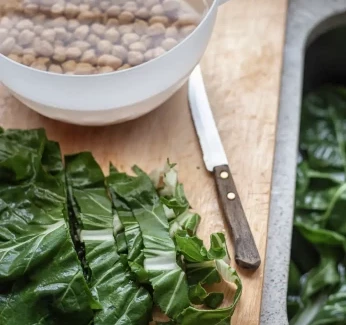
- Found sad salad leaves in your veggie drawer? You can bring leafy greens like lettuce back to life by soaking them in cold water for 15 minutes to an hour. You will see them plump up and turn crispy again before your eyes!
- Keep herbs in water. Fresh herbs will last longer if you trim the stems and place them in a glass of water before putting them in the fridge.
- You can wrap cheese in parchment paper or a kitchen towel so it can breathe and won’t dry out, then put it in an airtight container so it doesn’t absorb bad smells. Some cheeses (like cheddar) can be stored in the freezer for longer shelf life. You’ll need to thaw it in the fridge overnight.
- Place berries on a piece of clean kitchen paper in a plastic container before putting them in the fridge. (The paper absorbs moisture.) You should also wash them straight before using, because they won’t last as long when stored damp. Remove any mouldy or crushed berries to prevent the rest of the box from decaying too quickly.1
- You can leave tomatoes on the counter to ripen, then for packaging pop them in a paper bag or breathable container in the fridge. This will give you the best balance between taste and shelf life!
3 surprising foods you can freeze
If you want to reduce food spoilage and save some money, the freezer is your friend! Here are three ways to freeze commonly wasted foods.
- Bread. Can’t get through a loaf of bread? No worries, you can pop slices of bread in the freezer. When you’re ready to eat them, put them straight in the toaster.
- Potatoes. You can cut potatoes into small cubes (with or without the skin) and boil them until they are cooked but still firm. Rinse them with cold water so they stop cooking, and lay them out on a tray so they don’t touch before freezing. You can now store them in a ziplock bag or an airtight container until you can boil them from frozen to serve. You can also freeze mashed potatoes.2
- Liquid food and drinks. Does your recipe only need a glug of cream or a dash of tomato puree? You can pour leftover liquids like sauces, milk, cream or even juice into an ice cube tray to freeze, then store the frozen cubes in a ziplock freezer bag or an airtight box. Add these ice cubes to recipes as needed.
Top tips for safe food storage
- Be careful with rice! Rice contains Bacillus cereus, a bacterium which survives cooking and can multiply quickly at room temperature. It’s important to get rice in the fridge after it has finished cooling (within an hour) and consume it within 2 days.3
- Safe defrosting methods. The safest way to defrost (thaw) food is to take it out of the freezer and pop it on a plate in the fridge for several hours, to make sure it doesn’t get too warm. Once food has defrosted, you shouldn’t freeze it again.4
- Keep your fridges clean and organised. Is your fridge starting to look like a teenager’s bedroom? To prevent food from going bad and spreading bacteria, you might want to look at your fridge’s organisation. If you have more than one type of food, keep the oldest one towards the front of the shelves so you use it first. For the best hygiene, put food on plates or containers rather than straight on the fridge shelves, and regularly wipe the shelves with an antibacterial cleaner.
And finally, should eggs really go in the fridge?
You might have heard eggs can be kept in a cupboard. That’s not exactly wrong, but it’s not the safest choice either.5 It’s best to keep eggs in the fridge, as temperatures can change a lot in the kitchen. Never leave them sitting in a hot car, and make sure they are placed on the middle shelf rather than in the fridge door, for a more consistent storage temperature.6
Most viewed
References
- Safefood. (n.d.). How to defrost food safely. Retrieved May 21 2025
- European Food Safety Authority. (2014). Scientific Opinion on the public health risks of table eggs due to deterioration and development of pathogens. EFSA Journal, 12(7), 3782.
- British Egg Information Service. (n.d.). Egg storage and handling. Retrieved May 21 2025.
Do you care about thefood system?
Take part in our Annual Survey 2025
Take the survey