Not too long ago, if you didn't have a gluten intolerance or coeliac disease, the idea of a gluten-free diet probably drew a blank for most people. Now, “gluten-free” is taking over restaurant menus and supermarkets as a healthy alternative diet. Is it just today's trend, or is there really something to it?
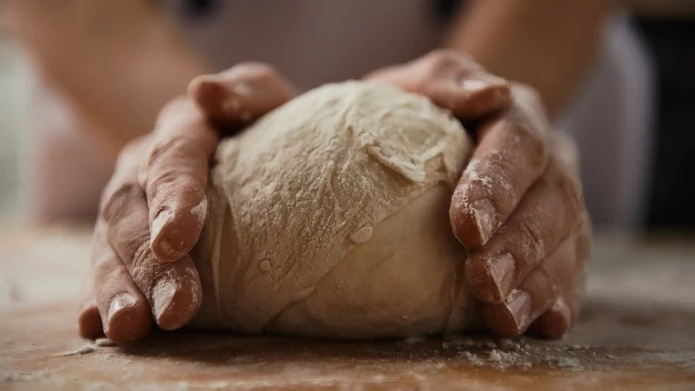
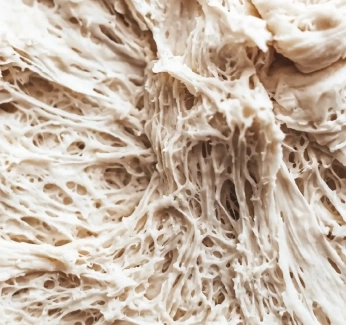
Gluten is a natural protein found in some grains like wheat, barley and rye. It acts as a binding agent, giving dough its elasticity and grain-based products their shape, texture and strength.1 Think of when a baker is rolling dough for bread or a pizza maker throws the pizza dough into the air: without gluten, the dough would rip apart.
What does gluten do to the body?
You find gluten in everyday foods like pizza, bread, pasta and cereals, but gluten provides no essential nutrients for our body.2 In fact, it is the only protein that is indigestible.
For those of us who don’t suffer from gluten sensitivity or coeliac disease, gluten passes through our system virtually unnoticed. For people with coeliac disease, however, eating gluten triggers an immune system reaction, which causes inflammation and damage to the intestines and other parts of the body.2 If people with coeliac disease keep consuming gluten-rich foods, their digestive system can become so damaged it stops absorbing nutrients from food altogether.3
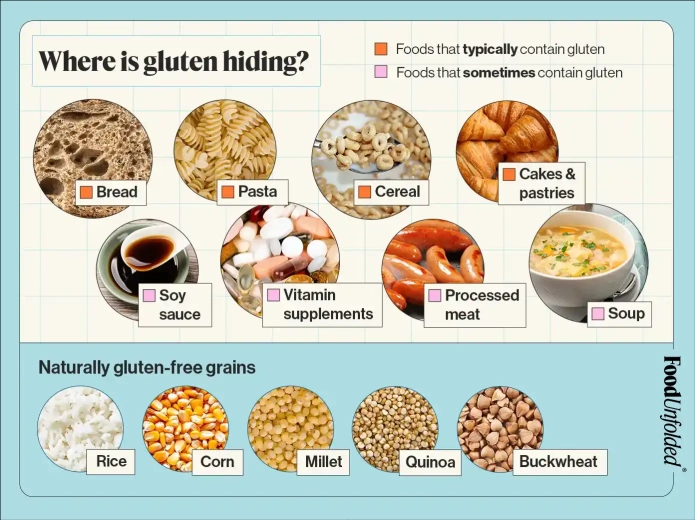
Did you know? People associate gluten with grains, but several other foods, drinks, and ingredients can contain it too. Besides the more obvious foods, such as breads, pastas, cakes and breakfast cereals, gluten can sometimes be found in soups, soy sauce, processed meats, and even in some medicines, vitamins, and herbal supplements.
Gluten-free diet: is gluten-free healthy?
So, for people with gluten sensitivity or coeliac disease, cutting back or eliminating gluten-rich foods from their diet is crucial. But what about the rest of the human population?
When it comes to the health benefits of a gluten-free diet, opinions are divided. According to a survey by the Consumer Reports National Research Centre published in 2014, 63% of the 1,000 American participants said following a gluten-free diet would improve their physical or mental health, and they believed a gluten-free diet tends to be more nutritious, containing more vitamins and minerals.6 Studies published on the Harvard Health Publishing website say it’s the other way around: gluten-free foods are usually less fortified with folic acid and minerals such as iron than conventional foods. It has also been observed that gluten-free food products often contain less fibre, more sugar and more fat, leading to more weight gain and higher risks of obesity. This is often the result of increased additives used to make up for taste and texture.2 4
Just because a product is labelled ‘free from gluten’, doesn’t make it healthier by definition. Make sure to always check the food label for nutritional content, additives, and hidden sugars if health is your priority.
How are products “gluten-free”?
We see a lot of “gluten-free” products in the supermarket today, and each of these products must comply with certain regulations. So, when can we consider a product truly free from gluten?
Industrial process for removing gluten*
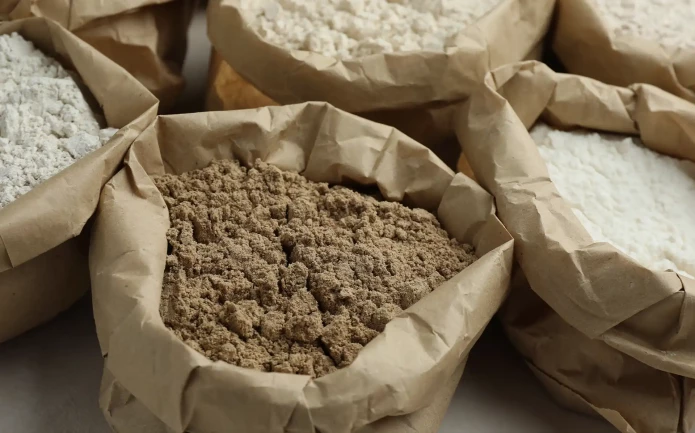
Many “gluten-free” products have been industrially processed to remove gluten or produced with alternative ingredients. Wheat consists mainly of fibre, starch and gluten protein. To extract gluten from wheat, it is milled into flour. This is turned into dough so the starch can be washed out, since starch dissolves in water, but gluten doesn’t. This process separates the gluten protein from the starch solution, which can be drained off and dried.7
*This method does not work at home.
When is a product considered “gluten-free”?
All in all, food can be labelled gluten-free when the product contains no more than 20 parts per million (ppm) of gluten. This is in part because current technologies are unable to reliably measure gluten presence below 20 ppm, but also because such a small amount of gluten shouldn’t have any negative impact on people suffering from coeliac disease.4
Why can the same food sometimes be gluten-free and sometimes not?
Part of labelling a product as “gluten-free” depends on where the food is made. Even though some foods are naturally gluten-free, they can’t always get the gluten-free label because they have been “contaminated” as they were processed in a facility that also processes gluten products.4 For example, oats are naturally free from gluten but often don’t get the gluten-free label because they are grown nearby or are processed in the same facilities as other grains that do contain gluten, like spelt, farina and wheat berries.1
Is going gluten-free good for you?
For those who are sensitive to gluten or gluten intolerant, the increased awareness and availability of gluten-free products is definitely a good thing. If you don’t have coeliac disease or intolerance, there’s no reason to avoid gluten. In fact, like with many other food labels, food manufacturers generously use such labels in their marketing, partly because it translates into a higher product price.
Most viewed

References
- Richards, L. (n.d.). Gluten foods: List of what to avoid and alternatives.
- “54 Foods You Can Eat on a Gluten-Free Diet” Healthline. Accessed on 13 July 2020
- “6 Truths about a gluten-free diet” Consumer Reports Magazine. Accessed on 3 August 2020.
- Van Waffle. (2015) “The New Word on Wheat Starch” Accessed on 3 August 2020.
Do you care about thefood system?
Take part in our Annual Survey 2025
Take the survey