Carbohydrates (shortened to “carbs”) are one of the most talked-about nutrients in our diets. They’ve been blamed, praised, cut out, and craved, leaving many of us unsure what to believe. Are they just sugar? Should we eat less of them? Do they make our energy levels rollercoaster throughout the day? Or do we desperately need them?
Let’s unpack what carbohydrates are, why your body depends on them, and how you can make healthy and sustainable carb choices.
What exactly are carbohydrates?
Carbohydrates are one of the three macronutrients your body needs, alongside protein and fat. Macronutrients are nutrients we need in large amounts because they give us energy and help our bodies grow, move and function. (Micronutrients, like vitamins and minerals, are just as essential, but we only need them in small amounts.)
Carbs are found in many of the foods we eat every day: grains, fruit, vegetables, legumes, dairy, sweet treats and more.
When you eat carbohydrates, your body breaks most of them down into glucose, a simple sugar that travels through your blood and is used as your body’s primary energy source. Glucose powers your brain, fuels your muscles, and keeps your body running smoothly.1,2
But not all carbs are broken down the same way or at the same speed. Some are digested quickly, while others take longer or aren’t digested at all. That’s where the different types of carbohydrates come in.
Different types of carbs (and why it matters)
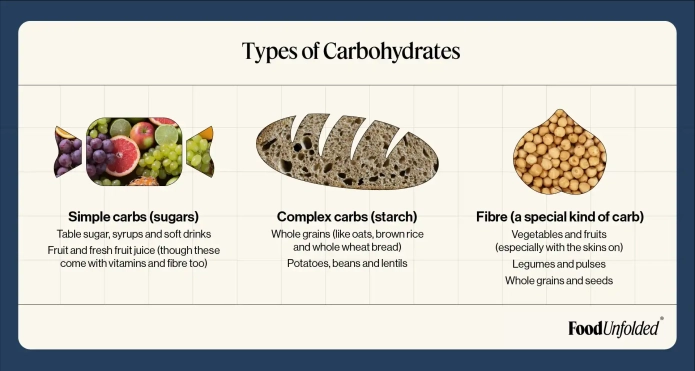
Not all carbs are created equal. Here’s a simple way to understand the three main types:1
1. Simple carbs (sugars)
These are broken down rapidly by your body, meaning they’re digested and absorbed into your bloodstream quickly, causing a sharp rise in blood sugar. They include:
- Table sugar, syrups and soft drinks
- Fruit and fresh fruit juice (though these come with vitamins and fibre too)
2. Complex carbs (starch)
These are made up of longer chains of sugar molecules (think of them like beads on a string), which take more time for your body to break down. This slower digestion means your blood sugar rises gradually, giving you steady energy instead of a quick spike and crash. You’ll find them in:
- White bread, white rice, white pasta
- Whole grains (like oats, brown rice and whole wheat bread)
- Potatoes, beans and lentils
Complex carbs are a better choice for your energy levels, gut, and overall health. You’ll feel fuller for longer. They're less processed and often come with fibre, vitamins and minerals that support your body in multiple ways.1
3. Fibre (a special kind of carb)
Your body doesn’t digest fibre, but it plays a vital role in digestion. Instead of being broken down, fibre moves through your gut, helping everything flow smoothly and feeding your beneficial gut bacteria. It helps regulate your blood sugar and keeps you feeling full. Foods high in fibre include:
- Vegetables and fruits (especially with the skins on)
- Legumes and pulses (like lentils, black beans, kidney beans, chickpeas…)
- Whole grains and seeds
Fibre is one of the most important and overlooked types of carbohydrate. A diet rich in fibre not only helps digestion but can also lower your risk of heart disease, type 2 diabetes and certain cancers.3
Some foods appear twice in this list. Fruit, for example, contains both fibre and simple carbs.
Carbs and your gut
Your gut is home to trillions of microbes, many of which feed on the fibre you eat. As they ferment this fibre, they produce short-chain fatty acids, tiny compounds that help keep the gut lining healthy, reduce inflammation, and may even help protect us from disease. These beneficial byproducts are one of the reasons why fibre is essential for overall health.
Eating a variety of plant-based carbs (think beans, nuts, whole grains, fruit and veg) helps keep this gut community diverse and thriving.4
The role of carbs: Your body’s energy supply
Carbs are your body’s preferred energy source. When you eat them, your body breaks them down into glucose, which travels in your blood to your cells and fuels everything from your brain to your muscles. Any glucose you don’t need immediately is stored in your muscles and liver as glycogen. If those stores are full and you continue to eat more than your body needs, the extra energy can eventually be converted into fat.5,6
That’s why athletes and active people often eat pasta or rice before a race; they’re stocking up on energy.
Without enough carbs, you might feel tired, dizzy or struggle to concentrate. That’s because your brain depends heavily on glucose, the simplest form of carbohydrate. Even though it only makes up about 2% of your body weight, your brain uses around 20% of your body’s energy, most of it from glucose. That makes it one of the most significant energy users in your body.2
How many carbs do you actually need?
There’s no one-size-fits-all answer, but general nutrition guidelines suggest that around 45–65% of your daily calories should come from carbs.7
It’s best not to get all your carbs from simple sugars like sweet pastries. Instead, aim for a variety of whole, minimally processed plant foods.
Here’s an example: A banana has more carbohydrates than a biscuit, about 25g compared to 10g, but it also comes with fibre, potassium, and natural sugars that your body can use for energy. The biscuit may be lower in carbs, but it’s more processed and provides little nutrition.
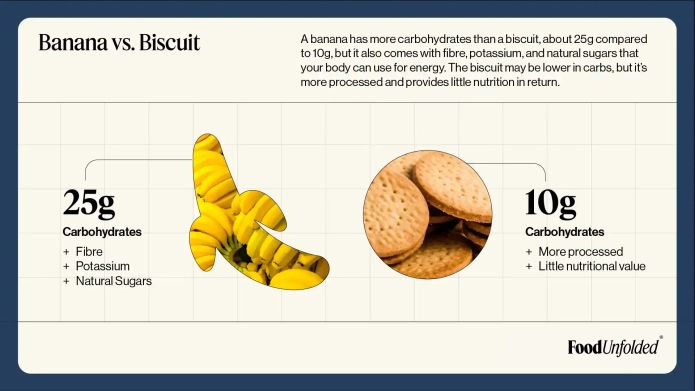
This is why the quality of your carbs matters more than the number. Carbohydrates from whole food sources, like whole grains, vegetables, legumes and fruits, come packaged with nutrients your body needs, including fibre, vitamins, and minerals.
Carbs and your blood sugar: What is the glycaemic index?
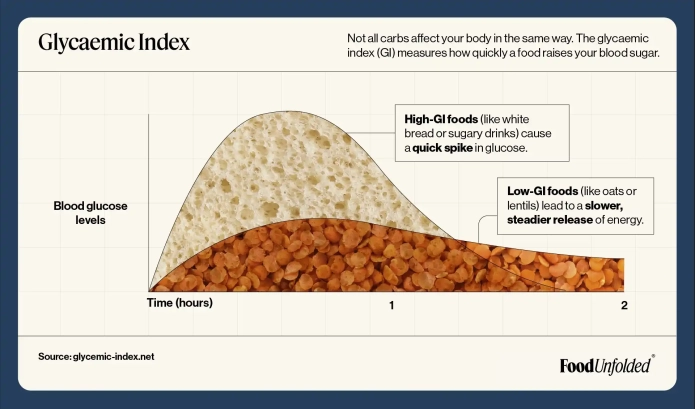
Not all carbohydrates affect your body in the same way. Some are digested quickly and give you a fast burst of energy, while others are broken down more slowly, helping to keep your blood sugar stable.
The glycaemic index (GI) is a tool that helps explain this. It ranks carbohydrate-containing foods on a scale from 0 to 100, based on how quickly they raise your blood sugar after consumption.
- High-GI foods (like white bread or sugary drinks) are broken down fast, causing a sharp spike in glucose levels. These are often processed foods with little fibre.
- Low-GI foods (like oats or lentils) release energy more slowly and steadily, often because they contain more fibre, are less processed, or take longer to digest.
So why does this matter?
Eating too many high-GI foods can lead to sugar crashes. This is when your blood glucose drops quickly and causes headaches, mood swings, increased hunger, tiredness and dizziness. Over time, high-GI foods can give you a higher risk of type 2 diabetes and heart disease.8 On the other hand, choosing low-GI foods can help keep your energy stable and your appetite more balanced.
To slow down metabolism and reduce blood sugar crashes, try combining carbohydrates with protein or healthy fats. For example, you could eat oats with nuts or whole grain bread with hummus. These nutrients help slow glucose absorption into your bloodstream, so your energy levels stay more stable and you’re less likely to feel hungry again soon after eating.9
Easy swaps for healthier carbs
Small changes can make a big difference. Here are some simple swaps to add more fibre and slow-burning energy to your meals:
| Instead of... | Try this... |
| White bread | Whole grain or rye bread |
| White rice | Brown rice, barley or quinoa |
| Sugary breakfast cereals | Porridge oats or muesli |
| Fruit juice | Whole fruit |
| Crisps or crackers | Air-popped popcorn or roasted chickpeas |
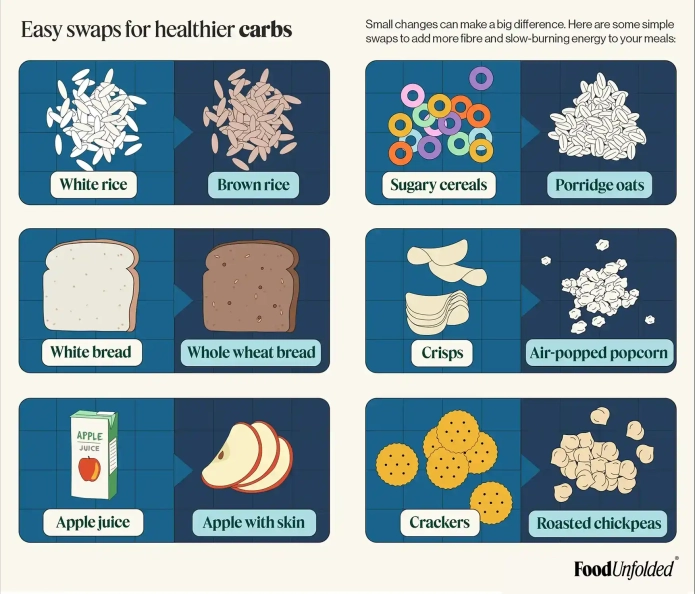
You don’t have to give up the foods you love. Just try to include more whole foods with complex carbs and fibre throughout your day. These simple switches can help balance your energy and support your gut.
Are low-carb diets healthier (and better for the planet)?
Low-carb diets have become popular for weight loss and blood sugar control. And for some os us, like people with Type 2 Diabetes or Insulin Resistance, low-carb diets can be beneficial. But they’re not for everyone, and cutting out carbs entirely can mean missing out on essential nutrients. It’s best to check in with your doctor before making any drastic changes to what you eat.
What about sustainability? Many of the best sources of complex carbohydrates, like lentils, beans, whole grains and root vegetables, tend to have a lower environmental footprint than heavily processed or animal-based foods.10 (They typically need less land, water and energy to grow.)11
In addition, legumes like lentils and beans can make soil healthier and reduce the need for fertilisers, helping farmers look after their land and make more profit. Whole grains and root vegetables also store well and can be grown locally in Europe, reducing transport-related emissions and food waste.
Swapping in more plant-based carbs can reduce your carbon impact while giving your body the energy and nutrients it needs. So instead of focusing on carb quantity, think about carb quality, for your health and the planet.
The takeaway
Carbs are often misunderstood, but they’re a key part of a healthy, balanced diet. The key is to choose the right kind, especially complex carbs and fibre from whole foods. (Think plenty of whole grains, legumes, pulses, vegetables and potatoes). These types of carbs can:
- Keep your energy steady throughout the day
- Support your gut and overall health
- Help reduce the risk of chronic diseases
- Add flavour, texture and enjoyment to your meals

Most viewed



References
- Cleveland Clinic. (n.d.). Carbohydrates: What they are, function & types. Cleveland Clinic. Retrieved May 8, 2025, from
- Mergenthaler, P., Lindauer, U., Dienel, G. A., & Meisel, A. (2013). Sugar for the brain: The role of glucose in physiological and pathological brain function. Trends in Neurosciences, 36(10), 587–597.
- Centers for Disease Control and Prevention. (n.d.). Fiber: The carb that helps you manage diabetes. Centers for Disease Control and Prevention. Retrieved May 8, 2025, from
- Parladore, Y. S., Bernardi, A., & Frozza, R. L. (2020). The role of short-chain fatty acids from gut microbiota in gut-brain communication. Frontiers in Endocrinology, 11, Article 25.
- Cleveland Clinic. (n.d.). Glycogen. Cleveland Clinic. Retrieved May 8, 2025,
- Hughes, L. (2024, January 9). How does too much sugar affect your body? WebMD.
- National Library of Medicine. (n.d.). Carbohydrates. MedlinePlus. Retrieved May 8, 2025
- Harvard T.H. Chan School of Public Health. (n.d.). Carbohydrates and blood sugar. The Nutrition Source. Retrieved May 8, 2025,
- Jarai, M. (2024, April 17). Low-Glycemic Foods: Health Effects and Examples. ZOE.
- Bunge, A. C., Mazac, R., Clark, M., Wood, A., & Gordon, L. (2024). Sustainability benefits of transitioning from current diets to plant-based alternatives or whole-food diets in Sweden. Nature Communications, 15, Article 951.
- Poore, J., & Nemecek, T. (2018). Reducing food's environmental impacts through producers and consumers. Science, 360(6392), 987–992.
Do you care about thefood system?
Take part in our Annual Survey 2025
Take the survey