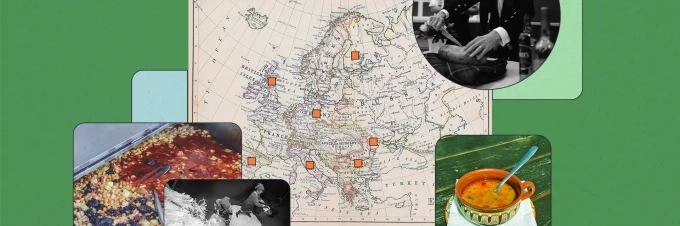
Europe’s food festivals are a big deal. Some of the most famous include Spain’s La Tomatina, where participants throw over 120,000 kilograms of tomatoes at each other in a massive food fight, and Germany’s Oktoberfest, the world’s largest beer festival.1 But crowds have become enormous at these popular festivals.
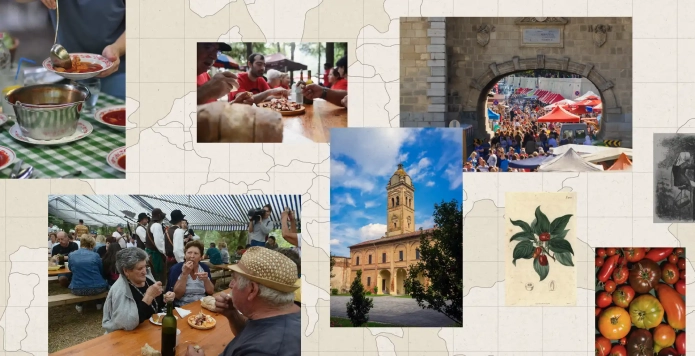
Oktoberfest now draws up to 7 million visitors, while La Tomatina has had to limit attendance to 20,000 people because so many wanted to get involved.234
So what if you’re looking for something quieter, or you don’t get one of those golden tickets to La Tomatina? Don’t worry. Europe is home to many thousands of lesser-known food festivals. Germany alone hosts over 10,000 folk festivals, where food takes centre stage.5 Whether you want to sip local wine and dance the night away or enjoy traditional dishes in a relaxed, family-friendly setting, there’s something for everyone. From vibrant onion festivals in Italy to savoury octopus feasts in Spain, Europe’s smaller celebrations offer great food and genuine community spirit.
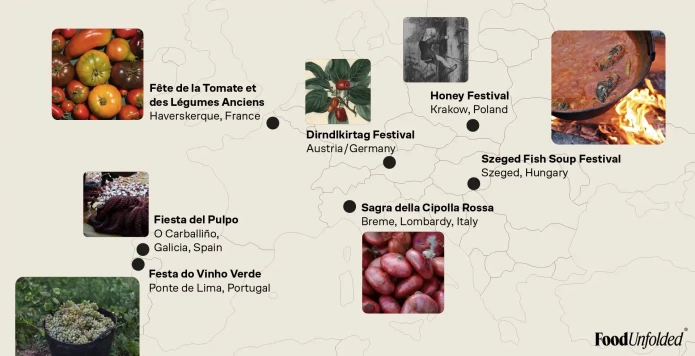
Let’s explore seven of Europe’s lesser-known food festivals. Which one would you most like to visit?
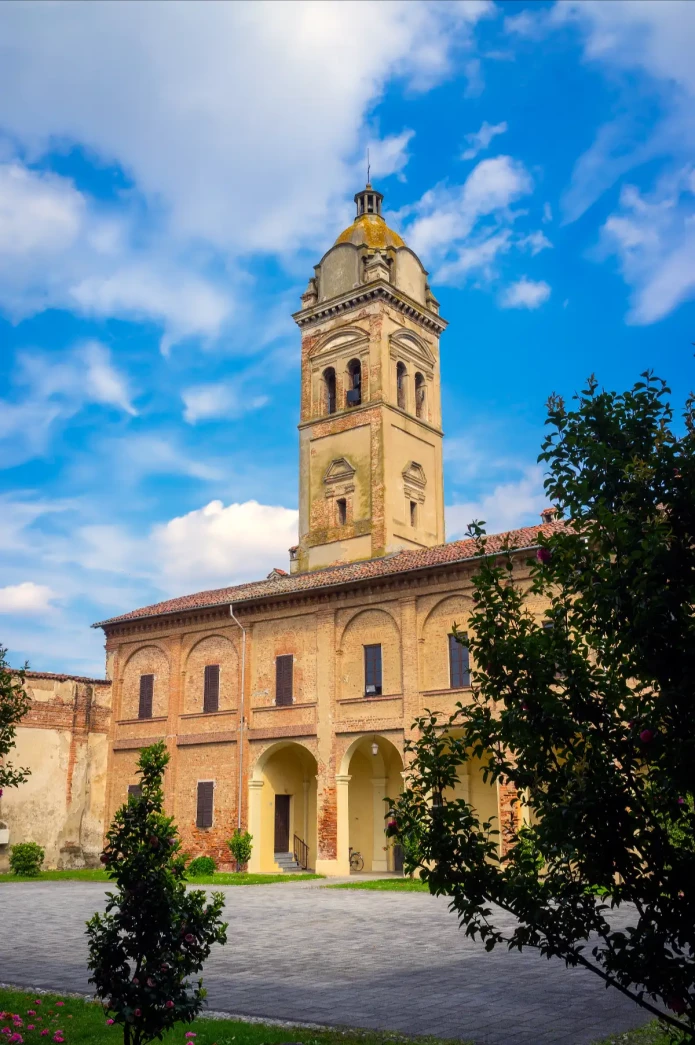
1. Sagra della Cipolla Rossa | Breme, Lombardy, Italy
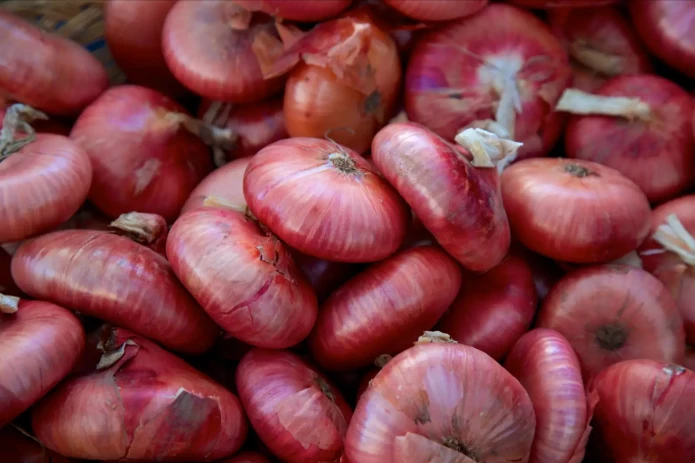
First off, let’s head to the small town of Breme in Italy’s Pavia region in Northern Italy, where the Red Onion Festival celebrates a sweet, crunchy onion that has been cultivated in these fields for over a thousand years. Once a humble kitchen staple, the Breme red onion is now a source of local pride. It’s considered a gourmet ingredient and is gaining recognition across Italy.
Did you know? The Breme onion has a special local status called 'De.Co.', which means only onions grown in the area around Breme can use the name.6
The Breme onion festival takes place every September, usually on the second or third weekend, to mark the onion harvest. Today, it draws around 12,000 visitors. This is just the right size for sharing good food and music with fellow food lovers, without the overwhelming crowds of bigger events.7 Long tables fill the town square as locals, including the mayor, serve up family recipes like onion omelettes and handmade pizzas sprinkled with the famous Red Onion.8 There’s even the option to rent a bike and explore the scenic countryside between meals. It’s a relaxed, down-to-earth celebration of tradition, flavour, and community.9 This festival is ideal for individuals who appreciate traditional cuisine and wish to share it with local residents.
Did you know? Onions have been an important food across Europe for centuries. They store well for months and are rich in vitamins and minerals, which helps families stay healthy and fed during the hard winter months. People also used them as a traditional remedy for coughs and colds.10
2. Fête de la Tomate et des Légumes Anciens | Haverskerque, France
Next, let’s hop over to the small town of Haverskerque in northern France, where garden lovers gather to celebrate tomatoes on the second Sunday of September. This colourful festival is all about variety, with 3,000 to 4,000 different types of tomatoes on show.11 Some are small like grapes, others are shaped like peppers or aubergines. Tomatoes come in every colour and size you can imagine. And if you enjoy growing food, you can even buy seeds to try in your garden.12
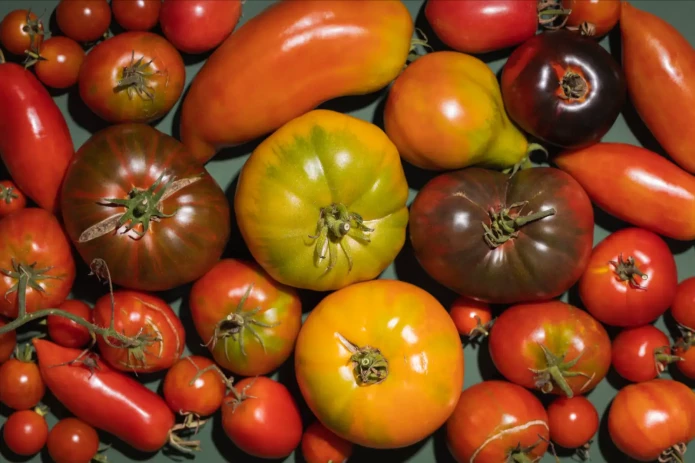
This festival isn’t about making money, it’s about sharing knowledge and keeping old varieties alive. That’s why tickets cost just €3, and children under 16 go free.13 Food trucks serve tasty snacks, and rescue dogs from the local sea rescue team show off their skills in demonstrations. The town is close to peaceful canals, so visitors can enjoy boat rides or walks by the water while taking in the countryside.
Welcoming around 3,500 visitors a year, it’s a real taste of community — friendly, relaxed, and refreshingly low-key.14 A far cry from the tomato-throwing mayhem of bigger events, this is a festival where you can peacefully admire heirloom varieties, chat with passionate growers, and maybe even head home with seeds in your pocket. It’s perfect for anyone who loves food and gardening, especially if you’re not usually one for big crowds.
Did you know? Tomatoes were first taken from the wild and grown in gardens in South and Central America, where Indigenous farmers developed many early varieties. When tomatoes came to Europe hundreds of years ago, farmers kept creating new types, each adapted to local soils, tastes, and climates. A wide mix of varieties helps farmers grow food in different places, gives us more flavours to enjoy, and makes it easier to deal with challenges like pests, drought, or changing weather.15 16 Find out more here.
3. Fiesta del Pulpo | O Carballiño, Galicia, Spain
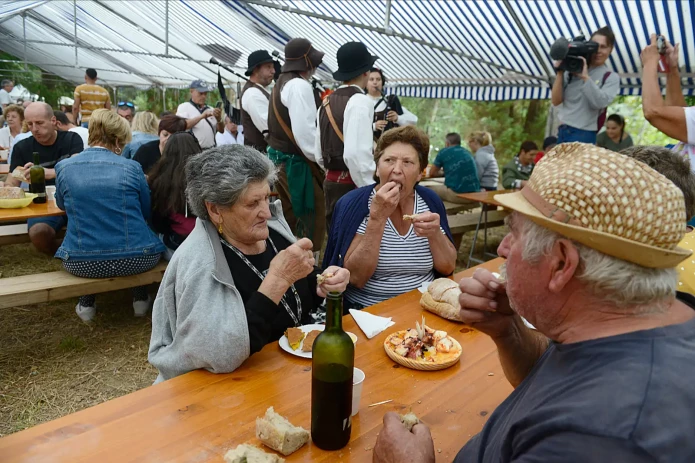
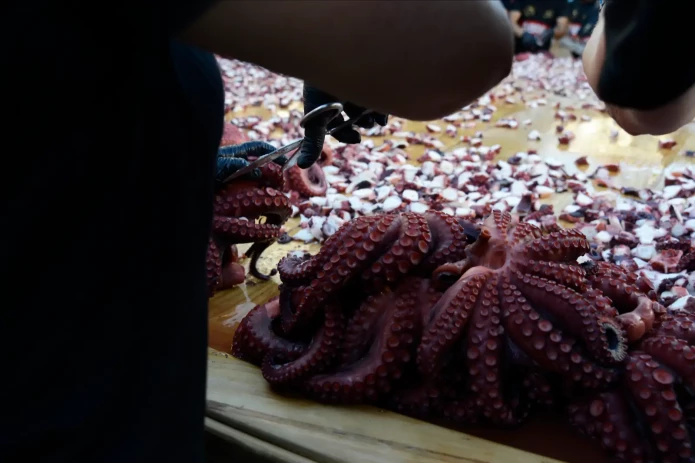
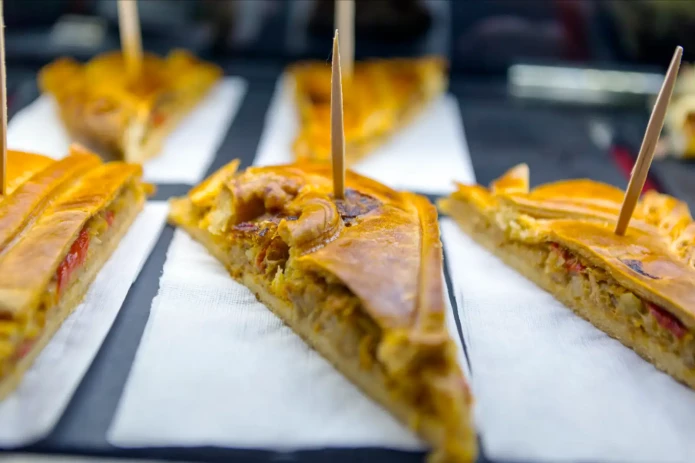
If you prefer more of a buzz, you can head to Galicia instead. On the second Sunday of August, the town of O Carballiño becomes a hub for Galicia’s most iconic seafood: octopus. This festival has grown into a huge party, with up to 80,000 kilos of octopus prepared in huge copper pots over the weekend for 125 000 guests.17 As well as Octopus, you can enjoy traditional foods like Galician empanadas and Cea bread, all washed down with local Ribeiro wine.18
Octopus has been a staple in Galician coastal communities for centuries, providing an important source of food and income. The dish called pulpo a feira has been served for over 500 years.19 It’s boiled octopus seasoned simply with paprika, olive oil, and salt.20
Did you know? While the octopus is a beloved part of Galician culture, the Marine Conservation Society rates the common octopus as “needs improvement” or “avoid”, depending on where and how it was caught.21 This means that the common octopus is not the most sustainable choice. You can check whether the fish you’re eating is sustainable with the Marine Conservation Society’s Good Fish Guide.
From the seafood-rich shores of Galicia and its octopus feast, we journey east to northern Portugal, where the cool, green vineyards set the stage for a very different celebration.
4. Festa do Vinho Verde | Ponte de Lima, Portugal
In northern Portugal, Ponte de Lima comes alive for the Festa do Vinho Verde every June over three days.22 Locals and visitors sip crisp Vinho Verde wines, enjoy regional dishes, and dance to folk music with people dressed in traditional costumes. The festival features chef demonstrations, a competition for the best wine, delicious local food, and a strong sense of cultural pride.23
Grown mainly in the lush, rainy northwest region of Portugal, Vinho Verde means “green wine”. Not because of its colour, but because it's young and fresh. You could be sipping this wine just 3 to 6 months after the grape harvest, unlike the average wine, which can take 2 to 5 years to mature.24
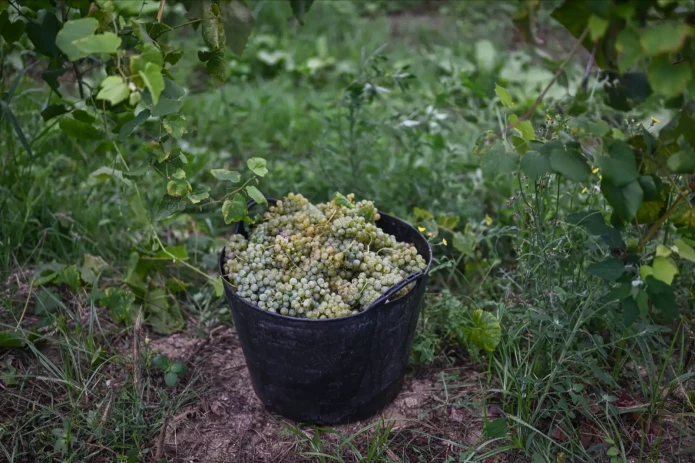
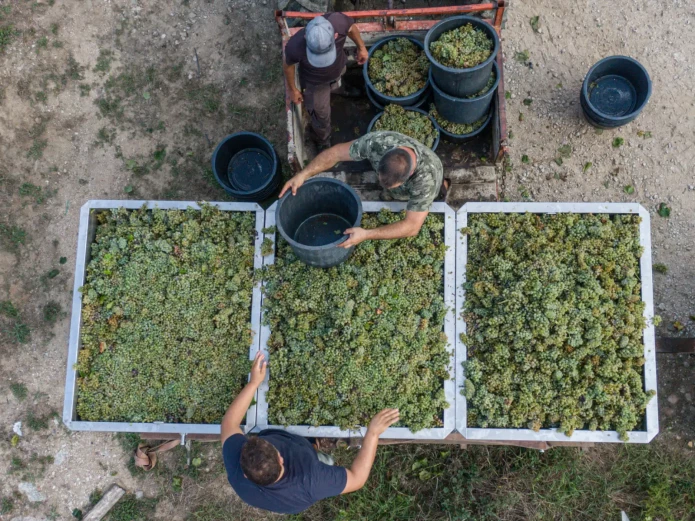
Did you know? The Vinho Verde region is one of the oldest wine regions in Portugal. People have been making wine here for 2000 years!25
Even if this is a wine festival, it’s pretty civilised and not about drinking excessively. It’s about shared joy, cultural heritage, and supporting small wine producers. A 10-euro ticket includes tastings and your own glass that you carry around in a pouch. Because there’s no way that special wine is going in a plastic cup!26
Next on our festival journey, we leave the green valleys of Portugal behind and head up into the Alpine mountains. Can you guess which fruit takes centre stage at the next celebration? Here’s a clue: it’s sour, red, and is found in the wild.
5. Dirndlkirtag Festival | Austria/Germany
Did you guess the Cornelian cherry? This festival celebrates both the bright red wild Cornelian cherry called Dirndlfrucht in German and the traditional Alpine dress called the Dirndl. Each year, a Dirndl Queen is crowned, wearing a simple tiara made of young cherry branches.27 This tradition celebrates the deep connection between nature and the culture of the Alpine region across two countries.
The two-day Dirndlkirtag Festival moves between towns in Austria and Germany, drawing over 15,000 visitors who enjoy music concerts, dancing, and tasty local products made from the cherry, like jams, spirits, and juices. 28 29
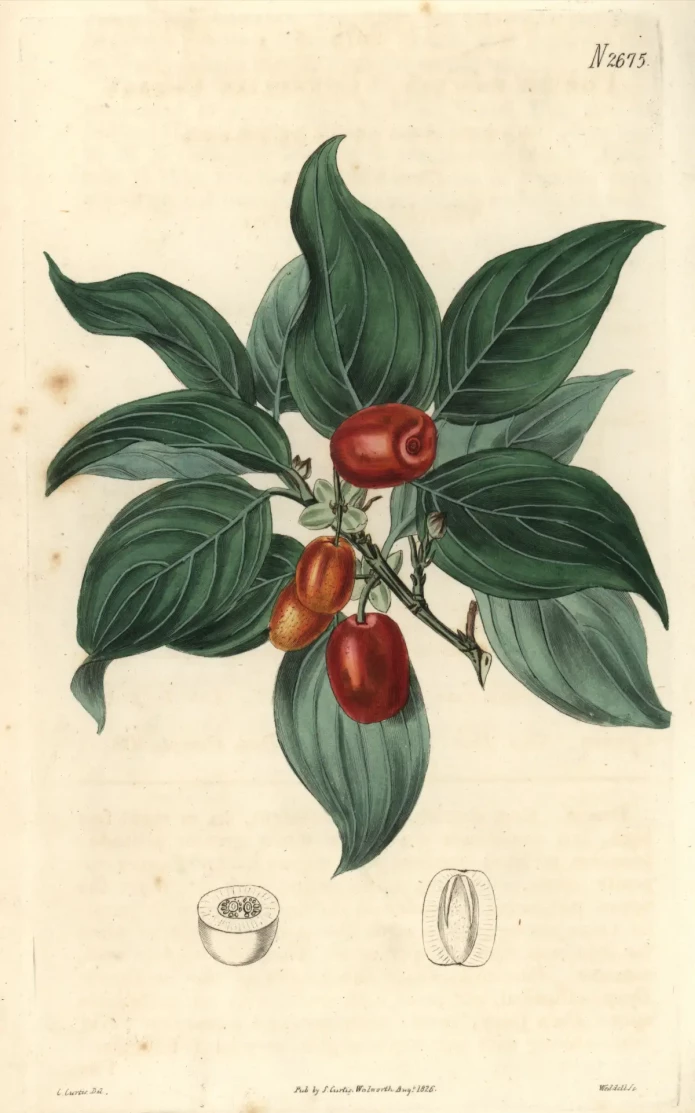

Did you know? Cornelian cherries are a tough, vitamin-rich fruit.30 Treasured for its resilience, it has long been part of local life, symbolising the region’s heritage, resourcefulness, and close relationship with nature.
Now that we've sampled the wild alpine cherries, let's head east to Szeged, Hungary, where the Szeged Fish Soup Festival warms hearts and bellies by the Tisza River.
6. Szeged Fish Soup Festival | Szeged, Hungary
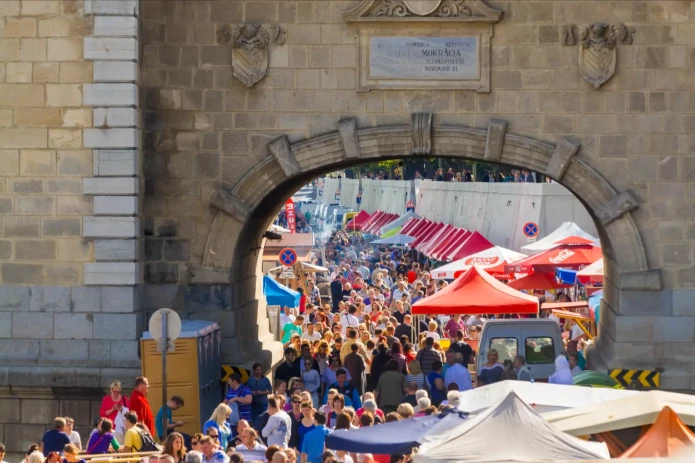
In southern Hungary, near the banks of the Tisza River, groups of friends and families gather to cook halászlé, a spicy, paprika-rich fish soup which is slowly simmered in large cauldrons over open fires.31
The International Tisza Fish Festival is a multi-day event, typically spanning three days in the first weekend of September. It attracts around 20,000 visitors each year. The festival offers a range of activities, including cooking and fishing competitions, food vendors, folk music, and craft markets. Tickets usually cost between €5 and €10.32
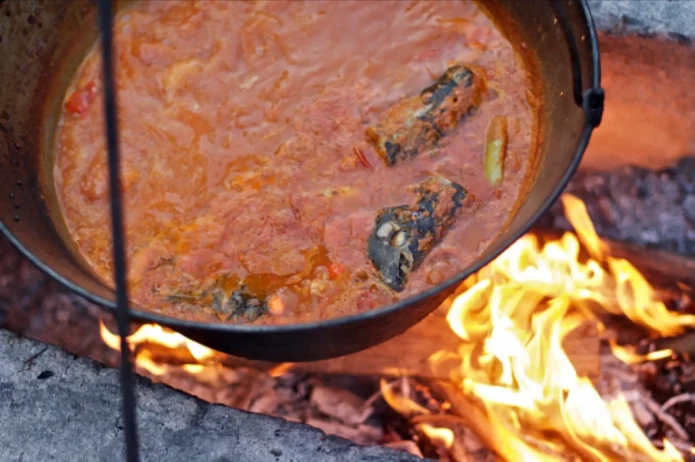
Did you know? Fish have been a vital source of food and income for riverside communities like Szeged for centuries.33 Thanks to traditional methods like salting and smoking, the river fish could be preserved through long winters, shaping local culinary traditions and community life. Festivals like Szeged’s Fish Soup Festival offer a chance to celebrate rich local traditions and remind us how much we rely on the natural world for food.
And finally, from the spicy cauldrons by the Tisza River, let’s move north to another sweet celebration: the Honey Festival in Krakow, Poland, where the ancient art of beekeeping takes centre stage.
7. Honey Festival | Krakow, Poland
Held at Plac Wolnica, Krakow’s honey festival showcases the many uses of honey and the deep-rooted history of Polish beekeeping.34 This festival is free and open to everyone, usually welcoming a few thousand people every year. From wax candles and sweets to cosmetics and a traditional fermented drink called mead, it’s a chance to taste and learn about honey in all its forms.
Beekeepers give demonstrations, and visitors can sample honeys with different flavours depending on which flowers the bees had access to — from wildflower to forest honeys, ranging from pale gold to deep brown.
Did you know? In Poland, bees were once kept in hollowed-out tree trunks in an ancient practice called bartnictwo.35 Honey was a key sweetener, medicine, and preservative before sugar became widely available.

Buying honey from small, local beekeepers is good for people and the planet. Big honey companies sometimes mix in cheap or even fake honey to meet the ever-growing honey demand.36 They also keep huge numbers of the same kind of bees, which can spread disease and make it harder for wild bees, like bumblebees and solitary bees, to survive.37
When you choose local honey from an artisanal producer, you’re not just getting real honey with rich flavour, you’re also helping protect nature and support small farmers.
Why these food festivals matter
These festivals aren’t just about fun, they help keep local traditions alive. At a time when supermarkets sell the same foods all year round, these seasonal celebrations remind us of what the land offers when it’s truly in season. They celebrate regional identity, traditional recipes, and the natural rhythms of farming and harvesting.
They’re also a gentler, more sustainable way to enjoy food culture. Big-name events like La Tomatina in Spain, Oktoberfest in Germany, or Naples’ Pizzafest may be famous, but they can also come with problems such as huge crowds, excessive waste, and pressure on local resources. Sometimes the original spirit of the event gets lost in all the tourism.
Smaller, local festivals offer something different. They tend to be more relaxed, more rooted in place, and more welcoming to visitors who want a real connection. By choosing these hidden gems, travellers can enjoy a richer, more meaningful experience, while supporting local communities and protecting the character of the places they visit.
Sustainable travel tips for European food festivals
If you want to go the extra mile with sustainability, why not try travelling a little lighter?
To keep your trip low-impact:
- Take the train when it’s affordable. Trains can be a relaxing and scenic way to travel. Booking well in advance or checking out interrail passes can help keep prices down. Even if trains are typically more expensive than planes, it’s worth remembering they don’t have baggage fees.
- Try driving for shorter trips. Driving usually has a bigger impact than trains, but is still better than flying short distances. It becomes much more sustainable if you ride-share with friends. Road trip, here we come!
- Cut down on single-use waste. Bring your own reusable containers, cutlery, napkin, and water bottle. Handy for picnics, street food, or festival snacks.
- Travel slowly. Going away less often but staying at least a few nights reduces your travel carbon footprint and makes for a richer, more relaxing experience.
- Eat local and seasonal. Food markets and festivals make this easy, look for what’s grown nearby and in season. It’s a great way to reduce food miles, support local farmers, and get a taste of local cuisine.
Final thoughts
Summer is a time for celebration, and what better way than through food?
Whether you're dancing in a dirndl, slurping spicy fish soup, or sampling forest honey, each food event invites you to savour the season and reconnect with what matters: community, culture, and the land beneath your feet.
And if you can’t travel far this year? Explore nearby festivals in your region. You might be surprised by what local flavours are waiting to be discovered on your doorstep.