Summer fruits such as juicy peaches, raspberries and cherries are a real treat, but they tend to show up all at once. Buy a little too many, and suddenly they’re ripening faster than you can keep up. Before you know it, those delicate summer fruits turn soft and mushy, and sadly, end up in the bin.
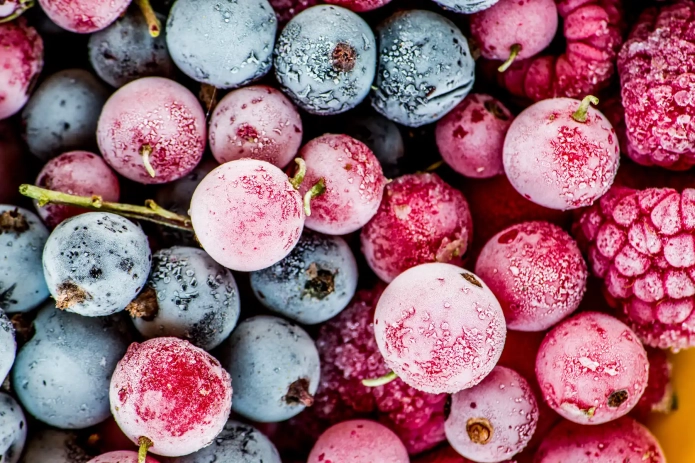
But here’s a simple and smart solution: freeze them. Freezing is a brilliant way to keep your favourite summer fruits from going to waste. It means you can enjoy their delicious flavour long after summer is gone. Let’s find out how freezing works, how to do it properly, and which fruits freeze best.
Why freezing works like magic
When it comes to preserving nutrients and the look and feel of fruit, freezing is considered by many scientists, farmers, and home cooks to be the very best method.16 It is quick and convenient and preserves most of the nutrients and flavours of most types of summer fruits.
You might think that freezing is just about making things cold. But it’s also a clever way to maintain freshness for longer. When you freeze food, you essentially put it into a deep sleep. The cold temperature slows down all the natural processes that cause fruit to spoil. This means that freezing helps to keep the important nutrients, wonderful flavours, and even the appearance of fruit almost as good as fresh.2
When done properly, fruit frozen at home can be stored for around 3 - 4 months, while still preserving most of its nutritional quality and extending its shelf life.12
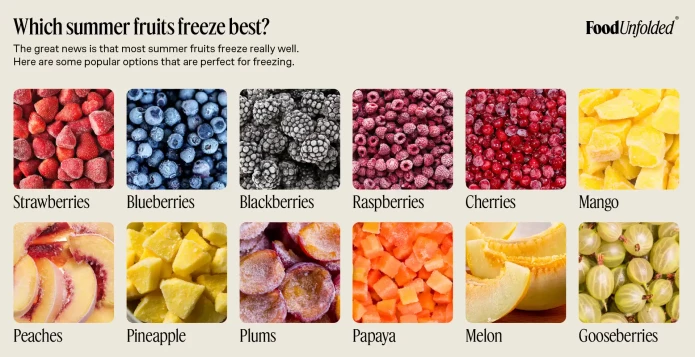
Step-by-step guide to freezing fresh fruit
Freezing fruit at home is simple. Here’s how to do it:
Choose fresh: The very best time to freeze your fruit is as soon as you buy (or pick) it. Select ripe fruit free from bruises or bad bits. Only use fruit you’d be happy to eat yourself. Old or wrinkly fruit will not magically get better in the freezer!
Rinse and dry: First, wash your fruits under cold water to make sure they are clean. Then, drain any extra water and pat them dry with a paper towel. Make sure they are well dried to help prevent any extra ice crystals from forming.4
Prepare: Some fruits need a little prep before freezing. For example, bananas, melons, and pineapples are best when peeled and sliced before freezing. For fruits like peaches, nectarines, plums, and apricots, it’s important to cut them in half and remove the pits before slicing. For strawberries, remove the stalks. You can freeze them whole or in halves. A little preparation with your fruits makes them easier to store and use later.
.webp)
Flash freeze: To stop fruits from sticking and clumping together, freezing them on a tray is the best option. For fruits like berries, cherries, grapes, melon or pineapple chunks, spread them out on a single layer on a baking tray lined with parchment paper. Make sure each piece of fruit has its own space and freeze them until they are completely solid.5 The recommended temperature for freezing fresh fruit at home is –18 degrees Celsius, which is the standard temperature for home freezers in Europe.
It’s all about the crystals
When fruit is frozen on trays (in a cold freezer) and kept at a constant cold temperature, small ice crystals are formed evenly inside and outside the fruit cells. This method is known as flash freezing and helps minimise damage to the texture. The size of the ice crystals impacts the quality of frozen fruit. Small ice crystals are best to preserve texture and flavour.
If fruit is put into a freezer that is not cold enough, larger ice crystals will form. These large crystals rupture food cells, causing the fruit to have a soft or mushy texture. It also impacts the fruit’s colour and flavour.1
Bag it up: Once your fruit is frozen solid, transfer it into a suitable freeze-safe bag or plastic container. If you are using a bag, try to push out as much air as possible before sealing the bag. This prevents freezer burn, which can cause your fruit to taste off.7
Label and freeze: Frozen foods without labels often end up in the back of the freezer, because nobody wants to take that risk! Don’t let your fruit become UFOs (Unidentified Frozen Objects).3 Write the current date clearly on the front of the bag or box. You can also add a use-by date, remembering that frozen fruits are best used within 3-4 months.
Defrost with care: The best way to defrost fruit is to remove it from the freezer and place it in the fridge overnight. This allows the fruit to defrost slowly and retain its texture. Try to avoid defrosting at room temperature as bacteria can grow again at higher temperatures.8 It also impacts the texture. Likewise, defrosting in the microwave will result in mushier fruit, so it’s not a good option unless you are in a rush.2
.webp)
Freeze once, not twice
Refreezing fruit is generally not recommended as it’s likely to go mushy when defrosted and refrozen.5
Chill out: Easy tips for freezing fruit
Store in portions: Storing fruit in snack-sized or recipe-sized portions is a good idea for home use. By flash freezing first on a tray, you can easily scoop out portions of fruit for smoothies, baking, or yoghurt bowls. This means you won’t have any waste, and it saves you from opening and closing giant bags of fruit, which could cause the food to partially defrost.
Select the right containers or bags: Proper packaging is key to protecting the colour, flavour, juiciness, and nutrients of your fruit. Reusable freezer bags are a great option, as they are sealable, reusable, and compact. They can be stored flat, like a book, so they don’t take up too much space. Don’t forget to push out as much air as you can before sealing.
Freezer-grade plastic bags with plastic or zip seals are another great option for storing fruit. These are hard to reuse, so investing in reusable bags might save you money and be better for the planet in the long run.
Rigid plastic containers with an airtight lid are also a good way to store fruits. Try to buy ones with straight sides or stackable ones to maximise space in your freezer.89
Whichever one you choose, containers or bags must be:
- moisture resistant
- durable and leak-proof
- made of freezer-grade material
- easy to seal and label
- appropriate size
To blanch or not to blanch
Blanching means quickly putting food in boiling water, followed by rapid cooling in ice water. Most people blanch vegetables before freezing. This is to kill bacteria and slow the enzymes, which might impact quality and taste. Blanching also preserves the colour.
But the good news is that you don’t need to do this with summer fruits. They have the right amount of natural sugar and acid to keep them fresh and colourful without the need for blanching.6
Using your frozen summer goodies
Now for the fun part: eating and enjoying your summer fruits. Here are some delicious ideas to get you started.
Smoothies: Frozen fruit is ideal for smoothies because it blends into a thick, cold drink without the need for ice, which can dilute the flavour.
Brilliant baking additions: Having frozen fruit in the freezer means you always have nutritious fruits for baking. Add frozen fruits directly to muffins, pies or crumbles for a burst of flavour.
Fancy compotes and sauces: Gently simmer frozen berries with a little water (and some sugar or honey if you prefer) to create lovely compotes or sauces for pancakes, ice cream, or yoghurt.
Use as a stir-in sweetener: Stir frozen fruit into your morning yoghurt, overnight oats, or porridge for a hit of natural sweetness.
Make it into a quick nice cream or sorbet: Blitz up frozen bananas for a sweet frozen treat that tastes like ice cream. You can also do the same for berries, blend them in a food processor to create a quick fruit sorbet.
Fruity water: Instead of ice, add frozen berries and some fresh mint leaves to a large jug of water for a refreshing summer drink.
From surplus to sustainable
Freezing fruit isn’t just convenient, it’s also a good way to make use of great produce and not let it go to waste. This summer is a great time to save the best fruits of the season, so that we can waste less and more easily eat locally and seasonally throughout the year.
Be a food waste hero: Fruit is one of the most wasted foods in Europe, with over 27% of fruit getting tossed in the bin.10Freezing fruit before it goes off is a powerful step to reduce food waste at home.
Eat locally and seasonally: Eating seasonally is good for the planet and our bodies. By freezing produce when it’s fresh and cheap, we’re able to eat local fruits all year round. During winter, when you crave some summer fruits, just reach into the freezer instead of buying fruits grown in faraway countries. The fruits you’ve frozen will keep their summer sweetness and vitamins. It’s a smart choice for both you and the planet.
Smart shopping: When there is a huge amount of fruit in the summer, you can buy it in bulk, knowing that you can easily freeze the extra. This supports local growers and markets who have fields of fruit that are perfectly ripe but have a short shelf life.
Preserve freshness, live green
Freezing summer fruit is a simple and effective way to preserve seasonal fruit, reduce waste, and eat more sustainably. Most summer fruits freeze well with little preparation, and when done properly, their nutrients and flavour are largely preserved. Plus, frozen fruit is incredibly versatile and easy to use in all sorts of delicious meals and snacks. By adopting this simple habit, you’re not just stocking your freezer with healthy snacks; you’re eating sustainably and can enjoy the taste of summer during the cold months of the year. These small actions at home are simple, sustainable choices that really make a difference.