Imagine this: you come home after a long day. You want a healthy and tasty meal on the table, but the last thing you feel like doing is chopping onions or peeling carrots. But then you remember you’ve got a freezer full of delicious, ready-to-go meals. Cue your comfiest pajamas and a deep sigh of relief.
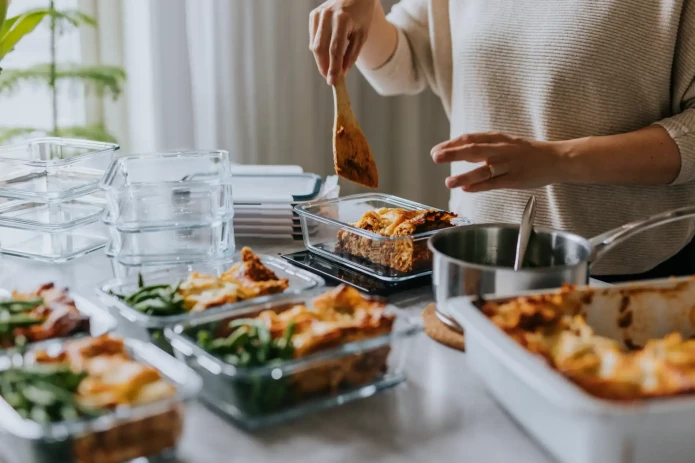
Batch cooking is all about preparing plenty of meals in advance, so you don’t have to cook from scratch every day. It’s perfect if you’re busy, watching your budget, or just want to make mealtimes easier. It can be as simple as cooking a bit extra so you can eat the leftovers another time.
There are a couple of different approaches to batch cooking and we’ll guide you through what they look like:
Bulk meal prep. This is when you cook entire meals in large amounts and store them to eat later. This is a great way to start batch cooking, and it doesn’t have to be overly complicated. For example, you cook three times as much soup as you need one night and put the extra food in the freezer for another day. Or you spend one morning a week cooking a few of your favourite meals to stock up your freezer for the future.
Ingredient prep. This is when you prepare ingredients to mix and match into different meals later on, like one of the FoodUnfolded writers did with the help of AI. You could roast lots of vegetables one day for different dishes. This method gives you more flexibility throughout the week.
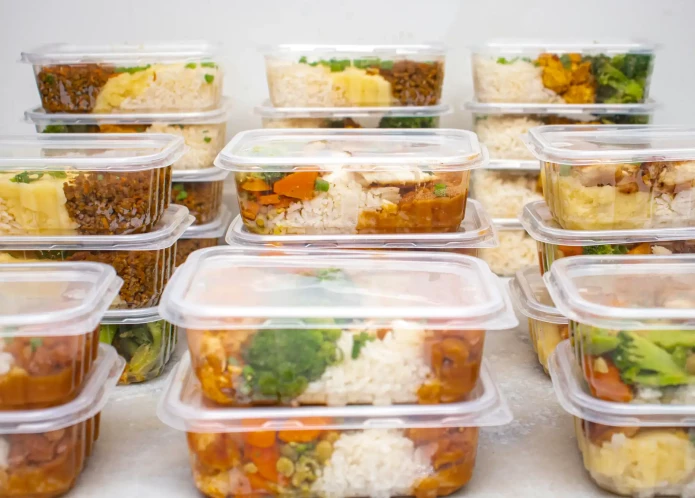
Image by Iara Melo/Pexels
Benefits of batch cooking
Batch Cooking is great for your health, your bank balance, and the planet:
- Saves time: Making twice as much doesn’t mean twice the work. It’s just a few extra chops, a little more sizzle time, and future-you gets a night off.
- Supports healthy eating: Sometimes you just need a meal to grab and go. Keeping healthy batch-cooked meals in the freezer means you can quickly heat up a homemade veggie curry or hearty stew in minutes, instead of turning to ultra-processed foods, which are often high in fat, sugar, and salt.1
- Prevents food waste: Did you know that up to 40% of food never gets eaten?2 When a recipe only calls for half a tin of tomatoes, it’s easy to forget the rest until it ends up in the bin. But doubling the recipe makes you less likely to have that problem.
- Cost-effective: Buying ingredients in bigger amounts can save money, as long as you use them up! Batch cooking on a budget means you’ll have tasty homemade meals waiting in the freezer, so when life gets busy, you can skip the pricey takeaway and still eat well.3
The four stages of batch cooking
Batch cooking is simpler than it sounds. Just follow these four easy steps:
- Decide what to cook. A quick browse online or in a batch-cooking book will give you plenty of ideas. Choosing recipes with overlapping ingredients (like a stir-fry, lentil stew, and chickpea curry) makes shopping and prep quicker and easier. Start with three to five easy meals and build from there.
- Go shopping. Once you’ve picked your meals, write a shopping list to stay on track. Getting groceries delivered can save time and help you avoid those tempting extras. If you can, buy your fresh veggies the day before so they’re nice and crisp when you cook.45
- Get cooking. Save time by preparing all your ingredients in one go, then dive in. If you’re just going to make extra of one recipe, use your biggest pan and cook as usual.
- Cool, label and store. Let your meals cool before storing, but don’t leave them out for more than one or two hours. Add labels with the name, date, and how many portions there are, so future-you doesn’t have to be a frozen food detective. Then pop everything into the fridge or freezer.6
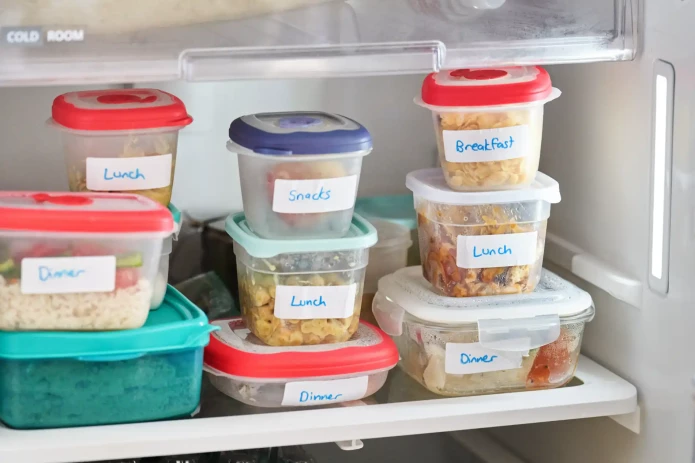
Batch cooking equipment
You don’t need to buy fancy gadgets to batch cook. Chances are, your kitchen already has most of what you need:
- A big cooking pan. If you’re planning to make big batches, a 10-litre pan is perfect. But a 5-litre one works just fine when you’re starting out. Just pick the biggest pot you’ve got and get stirring.
- Freezer-friendly containers. If you’re freezing meals, you’ll need some reusable containers or food-safe bags (disposable or reusable silicone ones both work well). The benefit of bags is that you can freeze them flat and stack them to save space. For things like lasagne or fish pie, a glass dish with a lid is a better fit.
- A way to label. Label with a permanent marker for disposable bags, or use a chalk pen for reusable containers. Once the chalk dries, it won’t rub off until you wash the bag.
- The usual kitchen kit. You’ll also need the basics like chopping boards, knives, measuring scales, or anything else your recipe calls for. Nothing too fancy, just your everyday tools.
Four tips to batch cook like a pro
Batch cooking gets easier (and quicker!) with practice. You could soon be whipping up a week’s worth of meals in under an hour. Until then, here’s a few tips to make things go smoother for you.
- Chop smart: If you need the same ingredient in multiple recipes, chop them in one go. A food processor makes chopping much faster, but isn’t essential.
- Stick with favourites: Cook recipes you already know well for a faster flow when batch cooking. Try new dishes another time, when you haven’t got a freezer to fill.
- Frozen is fab: Frozen veg is nutritious, budget-friendly, and pre-chopped for extra speed.
- Wash up as you go. Fill the sink with soapy water and wash as you go. You can reuse utensils and avoid a big cleanup at the end.
Quick Tip: If you’re cooking for a baby or young child, try freezing mini portions in silicone ice cube or muffin trays. Once they’re frozen, pop them out and store them in a labelled ziplock bag to save space in the freezer.
How to freeze and defrost food safely
- Take your time: let food cool before refrigerating or freezing, but don’t leave it out too long (no more than a couple of hours) or uninvited bacteria can show up to the dinner party.7
- Freeze wisely: Spread meals out on different freezer shelves so they freeze quickly and evenly.
- Label well: Use a marker or chalk pen to note the meal, date, and any allergens. It’s easy to end up with mystery leftovers if you don’t. Aim to eat frozen meals within three months for the best taste and texture.7
- Reheat right: Cook frozen meals until they’re steaming hot all the way through. That means too hot to eat straight from the oven or microwave.7
- Defrost safely: Defrost meals in the fridge overnight, use your microwave’s defrost setting, or cook straight from frozen. Only microwave plastic if it says "microwave safe."8
- No refreezing: Once food has defrosted, don’t refreeze it. Bacteria can multiply fast, increasing the risk of food poisoning.9
Happy batch cooking!
Batch cooking doesn’t have to be a big project. Start small with these easy ideas: make double the amount for one dinner this week and freeze half, roast a few extra veggies for tomorrow’s lunch, or cook a big pot of rice or lentils to use in a few meals. You might be surprised how much time you save.
Most viewed

References
- British Heart Foundation. (2024, April 12). Ultra-processed foods: how bad are they for your health?
- World Resources Institute. (2024, March 27). How much food does the world waste?
- LendingTree. (2023, September 18). Buying in bulk could save shoppers 27%, on average — led by paper towels, water and batteries.
- Kramer, A. (1977). Effect of storage on nutritive value of food. Journal of Food Quality, 1(1), 23–55.
- Brown, M. J. (2017, June 15). Fresh vs Frozen Fruit and Vegetables — Which Are Healthier? Healthline.
- Food Standards Scotland. (n.d.). Chilling [Consumer advice page]. Retrieved June 15, 2025, from
- Safefood. (n.d.). Storing food in the freezer. Retrieved May 7, 2025, from
- U.S. Department of Agriculture, Food Safety and Inspection Service. (n.d.). The Big Thaw — Safe defrosting methods. Retrieved May 7, 2025, from
- Food Standards Agency. (2024, June 12). How to chill, freeze and defrost food safely
Do you care about thefood system?
Take part in our Annual Survey 2025
Take the survey