Every time we eat, we’re not just feeding ourselves; we’re also using land, water and energy. From growing crops to raising animals, the way we produce food affects our planet and broader environment. Some foods create more greenhouse gas emissions than others, use more water, or take up more space to grow.
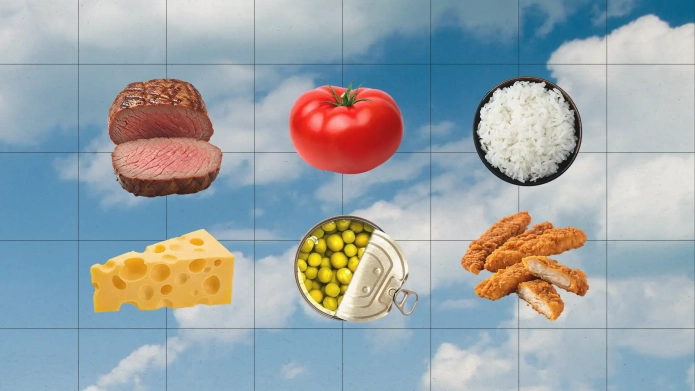
Understanding the climate cost of everyday foods can help us make smarter choices. This doesn’t mean cutting out your favourite meals. It means knowing the impact behind them — and finding ways to eat in a way that’s better for you and for the planet.
What we mean by climate cost
When we talk about a food’s climate cost, we’re mostly talking about:
- Greenhouse gas emissions (measured in kilograms of CO₂ equivalents per kilogram of food)
- Water use (how many litres it takes to grow or raise that food)
- Land use (how much space is needed to produce it)
Let’s look at common foods and see how they compare.
1. Beef
High in protein, but also high in emissions
Beef is one of the most climate-intensive foods we eat. Producing just 1 kilogram of beef creates about 99 kilograms of greenhouse gases (equivalent to driving 201 kilometers in a petrol car, approximately the distance from Brussels to Amsterdam), mainly from methane released by cows and emissions from growing animal feed.1 It also needs around 1,451 liters of water (around 10 bathtubs) to produce that same amount.2
Beef farming uses a lot of land, not just for the cows, but also to grow their feed. This has been linked to deforestation and biodiversity loss in many parts of the world.
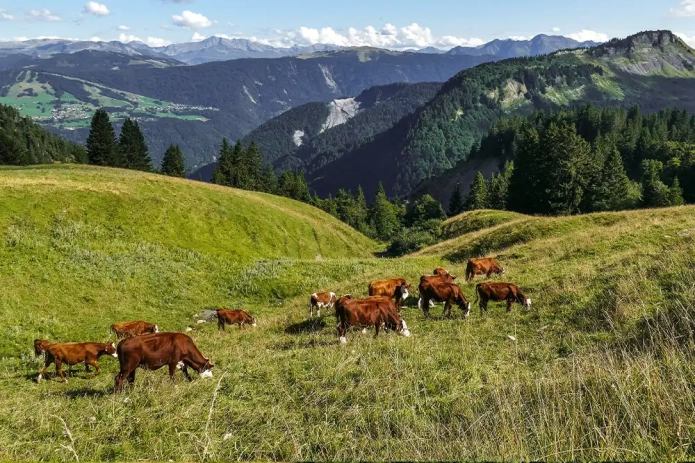
Cattle grazing in Le Merdassier, France. Beef requires 20 times more land and emits 20 times more GHG emissions per gram of edible protein than common plant proteins, such as beans. Photo via Getty Images.
Lower-impact option: Try swapping some beef meals for lentils, beans or tofu. Chicken or eggs can also be lower-impact animal-based alternatives, with around 6–7 kg of CO₂e per kg — about five to ten times less than beef.
Want to make sure you're still getting enough protein while swapping some meals? Discover simple ways to fuel your body and support the planet here.
2. Cheese
Surprisingly impactful for such a small bite
Cheese might not seem like a climate-heavy food, but it’s made from milk — and lots of it. To make 1 kilogram of hard cheese, it takes about 10 litres of milk. This means cheese has a fairly high carbon footprint, with around 23 kilograms of CO₂ equivalents per kilogram of cheese (roughly the same as driving a petrol car from Brussels to Bruges).1 Water use depends on the type of cheese, but the average is 5,600 litres per kilo, (around 37 bathtubs of water).2
Cheese also needs refrigeration during transport and storage, which adds to its impact.
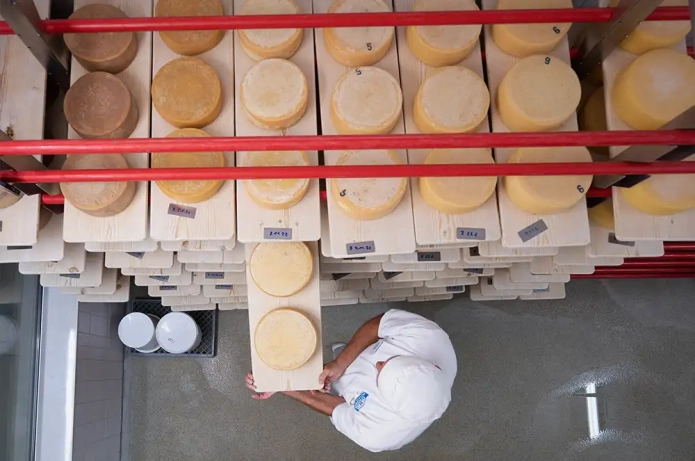
Lower-impact option: Eat cheese less often or in smaller portions. While some plant-based cheese alternatives are improving in taste and climate footprint, they can also be ultra-processed, so it’s worth checking labels and ingredients. Another option is to choose fresh European cheeses like mozzarella, ricotta or feta. These are typically less processed, require less milk, and often have a lower carbon and water footprint than aged, hard cheeses like cheddar or parmesan. Especially when they’re made locally and seasonally, reducing transport and storage emissions.
3. Peas
Don’t underestimate the humble pea
Producing one kilogram of peas releases just 0.98 kilograms of CO₂ equivalents — about the same as driving 6 kilometres, roughly the distance of a short city commute or a countryside bike ride.1
Water use is also modest, at 397 litres per kilogram, or around 2.5 bathtubs' worth, making peas one of the most resource-efficient plant-based proteins.
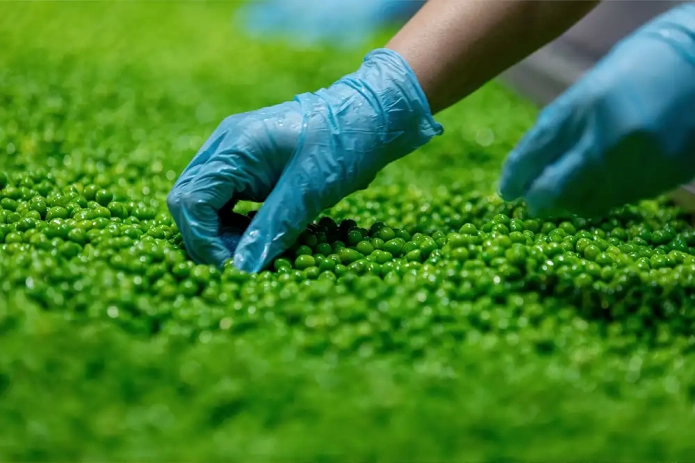
Lower-impact option: Peas are already a low-impact food, but choosing dried, canned or frozen varieties can further reduce their footprint. These options last longer, helping to cut down on food waste, and are often transported more efficiently by ship rather than by air. Choosing in-season or locally grown peas adds another layer of sustainability.
4. Chicken
A lower-impact meat, but not impact-free
Poultry meat produces an average of 9.9 kilograms of CO₂ equivalents per kilogram of meat, which is roughly the same as driving 60 kilometres in a petrol car, roughly the distance between Milan and Bergamo.1 It also requires around 660 litres of water, or about 4.5 bathtubs, which is significantly lower than beef or cheese.2
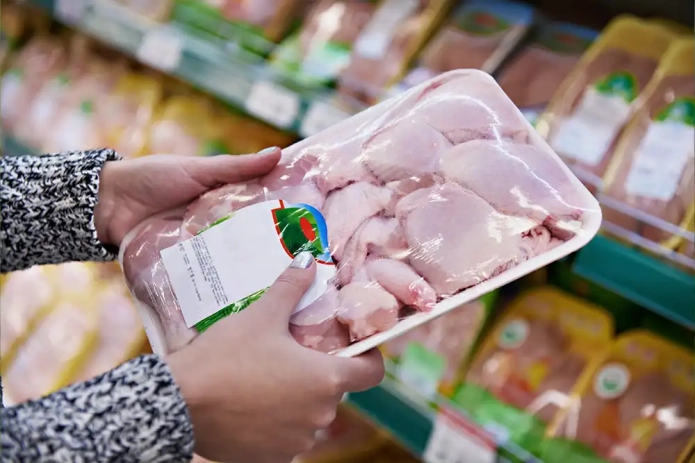
Lower-impact option: While chicken still has a notable footprint, it’s a considerably less intensive choice than red meat. Swapping beef for chicken every now and then can help reduce the overall environmental impact of your meals.
5. Rice
A staple with a surprising footprint
Rice is a major staple food globally, but environmentally, it’s not as light as it might seem. Producing 1 kilogram of rice releases around 4 kg of CO₂ equivalents, more than most grains and legumes.1 This is mainly due to methane emissions from flooded paddy fields, especially in tropical climates, where temperatures are high.
Water use is also significant: it takes about 2,500 litres of water to produce just 1 kilogram of rice — that’s around 16 bathtubs’ worth.2 Land use, on the other hand, is moderate compared to animal-based foods.
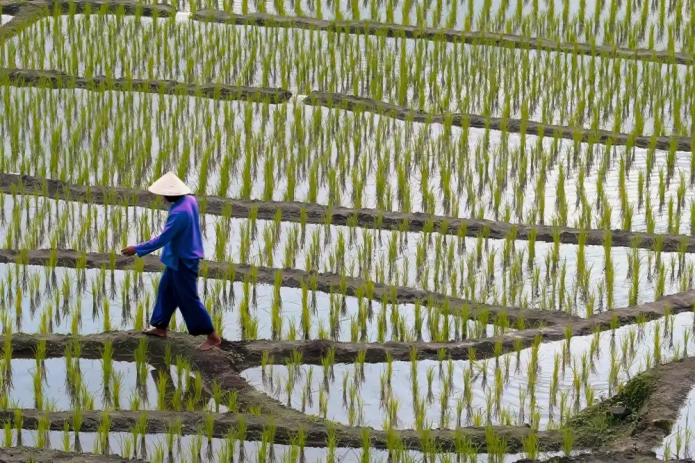
Lower-impact option: consider switching to other grains like oats, barley or wheat where possible. These tend to have lower greenhouse gas emissions and use less water, while still being versatile and filling.
6. Tomatoes
Low-impact if local and seasonal
Tomatoes are low in emissions, especially when grown in-season and outdoors. Producing 1 kilogram of field-grown tomatoes creates about 2 kilograms of CO₂ equivalents.1 That’s 15-30 times less than beef.
But not all tomatoes are equal. When grown in heated greenhouses, especially out of season or in colder countries, the footprint can be much higher: up to 9 times more emissions in some cases.4
Water use for tomatoes is around 370 litres per kilogram (around 2.5 bathtubs), depending on where and how they’re grown.2
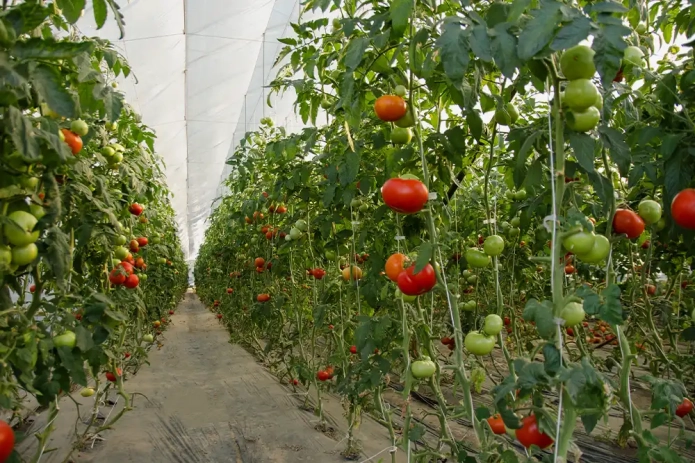
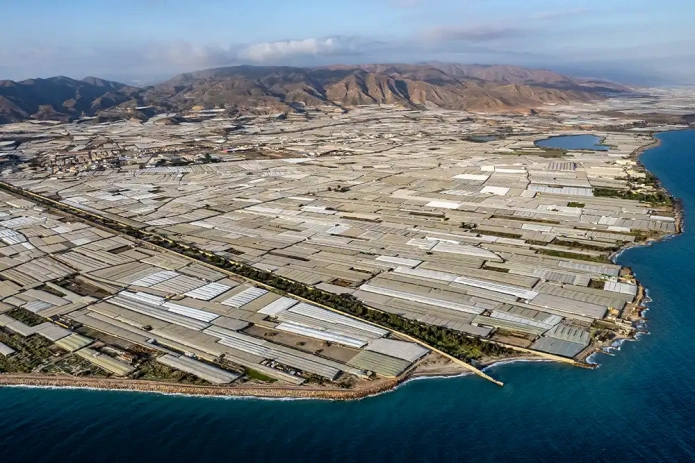
Lower-impact option: Choose local, seasonal tomatoes grown without heated greenhouses, which are energy-intensive to maintain, especially in colder climates. In winter, canned or jarred tomatoes from Mediterranean countries can be a better choice than fresh tomatoes grown out of season in artificially heated environments. So, check the food label to see where your tomatoes were grown. This can help you make lower-impact choices more easily.
What can I do with this information?
Eating sustainably isn’t about being perfect. It’s about small choices that add up. Here are some simple things you can try:
- Mix it up: Try a plant-based meal once or twice a week. It’s a fun way to challenge yourself and there are many recipes available online where vegetables take centre stage.
- Eat with the seasons: Seasonal foods often have a lower footprint and they taste better too.
- Be mindful with meat and dairy: Enjoy them occasionally and explore alternatives, such as pulses, tofu, tempeh, grains, or pre-prepared plant-based alternatives made with simple ingredients.
If this is your first time exploring the climate cost of food, don’t worry; the goal isn’t to change your diet overnight. It’s about recognising the impact behind everyday foods and making small shifts where it makes sense for you. Whether that means choosing in-season produce, trying a new protein now and then, or reading a label a bit more closely, every step counts.
- Think beyond fresh: As mentioned earlier with peas, canned, dried or frozen foods can have a lower impact because they last longer, are less likely to be wasted, and can be transported and stored more efficiently.
- Check labels and choose local when possible: While transport emissions are usually a small part of a food's total climate footprint, choosing locally grown produce can still help reduce impacts, especially for foods that are flown in from far away. For example, apples grown nearby are likely to have a lower transport footprint than those flown in from Chile. Checking the label is a simple way to make more informed choices.
Every food has a story. By simply asking "what’s the climate cost of this?" you’re already helping build a better food system.

Most viewed

References
Do you care about thefood system?
Take part in our Annual Survey 2025
Take the survey