Have you ever wondered why some foods feel special and cost a lot, while others are just part of everyday meals? Why do oysters, which are simple and often served raw, cost so much more than other dishes that take time and effort to prepare? And why do some foods, that were once common or cheap, suddenly become signs of wealth and luxury?

Food tells us a lot about who we are. What counts as luxury food is deeply tied to our society, history, and even our hopes and dreams. Let’s explore how foods earn their fancy reputations and how these food trends constantly change. And let's take a look at what products might become luxurious in the future.
A little bit of history
Let’s go back in time and see how luxury foods have changed over the years. We’ll look at some common food that people used to eat every day, but are now considered fancy. And some items that used to be just for the kings and queens, but are now in everyone's shopping basket.
The party pineapple
Back in the 18th century, pineapples were incredibly rare in Europe. The price of a single fruit could equal thousands of euros today.1 Pineapples were expensive because they had to be grown in heated glasshouses. They were costly and difficult to produce. This unusual fruit was so special that people didn’t even eat it. Instead, they showed them off like trophies. They were placed on a table at special occasions just to impress the guests. The fruit became known as “King Pine” as it was considered almost royal. Wealthy people sometimes rented pineapples to show them off at dinner parties. But as soon as steamships started to import pineapples from the colonies, delivery became easier, and prices dropped. Suddenly, the pineapple was no longer the prized luxury item it once was.2

Oysters for everyone
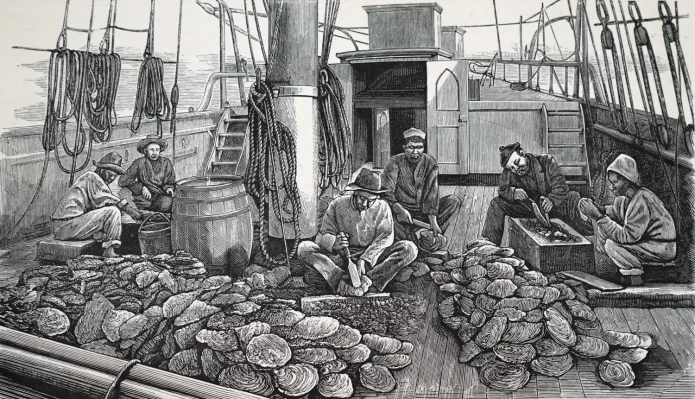
Oysters have an equally interesting story. In the 18th and 19th centuries, oysters were considered a cheap meat substitute. Anyone could afford them, and they were added to stews and pies to bulk them up — just like you would mushrooms or vegetables today.3
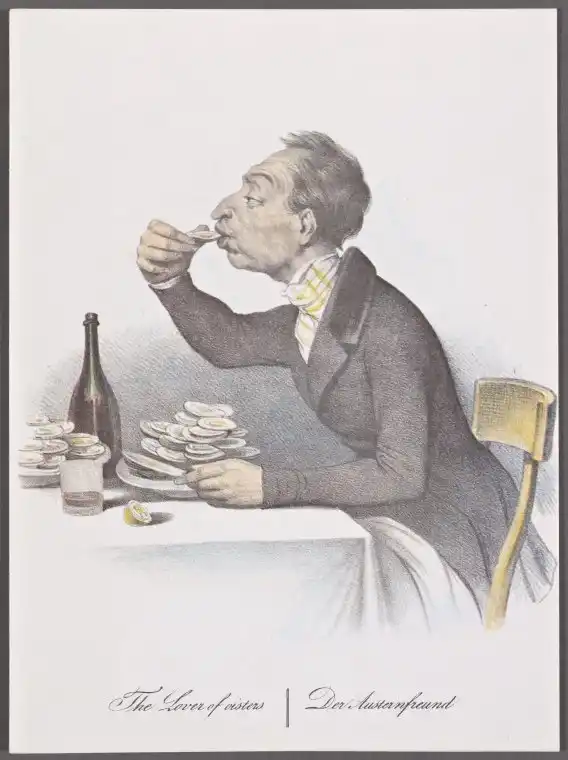
But overfishing and pollution changed that. Fresh oysters became rare and the value perception changed.4 Because fewer oysters were available, they became more valuable — and that made people want them even more. This once common seafood was suddenly a status symbol. Today they remain expensive, but not to the same extent as in the early 20th Century. That said, oysters are still associated with luxury and fine dining.
Sugar, tea, coffee, and cocoa
In the earlier colonial period, only the wealthy could afford chocolate, tea, coffee, and sugar.
These cupboard staples were once just expensive gifts from exotic countries. Rich people were the first to add sugar to their tea, and many others copied them as it was a sign of status and wealth. Europeans wanted these exotic ingredients so badly that they took control of lands where they grew. Sadly, these foods were often grown using enslaved people who were forced to work without pay. As production increased, costs dropped, and tea, coffee, sugar, and cocoa became affordable to all classes. What was once a luxury item, is now a common staple in our kitchens.1 But their luxury status lingers especially in high-end gift sets and gourmet chocolate boxes.
Lobster
Surprisingly, lobster used to be considered undesirable. It was so plentiful on the US East Coast that it was used as fertiliser and fed to prisoners. It was the railways which transformed lobster into a luxury food. Railway companies needed cheap, easy-to-store foods for long railway journeys. Canned lobster was the perfect, easy-to-prepare protein. Wealthy passengers were unaware of its bad reputation and soon developed a taste for it. By the late 19th century, lobster became an expensive ingredient only served in fine dining restaurants. 4
Quinoa
Quinoa has been around for about 5,000 years and was first grown in the Andean region of South America, specifically Bolivia, Ecuador, Chile, and Peru.5 It was a staple food, but not highly regarded and was often called “dirty” food.6 But, as soon as it became popular in the US and Europe, global demand increased and prices skyrocketed.6
Super popular superfoods
In Western culture, quinoa became known as a superfood. Its high protein and gluten-free status made it attractive to health-conscious consumers. Sadly, this made it too expensive for some of the local farmers and families in Bolivia who relied on this food. Similarly, açaí berries from Brazil gained huge popularity as a superfood packed with antioxidants, minerals, and vitamins. They are a staple in Brazil, particularly the Amazon region, but the increased demand from Europe and North America is hurting the environment in the Amazon forest. This shows how foods can become luxury items in one place, while becoming harder to access in another.6 7
What makes a food luxurious?
So what makes a food fancy? Several factors work together and can transform an everyday ingredient into a high-priced sensation very quickly.
Scarcity
When food is hard to come by, it naturally becomes more valuable. This scarcity can be due to environmental challenges or difficulty in production, like the pineapple, for example. It was not possible to grow pineapples easily in Europe, so the fact that they were hard to get made them luxurious.
Cost
Luxury foods are often expensive. The high price limits access and makes them exclusive. High costs can be due to many reasons. Foods that involve a lot of specialised labour and conditions can result in costly products. Japanese Wagyu beef is a luxury food as it’s a very specialised food that’s expensive to produce and requires expert care.8
Effort to produce
Foods that take a lot of work or special skills to grow or harvest become premium items. Saffron, for example, takes a lot of effort to harvest. It comes from the Crocus sativus flower. Producing saffron involves picking the flowers and harvesting the delicate saffron threads by hand.9

Did you know?
Wild truffles are considered a luxury item, as they can’t be farmed easily and are difficult to forage. Because of this, truffles are highly valued.
Exotic foods
Bringing exotic foods from distant lands immediately gives them an air of mystery and luxury. People made trade routes based on things they wanted, like spices, tea and coffee.1 This desire for different and exotic foods, together with the high price of global trade can make an item luxurious. Even today, items like Italian olive oil, Spanish cheese, or French wine often feel special because of their heritage.
Marketing and trends
How food is presented and talked about makes a big difference. If food is associated with famous or influential people, or with fancy places, it can quickly turn simple foods into must-have indulgences. Social media like TikTok and Instagram can make a food trend explode overnight. Brands and retailers can market a food to make it seem exclusive or special, even if it’s not rare. They might sell it in limited amounts or do special “drops” to make people feel like they need to get it quickly and the price is worth it.10
A golden chocolate bar
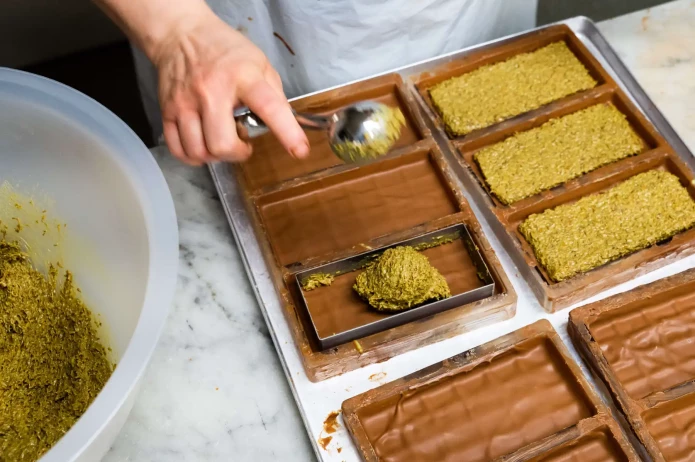
Have you ever heard of Dubai chocolate? It’s milk chocolate made with a special filling of pistachio, cream, and crunchy pastry. It’s inspired by a Middle Eastern dessert called knafeh. The chocolate took off when an influencer posted a video about it on TikTok in 2023. The video got millions of likes and views, and caused a huge demand for this treat. Because of the sudden popularity, supermarkets and chocolate companies quickly started making their own versions. Demand was so high in some stores that they had to limit how many bars people could buy. Now, Dubai chocolate has become more commonplace, and no longer the luxury food trend it once was.10
Like other food trends, such as the pineapple or the cronut (a pastry that’s a cross between a croissant and a doughnut), some quickly become popular but don’t last long, while others stick around for years.
Social copying
People often watch what rich or famous people are eating and doing and try to do the same. This can boost demand for certain foods.11 Bubble tea has become popular in recent years due to influencers and K-pop stars posting about it on social media. While this drink has been popular in Asian countries like Taiwan since the eighties, it’s only in the early 2000s that Europe started following the trend.
Luxury and identity
Food isn’t just something we eat when we’re hungry. It can also be a way of showing people who we are or who we want to be. Eating certain foods can be a sign of wealth, good taste, or belonging to a particular group. With social media, sharing food photos and videos has made this even more evident. Food has become an experience to boast about on social channels like Instagram. But even before social media, sharing food experiences and social copying have been happening for a very long time. Think of the huge feasts thrown by wealthy people in the past. This was just another way of using food to show off how rich or powerful they were.
Luxury food isn’t just about the food itself. It’s about who eats it, where it comes from, how it’s produced and how it’s marketed. Scarcity, the effort to produce it, and social trends all play a role.
Future luxury foods
One big reason some foods might become luxurious in the future is that they might be harder to produce. Climate change is already impacting many of our favourite foods and drinks, making them more expensive. Take chocolate and coffee, for example. Both of these foods are becoming harder to grow and harvest.4 Rising temperatures in Ghana and the Ivory Coast are making it difficult for farmers to grow cocoa there. Similarly, a 2017 study warns that by 2050, the areas where coffee grows in Latin America could shrink by 88%. Because of this, coffee and chocolate could become luxurious and unaffordable foods like they were in the past.12
The new luxury: caring for people and the planet
Today, a slow movement is taking place, where people are starting to think differently about what makes food valuable or luxurious. A new idea of sustainable luxury is emerging.4 People want food that is not only special but also good for the planet. They care about how food is produced. The true luxury isn’t just about how expensive or rare something is. If we think more about where our food comes from, how it’s produced, and who benefits along the way, it can give us a new way to think about value. So, next time you sip a cup of coffee or unwrap a bar of chocolate, ask yourself: What makes this food special, and who made it possible?


Most viewed
References
- Gerretsen, I. (2022, February 24). The everyday foods that could become luxuries.
- Harvard T.H. Chan School of Public Health. (n.d.). Quinoa. The Nutrition Source.
- Richardson, J. (2014, April 22). The story behind the popular superfood, quinoa. Food First
- Logiuratto, E. (2023, August 28). Acai berry craze boosts incomes in the Brazilian Amazon, but at a cost. Al Jazeera.
- Food & Wine Editors. (2023, April 18). Wagyu Beef explained — What makes this illustrious meat so expensive and is it worth the price? Food & Wine.
- Fulton, A. (2017, May 3). The secret history of the world’s priciest spice. Culture.
- Leonard-Bedwell, N. (2025, April 4). Dubai chocolate: how the trend started, and how it’s grown. The Grocer.
- Osborne, H. (2024, May 16). ‘It’s going gangbusters!’ How Britain fell in love with bubble tea. The Guardian.
- AAAS. (2017, September 11). Biggest producer of coffee could see bean‑growing land shrink nearly 90% by 2050. Science.
Do you care about thefood system?
Take part in our Annual Survey 2025
Take the survey