How many times have you run out the door for the school drop-off without even having a bite of toast? Maybe your day is full of deadlines, so you rush through lunch in front of your computer. Or perhaps you’ve found yourself at home, snacking while watching TV or scrolling through social media — not because you’re hungry, but out of habit or boredom.

These scenarios are all too common in our fast-paced world, and it’s normal to recognise yourself in one (or all) of them. But while they’re understandable, they don’t support your body’s true needs or your overall wellness.
One way to break the cycle is through intuitive eating, a lifestyle that helps you build a trusting relationship with your body’s natural signals. It’s about tuning into your hunger and fullness cues, recognising genuine nourishment needs, and slowing down to truly appreciate your food.
What is intuitive eating?
Intuitive eating is a style of eating motivated by physical reasons, relying on your connection with physical hunger and satiety cues, rather than on emotional or environmental motivators.1
It means listening to your body’s intuition about hunger and satisfaction, choosing foods that nourish you, and respecting your natural appetite and fullness signals. This approach supports balance and freedom, helping you cultivate awareness and autonomy over your eating behaviours.
In simpler terms, intuitive eating is eating when you are hungry and finishing a meal when you are comfortably full. Sounds simple, right? Well, many people struggle to understand when they are hungry or full, and some who do, choose to ignore these signals due to societal pressures. This is especially true for young women — some studies have found that young men are more likely to trust their bodies to tell them how much to eat compared to young women.1
Intuitive eating vs mindful eating – what’s the difference?
You might wonder, what’s the difference between intuitive eating and mindful eating? They complement each other but are not the same.
- Intuitive eating focuses on honouring your body’s hunger and fullness cues, deciding when and what to eat based on physical needs rather than emotions or stress.
- Mindful eating is about being present with your food—paying attention to the taste, texture, and how the food makes you feel.
Together, they help you build a healthy relationship with food and a deeper sense of self-care.
How to tell if you’re hungry, full, or just stressed
In a world full of distractions (notifications, endless to-dos, and social pressures), it’s easy to lose touch with your body’s signals. But your body communicates constantly through physical sensations and feelings that tell you if you need fuel or rest.
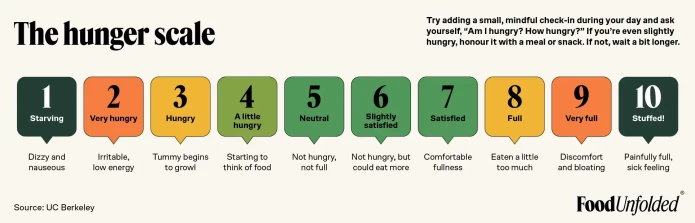
Hunger cues might include a growling stomach, low energy, difficulty focusing, or even irritability. Recognising these helps you respond before hunger becomes urgent, avoiding overeating later.
Fullness cues are more subtle — a gentle sense of satisfaction, feeling comfortably content but not stuffed. Learning to recognise this “just enough” feeling helps prevent overeating and supports digestion.
Emotional and environmental triggers
Our eating habits are not just shaped by hunger and fullness. Emotions and environment play huge roles, too.
- Emotional triggers: We often eat for reasons other than hunger, like stress, boredom, loneliness, or anxiety. You might find yourself snacking while scrolling social media or reaching for comfort foods after a tough day. Conversely, emotions like stress or sadness can also suppress your appetite, making you skip meals unintentionally.
- Environmental triggers: The people and settings around you impact when and what you eat. Social events, habitual snack times, or even watching TV can prompt eating without true hunger. On the other hand, busy schedules or environments where eating feels inconvenient can cause you to ignore hunger and delay meals.
Awareness of these triggers helps you build trust with your body and regain control over your eating choices.
10 steps to intuitive eating
- Find an alternative to diets
Many people may struggle with following diet plans, as they can seem restrictive, too structured, or they simply aren’t a sustainable option for the long-term. Intuitive eating gives an alternative to diet plans, encouraging nutritious food and trying out different meals, without having to stick to a certain plan or timetable. - Feed your hunger before it roars
When you wait too long to eat, your body goes into survival mode, and suddenly moderation flies out the window. The key is to catch hunger early—before you’re ravenous. Listen for those first signs, and give your body what it needs. - Make peace with food
Ever noticed how a “forbidden” food becomes the only thing you can think about? When you give yourself unconditional permission to eat what you truly want, the power struggle fades. Enjoy food and view it as something that is nourishing your body. This will guide you towards making healthier choices, while enjoying a sweet treat every now and then. - Find the satisfaction factor
Food isn’t just fuel, it’s pleasure and enjoyment. When you eat food you enjoy, in a calm, inviting setting, you feel more satisfied and can tune into your senses. This means you can more easily understand what your body is craving, how hungry you are and when you are full — meaning you are more likely to eat the food you need and in the right amounts. - Listen for “just enough”
Fullness isn’t a switch that suddenly flips, it’s a gentle signal that grows. Pause halfway through a meal, notice how your body feels, and ask yourself if you’re comfortably satisfied. - Challenge your inner voice
You might notice a voice in your head guiding what you eat or how you feel about food. Pay attention to it and practice speaking to yourself with positive, supportive language, especially around food. - Be kind to your feelings
We’ve all turned to food for comfort — it’s human. But it’s worth remembering that while food might soothe for a moment, it can’t fix stress, loneliness, or boredom. Instead, try finding other ways to care for yourself: call a friend, take a walk, or curl up with a good book. - Respect your body
Bodies come in all shapes and sizes, just like feet come in different shoe sizes. Expecting yours to be something it’s not only creates frustration. Treat your body with dignity, exactly as it is right now. - Move because it feels good
Choose movement that makes you feel alive — whether that’s dancing in your living room, hiking, or stretching in the sunshine. Combining enjoyable movement with nourishing food is a simple way to support a happy, balanced lifestyle. - Nourish your health gently
Healthy eating isn’t about being perfect — it’s about patterns over time. One snack or meal won’t make or break your health. Choose foods that you enjoy and that make you feel good, and remember: progress matters more than perfection.
What is the 80/20 rule of intuitive eating?
A popular concept within intuitive eating is the 80/20 rule — aiming to nourish your body with wholesome, satisfying foods about 80% of the time, while allowing 20% for indulgence and pleasure. This balance supports both physical health and mental freedom without rigid restriction.
Adapting intuitive eating to a busy schedule
Schedule check-ins
You might wonder, “How do I practice intuitive eating with a hectic lifestyle?” The good news is that it’s more about a mindset shift than extra time.
Try adding a small, mindful check-in during your day, like setting a reminder at work to pause and ask yourself, “Am I hungry? How hungry?” If you’re even slightly hungry, honour it with a meal or snack. If not, wait a bit longer, but stay aware. This practice builds your hunger and fullness awareness in a way that fits your lifestyle.
Over time, listening to your body will feel natural, and you may no longer need to schedule check-ins at all.
Batch-prepping meals
But what if you pause, notice your hunger… and realise you didn’t prepare lunch?
Maybe the only shop near you has limited options, and nothing appeals to you. To avoid this scenario, try batch-prepping food on a calmer day, perhaps a Sunday evening. Cook a big batch of a base carbohydrate (rice, pasta, quinoa, etc.), divide it into 4–5 lunch boxes, then pair each with a different protein, healthy fat, and vegetables. You’ll have ready-to-go lunches that still give you variety, letting you choose what you’re craving that day.
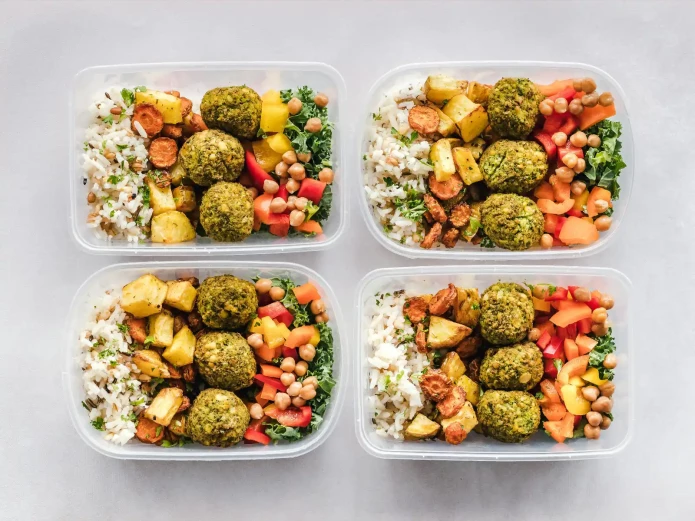
You can also flip the approach: prepare your protein, vegetables, and fat in bulk, and pair them with different carbs during the week.
If meal-prepping five meals feels like too much, a simpler option is to double your dinner portions so you have tasty leftovers ready for the next day.
The pros and cons of intuitive eating
The advantages of intuitive eating:1234
- Supports a healthy weight range: research shows intuitive eating is linked with lower BMI and weight stability, all without the rollercoaster of dieting, fitting well within a non-diet lifestyle.
- Boosts mental well-being: Intuitive eating is associated with better psychological health, including a more positive body image and lower levels of depression, promoting self-care and emotional balance.
- May improve physical health markers: Some studies suggest intuitive eating can improve blood pressure and cholesterol levels.
- Encourages healthier eating habits: Intuitive eaters often demonstrate better dietary quality and more balanced eating patterns focused on nourishment and satisfaction.
- May reduce the risk of disordered eating: By cultivating a more mindful, respectful relationship with food, intuitive eating lowers the chance of developing harmful eating behaviours or negative attitudes towards food.
The potential risks of intuitive eating:
- Overlooking nutrition quality: While intuitive eating encourages food choices that satisfy and nourish, it’s important to consider nutritional value. Focusing solely on cravings without balance can lead to missing essential nutrients your body needs to function at its best.
- Medical considerations: For certain health conditions (like diabetes, high cholesterol, or mental health challenges), intuitive eating works best when combined with professional healthcare guidance to meet nutritional needs while ensuring psychological safety.
- Difficulty adapting: It’s completely normal to feel like you are struggling to adapt to this new way of eating — new things take a while to get used to. Even though it is not a risk, this is still something to consider when taking up intuitive eating.
How to make intuitive eating a long-term habit
The key to sustaining intuitive eating in a busy life is weaving it into your daily routine in ways that feel realistic and supportive. Start small: schedule short pauses to check in with your hunger levels, keep nourishing snacks within reach, and plan simple meals that can be prepped in advance.
Build flexibility into your approach so it works with changing schedules, travel, or long workdays. Surround yourself with people, tools, and resources that help you stay connected to your body’s cues.
By making these practices part of your everyday rhythm, intuitive eating becomes second nature, even on your busiest days. And most importantly, remember: intuitive eating isn’t a short-term fix. It’s a lifelong shift toward self-care, respect, and acceptance. When you decide to say, “I trust my body, and I’m done letting food rules control me”, you have the chance to move into a balanced, joyful, and nourishing way of life.