Meal planning isn’t just about convenience and being organised. It’s also a powerful way to eat healthier, save money, and reduce food waste. If you’re new to it, don’t worry! The key is to start slow and keep things flexible. In this article, we’ll explore some simple and practical ways to make meal planning part of your week, so you can spend less time stressing about dinner and more time enjoying healthy meals.
How to get started
The wonderful thing about meal planning is that you’ve probably already done it, maybe without even realising it. When you have friends or family over for a special dinner, you might make a list, do the shopping, prep ahead so you’ll have time for chat, and maybe even have a plan for the leftovers. That’s essentially meal planning on a small scale. The trick is to make it a little more regular. Here are a few easy tips to get you started.
- Give yourself some motivation: Having a goal is a great way to keep you on track with meal planning. Are you hoping to eat healthier? Looking to waste less food and save money? Or just want to know what’s for dinner every night. Having a clear goal in your mind can help you stay focused.
- Be flexible: Meal planning doesn’t have to be a strict rulebook. You don’t need to plan every single meal for every day of the week. Start small. Try planning your lunch for the next 2 days. See how that goes and try meal planning for a few dinners next week. This can help you figure out how meal planning can fit into your life. Maybe you only need a meal plan for busy weekday dinners or work lunches. Start slowly, and you’re more likely to stick with it.
- Select time to plan and prep: Give yourself a chance by picking a time or day for planning, shopping, and preparing. For some, this might be a free morning or evening on a weekend. By doing this work ahead, you’ll have less to do during the busy week.
How to choose meals
Now for the fun bit: choosing your meals! Here are a few ways to make the planning part easy and enjoyable.
Make it adaptable: If the thought of planning out 5 or 7 meals sounds too much, use categories instead. You can decide to have different meal types on certain nights, e.g. Meatless Monday, Taco Tuesday, Pizza Friday, etc. This way, you’ll know what to shop for and have a good sense of what meal you’re cooking, but still have a little flexibility.
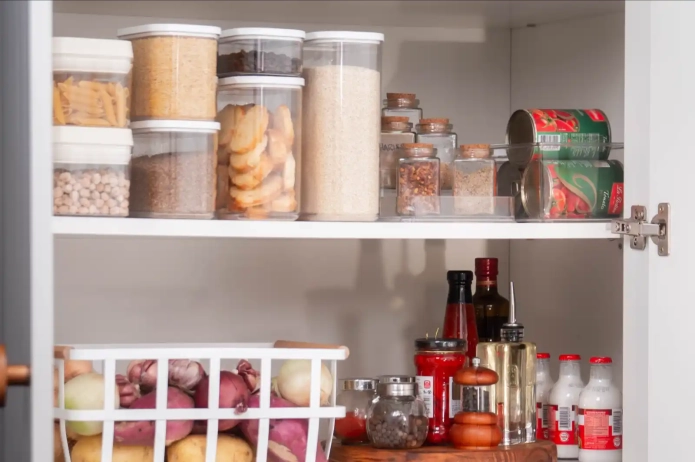
Start with what you have: A great place to begin is to shop in your own kitchen. Identify what foods you have in your fridge, freezer, and cupboards. Planning recipes around these ingredients is a great way to use what you have, reduce waste, and save money. Recipe sites, or even AI, can be useful tools to help you come up with recipes using the ingredients you have on hand.
Mix favourite recipes with new ones: Go easy on yourself. Start with familiar recipes that you know well: ones that are easy to make and that everyone will eat. Then, as you get comfortable with meal planning, try adding one or two new recipes every so often to keep things interesting.
Let cuisines guide your choices: A sauce or a cuisine can inspire multiple dishes. For example, a teriyaki sauce can be used with many different dishes, making it easier to use throughout the week. It can be served with rice, noodles, tofu, prawns, chicken, veggies, etc. Serve it with salmon and noodles one night, or add it to a stir-fry with tofu the next night. Likewise, a good taco seasoning can be used in lots of delicious Mexican dishes, such as tacos, fajitas, or enchiladas.
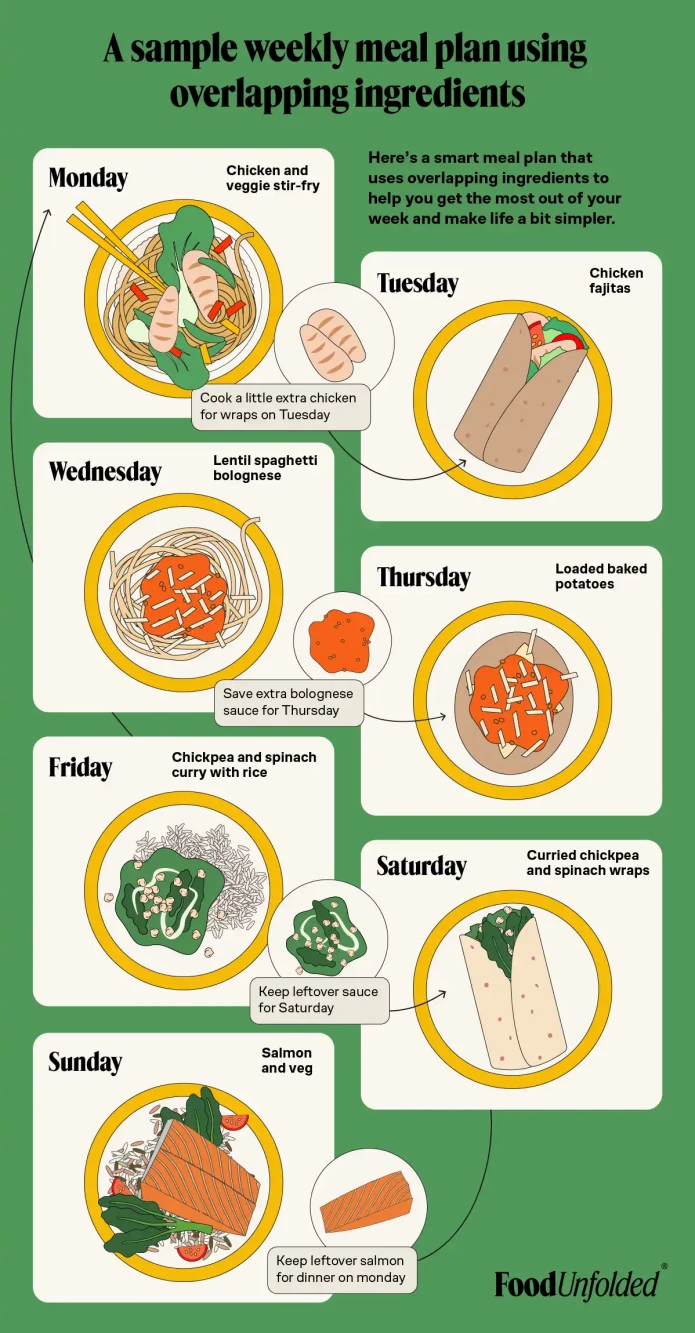
Overlapping ingredients: Think about how one ingredient can be used across multiple meals. For example, if you cook a roast chicken on Sunday, some leftover chicken can be used in a curry on Monday evening. Making a plan for leftovers saves you time, money, and keeps good food out of the bin.
Shopping and buying what you need
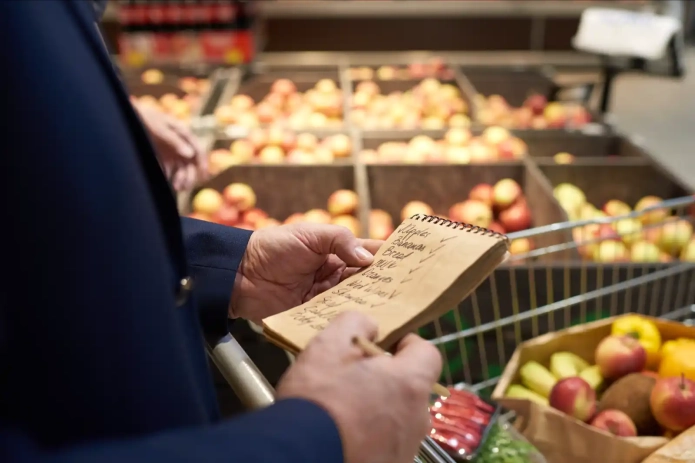
With your meal plan in mind, a thought-out grocery list is the next step. If you prefer to plan online, you could try a meal-planning app that can help organise recipes and create shopping lists. Otherwise, a simple pen and paper work just as well.
- Stick to the list: Write down every ingredient you need for your planned meals, as it can be hard to remember everything. Try to skip the “buy one get one free” offers or meal deals. Sticking to the list is a powerful way to save money and avoid food waste. If you know your supermarket well, organise your list by aisle to save you time in the shop.
- Include some frozen and canned foods: The freezer aisle is a treasure trove of convenient and healthy options, such as pre-washed and chopped frozen veggies that are ready to go into a pan. Some canned foods can also be convenient. For example, tinned beans, tuna, and salmon are all good proteins that are quick to prepare and ideal for busy nights. Always remember to rinse canned beans with water to remove any excess salt.1
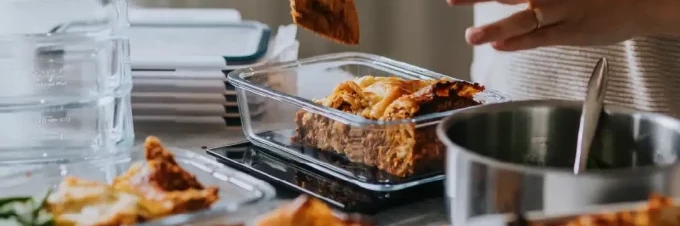
- Buy the right tools: Good quality, reusable, airtight food storage containers are brilliant for keeping your prepped food fresh and organised. Look for containers that are safe for both the freezer and microwave. Labels are also helpful for identifying what’s in your containers and when it was made, especially if you plan to freeze items.
Smart tips and tricks to master meal planning
Here are a few tricks to help you get even more out of meal planning.
Batch cooking
Cooking larger portions of dishes like soups, stews, or grains means you’ll have extra for lunches or dinners later in the week. Instead of calling them “leftovers,” think of them as “prepped food.” It can sound more appealing and help you think of leftovers differently. You can also freeze batch-cooked meals in individual portions for easy dinners on busy days.
Prep ingredients
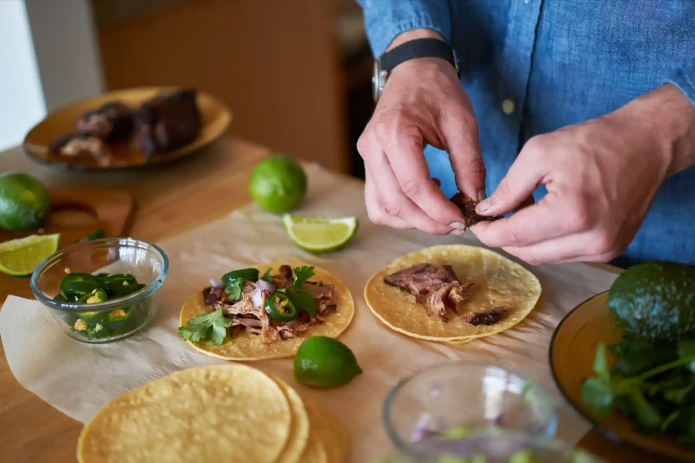
You don't have to cook entire meals in advance. You can also just work with prepped ingredients. Simply washing and chopping fruits and vegetables saves time during the week. Cooked proteins such as chicken can be cooled and stored in a Tupperware in the fridge, ready to be added to tacos, salads, curries, etc. This makes assembly quick and easy, even on hectic evenings.
Have a semi-healthy backup plan
Even the best plans can go wrong sometimes. For those unexpected crazy days, have a few easy backup options ready. This could be a frozen pizza that you can top with fresh vegetables and serve with a salad, or quick-cooking options like frozen prawns, with noodles and frozen peas. The key is to have something convenient and reasonably healthy that prevents a last-minute, less healthy option, such as a takeaway.
Prioritise fruits and veggies
Aim to make fruits and vegetables at least half of your meal whenever possible. Pre-chopping and preparing fruits makes them easily available for snacks or additions to any meal. Remember that fresh, frozen, or even canned can all count towards your five a day.2
Understand food safety
Cooked foods can generally be refrigerated in airtight containers for 3 days or frozen for 2 to 3 months, depending on the ingredients. Always store food in airtight containers and keep it out of the “danger zone” (temperatures between 8 °C and 63 °C) to prevent bacterial growth.3
Keeping it simple and sustainable
Meal planning is a flexible tool to reduce stress, food waste, and help you eat more balanced and nutritious meals regularly. It can help avoid impulsive decisions such as ordering takeaway or eating too many microwave meals. Beyond the health benefits, it can also help reduce the daily pressure of deciding what’s for dinner.
Life will inevitably get busy, and there will be weeks when your meal plan doesn’t work out as planned. That's perfectly fine! The key is to have a few “emergency” meals up your sleeve and know that you can always get back on track. The journey of meal planning is about finding out what works and adapting it to fit your life. Meal planning is a great support system that can make it easier to enjoy healthy food, waste less, and simplify your day.