Have you ever tried a protein shake after a workout, added chia seeds to your breakfast, or picked up a snack bar containing baobab fruit? These ingredients might seem pretty ordinary now, but they’re all classed as novel foods.
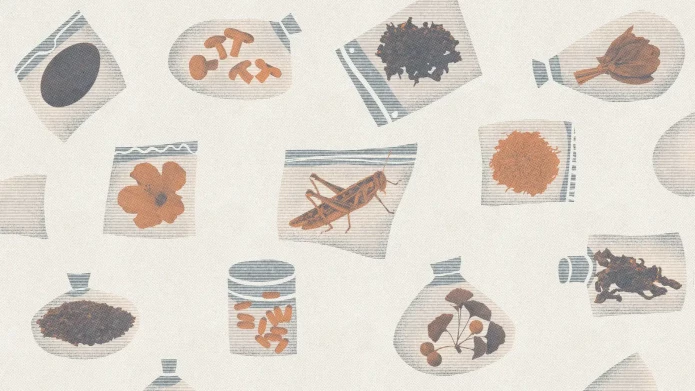
While some novel foods have become everyday staples, the list also includes ingredients that might seem unfamiliar at first glance. But surprisingly, many of these “newcomers” have been part of traditional diets for thousands of years. Others are more recent innovations that could help us meet the challenge of feeding a growing population in a healthy and sustainable way.1
So, what exactly counts as a novel food, and how are these foods regulated? Let’s take a closer look.
What counts as a novel food in Europe?
Novel foods are ingredients that weren’t commonly eaten in Europe before 1997. That’s the year the EU began officially checking and regulating new foods.2
Thanks to global trade and the development of new food innovations, exciting new ingredients were arriving in Europe, like dragon fruit and acai berries. But back then, there wasn’t a single set of regulations to check if these new foods were safe. So in 1997, the EU introduced a clear system of rules to make sure novel foods are tested, safe, and properly labelled before they reach our plates.
Since 1997, over 200 novel foods have been approved for sale in the European Union.2 Some are already on supermarket shelves, while others are still finding their place at the table. Together, they offer new ways to nourish ourselves and the planet.
Nutritious foods with a twist
Novel foods are like new guests at a dinner party. Some have already made themselves at home—like protein shakes in your gym locker or chia seeds in your breakfast bowl—while others are just arriving, carrying unusual dishes that might surprise you. These are your newcomers, such as insect protein or cultivated meat.
Which novel foods are we already eating?
You might be surprised to learn that some everyday staples in European kitchens are officially classed as novel foods. From plant-based drinks to meat alternatives, these ingredients have become so normalised that we often forget they were once considered new or unfamiliar.
Have you tried any of the following novel foods?
- Rapeseed oil (canola oil):
Rapeseed oil is a common ingredient in many kitchens, but did you know that it can be considered a novel ingredient? Cold-pressed rapeseed oil, made by gently squeezing the seeds, has been used for a long time and is not a novel food. However, rapeseed oil found in shops sometimes uses a process called “vacuum distillation” and can be considered a novel food.3 - Algae oils: Algae are tiny plants that live in water, and from them, we can get oils rich in omega-3, the good fats that support our brains and eyes. (These oils are an excellent option for people who don’t eat fish, like vegetarians.) Algae oils are also added to some baby formula and supplements.4
- Pea protein burgers: Pea protein isolate is made by taking yellow peas and using modern processes to extract the protein. This protein is then used in shakes, snacks, and meat alternatives to provide us with extra energy and support our muscles. Since 2023, the EU has authorised the fermentation of pea proteins with Shiitake mushrooms. According to some studies, this novel version can improve plant proteins' digestibility and nutritional values.5
Novel foods of the future
The following novel foods are still a bit “niche.” It’s possible to get them, but not in every supermarket.
- Insects: From roasted grasshoppers to mealworm protein powder, edible insects are rich in protein, fibre, and micronutrients. They can even be fed on food waste, making them a clever, sustainable source of protein.6 7
- Cultivated meat: Grown from animal cells in a lab using biotechnology, this meat tastes and feels like the real thing, without the need for as much land or water, or to slaughter an animal. It's currently only approved for pet food in the EU, and it still needs a lot of energy, but progress is being made.8
- 3D-printed food: Using pureed ingredients or specialised pastes, 3D printers can layer food into intricate shapes or textures. It’s still mostly used in research, restaurants, and care settings where swallowing difficulties require modified food textures.9 10
- Animal-free dairy: Made using precision fermentation, this dairy alternative contains real milk proteins like casein and whey, but without the cow. The result is milk, cheese, or ice cream that tastes like the real thing, just made in a lab with microbes instead of animals.11
Did you know?
Many novel foods still need to be perfected. For example, some meat alternatives are still energy-intensive and expensive to produce, so scientists are working to make them more sustainable and affordable.22
Novel foods with traditional roots
Some of today’s so-called “novel” foods are anything but new. Long before they hit health food shops and smoothie bars, they were everyday staples in traditional diets around the world.
Which of these have you already tried?
- Seaweed: In Japan, seaweeds like nori have been kitchen staples for generations. They’re used to wrap sushi, flavour soups, or top off rice dishes with a nutritious twist.12
Try it: Crumble dried seaweed over popcorn for a salty snack. - Teff: This tiny grain is packed with nutrients and used to make injera, a soft, spongy flatbread that’s a daily staple in Ethiopia and Eritrea.13 14
Try it: Cook teff like porridge and top with fruit and nuts for a hearty breakfast. - Jellyfish: In parts of Asia, salted and dried jellyfish are added to salads for a crunchy texture and mild, savoury flavour.15
Try it: Check out your local Asian supermarket to see if it’s in stock
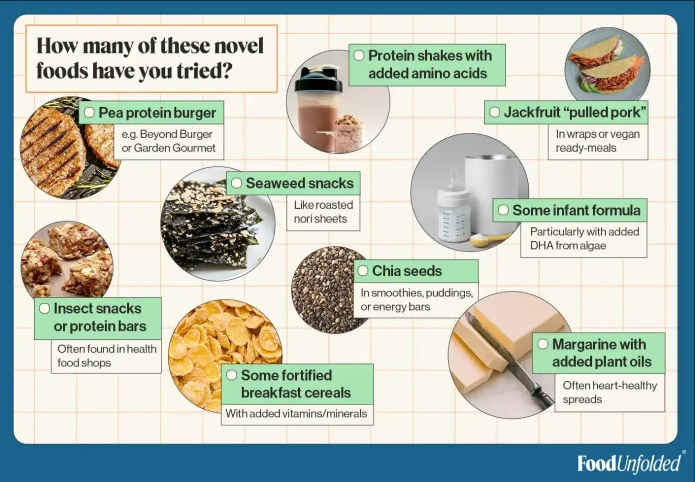
If some of these novel foods don’t appeal to you, that’s okay, you don’t have to eat them! But it’s worth remembering that if you time-travelled back to the Aztec civilisation, you’d find people eating spirulina and chia seeds (both of which we call novel foods today).
Why do we need approval processes?
If novel foods aren’t always new, why do they need to go through approval processes? The answer is simple: safety and nutrition. Companies must prove that their novel food is safe to eat and nutritionally similar to the traditional food it might replace.16
Take a cell-cultivated burger, for example. Before it can be sold in Europe, the manufacturer needs to demonstrate that the burger is safe for people to eat and that it provides nutrition comparable to a regular beef burger.
Approval processes in the EU are thorough and can take years.17 This can be frustrating and expensive, especially for small businesses. But these strict regulations are in place to protect consumers and build trust. They ensure that new, sustainable food innovations do not come with unexpected risks, whether immediate health concerns or longer-term issues, such as malnutrition.
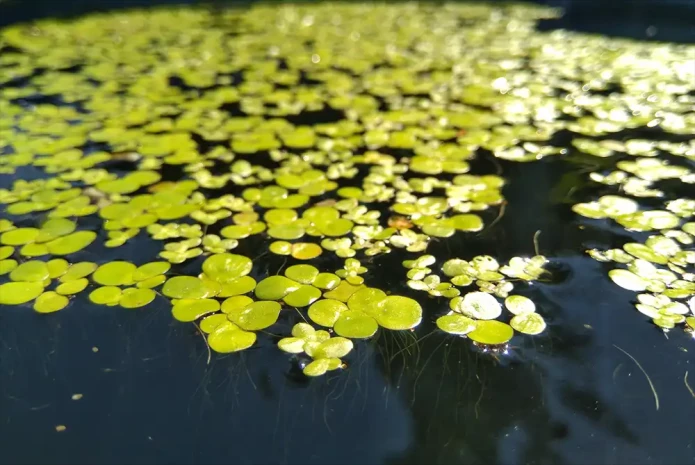
In January 2025 the European Commission added duckweed, also known as water lentils, to their list of novel foods. This means that it can now be marketed as a food ingredient in the EU. Duckweed has great promise; it contains heaps of protein, is nutritionally rich and grows quickly.
How novel foods get the green light in the EU
Before any novel food lands in your local supermarket, it has to pass a series of checks to make sure it’s safe, nutritious, and clearly labelled. Here’s how the EU gives new foods the green light:18 2
- Step 1: Application
A company applies to the European Commission, explaining:- How the food is made
- Whether it's already eaten in other parts of the world
- What scientific evidence shows it's safe and nutritious
- Step 2: Safety check
The European Food Safety Authority (EFSA) reviews the food by:- Assessing all the data provided
- Looking closely at how it’s processed
- Sometimes asking for lab tests to confirm it won’t harm our health
- Step 3: Approval
If the food passes the safety checks and legal review:- It’s approved for sale across the EU
- You might soon see it on a shop shelf near you!
Fresh ideas for a greener food future
We all need to eat, but food production puts pressure on our planet in several important ways:
- Land use: Farming animals and crops requires large areas of land, which can lead to deforestation and loss of wildlife habitats.
- Water use: Agriculture consumes huge amounts of fresh water.
- Greenhouse gases: Producing food, especially meat and dairy, releases methane and carbon dioxide that contribute to climate change.
Here’s how novel foods offer smart solutions to ease these pressures:
- Saving land: Plant-based burgers need far less space than traditional livestock farming, helping protect forests and habitats.19
- Using less water: Traditional crops like teff are naturally drought-tolerant and require less water than many modern grains, helping to ease pressure on freshwater resources.20
- Lowering emissions: Insect-based protein produces a tiny fraction of the emissions generated by beef or pork, making it a climate-friendly alternative.21
Stay informed, stay curious
It’s normal to feel unsure about unfamiliar foods, but being open to new ideas could help us create a healthier, more sustainable food future. After all, bananas and pineapples were once seen as exotic in Europe. Now they’re just part of the weekly shop. Who knows? One day, 3D-printed desserts or cell-grown chicken nuggets might be just as familiar. By staying curious and open, we can help shape a food system that’s good for people and kind to the planet.
Most viewed
References
- European Commission. (2023) Impact of the development of novel foods based on alternative sources of proteins [Funding call]. Horizon Europe
- European Food Safety Authority. (2025). Novel food. EFSA. Retrieved 2/7/25 from
- Matthäus (2007) Oil Technology, Advances in Botanical Research, Academic Press, Volume 45,Pages 483-527, ISSN 0065-2296.
- Healthline. (2020). Algae oil: Nutrition, benefits, and more. Healthline. Retrieved July 2, 2025, from
- Clark, A. J., Soni, B. K., Sharkey, B., Acree, T., Lavin, E., Bailey, H. M., Stein, H. H., Han, A., Elie, M., & Nadal, M. (2022). Shiitake mycelium fermentation improves digestibility, nutritional value, flavor and functionality of plant proteins
- Kouřimská, L., & Adámková, A. (2016). Nutritional and sensory quality of edible insects. NFS Journal, 4, 22–26
- Biteau, Bry-Chevalier, Crummett, Ryba, St. Jules (2024) Is turning food waste into insect feed an uphill climb? A review of persistent challenges, Sustainable Production and Consumption, Volume 49, Pages 492-501, ISSN 2352-5509
- University of Oxford. (2011). Lab‑grown meat would 'cut emissions and save energy' [News release]. University of Oxford. Retrieved 2/7/2025
- Katsnelson, A. (2024). 3D printed foods. ChemMatters. American Chemical Society.
- Logan, A., Watkins, P., & Bhandari, B. (2022). The 3D printing of foods – from concept to reality. CSIRO. Retrieved 2/7/25 from
- Hanghøj, T., & Liljenberg, A. L. (2023). Milk from microbes. FARSIGHT. Retrieved 2/7/25
- Healthline (2019). The Japanese diet: Benefits, food list, and meal plan. Retrieved 2/7/25 from
- Saurine, A. (2019). Did the Dutch 'steal' this African food? BBC Travel. Retrieved 2/7/25
- The Teff Company. (n.d.). How to make authentic injera – Ethiopian flatbread. Retrieved July 2, 2025, from
- Loh, P. D. (2018). Crispy, crunchy jellyfish. China Daily. Received 2/7/25 from
- European Commission. (n.d.). Novel food. Retrieved July 2, 2025, from
- Lester, H. (2023). Setting the record straight on the EU novel food approval process. Protein Production Technology. Retrieved 2/7/25 from
- European Food Safety Authority. (n.d.). Application procedures. European Food Safety Authority. Retrieved July 2, 2025, from
- Good Food Institute. (n.d.). Environmental impacts of alternative proteins. Retrieved July 2, 2025, from
- Oldach, L. (2021). Saving injera: Lessons from a teff grain’s drought-tolerant cousin. ASBMB Today. Retrieved 2/7/25 from
- Smetana, S., Bhatia, A., Batta, U., Mouhrim, N., & Tonda, A. (2023). Environmental impact potential of insect production chains for food and feed in Europe. Animal Frontiers, 13(4), 112–120.
- Oort Alonso, I. (2024). Lab-grown meat: The idea that (almost) changed the world. FoodUnfolded retrieved 2/7/25 from
Do you care about thefood system?
Take part in our Annual Survey 2025
Take the survey