Dietary fibre is a crucial component of a healthy diet, but many people don’t fully understand what it is, where it comes from, or why it matters. Fibre is a type of carbohydrate found in plant-based foods, and plays a significant role in digestion, heart health, and overall well-being.

This guide explores what dietary fibre is, its benefits, and practical ways to increase your intake.
Before we talk about fibre, let's take a step back and look at what plant foods are made of and why they matter in our diet.
Plant-based foods—like fruits, vegetables, grains, legumes, nuts, and seeds—are nutrient powerhouses, providing essential components that help our bodies function properly. They contain:
- Carbohydrates: The main energy source in plant foods, specifically from sugars and starches. Fibre is also a carbohydrate, but our bodies cannot break it down for energy.
- Proteins: Essential for growth and repair, found in legumes (like beans and lentils), nuts, and whole grains.
- Fats: Healthy fats, like those in avocados and seeds, support brain function and energy levels.
- Vitamins and minerals: Micronutrients like vitamin C (found in citrus fruits) and iron (found in spinach) help keep our bodies strong and balanced.
The main function of fibre in the plant itself is to provide mechanical strength. Fibres are strong, but also stretchy—think of a palm tree bending in a hurricane. Fibre is what keeps it grounded, yet flexible.
Wait, what about meat?
Meat does not contain fibre. Fibre is only found in plant-based foods because it comes from the cell walls of plants, which provide structure and support for the plant.
Animal products—such as meat, fish, dairy, and eggs—do not have plant cell walls and therefore contain zero dietary fibre. This is one reason why balanced diets that include plenty of plant-based foods are recommended for good gut health.
Now, back to fibre…
Now that we know fibre is unique to plant foods, let's explore why it's so essential—not just for plants, but also for us.
Dietary fibre is a type of carbohydrate found in plant foods. Our bodies can't fully digest it. Unlike other carbohydrates that break down into sugar, fibre passes through our digestive system relatively intact.
Fibre doesn’t give energy or calories like other nutrients, but it has key health benefits. Fibre is like the road crew of your digestive system—keeping everything moving smoothly and preventing uncomfortable digestive gridlocks known as constipation.
The interesting thing about fibre is that its health benefits come partly from what it doesn't do— it isn’t digested or absorbed like other foods. Instead, it plays an important role as it moves through the gut.
Types of fibre: soluble vs. insoluble
There are two types of fibre, and each plays a unique role in your body.
Soluble fibre
The best way to describe soluble fibre is to think about mixing cornstarch with water—it thickens into a gel rather than fully dissolving. In your digestive system, soluble fibre absorbs water and mixes with gastrointestinal fluids to form a gel-like substance which:
- Helps lower bad cholesterol by attaching to it in your gut¹
- Slows down digestion, which keeps blood sugar levels steady¹
- Feeds the friendly bacteria in your gut²
You'll find soluble and insoluble fibre in most plant foods.3 For example, carrots contain about 50% soluble and 50% insoluble fibre.
Insoluble fibre
If you've ever struggled to chew stringy strands in celery or the tough outer layer of whole grains like brown rice, you've met insoluble fibre. Unlike soluble fibre, it doesn’t form a gel. Instead, it stays intact as it moves through your gut, adding bulk and helping waste pass through smoothly. It works like a broom, sweeping waste through your digestive system and keeping things moving.
Insoluble fibre:
- Promotes regular bowel movements by making stool softer and easier to pass4
- Helps prevent constipation by speeding up the movement of food through the gut4
- Supports gut health by encouraging good bacteria and reducing digestive issues²
Good sources of insoluble fibre include whole wheat, nuts, beans, cauliflower, potatoes (with skin), and most vegetables.
Since most plant foods contain both types of fibre in varying amounts, eating a variety ensures you get the full range of their benefits.
Why fibre matters to you
By now, you know that fibre is important—but how does it actually impact your daily life? Fibre helps keep your digestion smooth, keeps you feeling full after meals, and supports heart health. It plays a role in how you feel every day—and in your long-term health. Here's how fibre actively supports your health:
- Supports digestive health: Fibre keeps the gut moving, prevents constipation, and helps support good gut bacteria2,4
- Lowers cholesterol: Soluble fibre helps remove excess cholesterol from the body, reducing the risk of heart disease5
- Regulates blood sugar: Slows down sugar absorption, reducing blood sugar spikes and lowering the risk of type 2 diabetes6
- Feeds the gut microbiome: (the community of bacteria in your gut )– Acts as a prebiotic, supporting good gut bacteria and improving overall gut health2
- Aids in weight management: High-fibre foods help you feel full for longer, reducing overall calorie intake4
- May reduce the risk of certain diseases: Some research suggests higher fibre intake could lower the risk of certain cancers7
The effects of not getting enough fibre often show up in everyday life—from feeling lethargic in the afternoon to experiencing digestive discomfort to finding yourself hungry shortly after eating. These daily experiences are your body's way of signalling that it might benefit from more fibre-rich foods.
So now that we know why fibre matters to you, how much do you actually need each day? Let's break it down.
How much fibre do you need?
In 2015, the UK Scientific Advisory Committee on Nutrition (SACN) recommended the following daily fibre intakes:
- 15 g/day for children aged 2–5 years
- 20 g/day for those aged 5–11 years
- 25 g/day for those aged 11–16 years
- 30 g/day for those aged 16–18 years
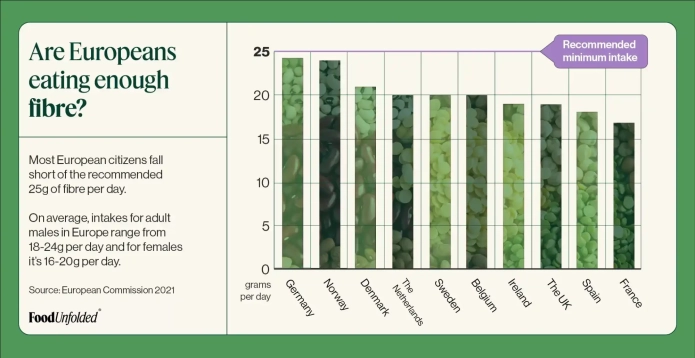
Most Europeans only consume 15-20g per day, which is significantly below the recommendation.8
Frightening fibre fact! In 2019, low-fibre diets were linked to nearly 60,000 deaths in the EU—mostly from ischaemic heart disease, stroke, and colorectal cancer.
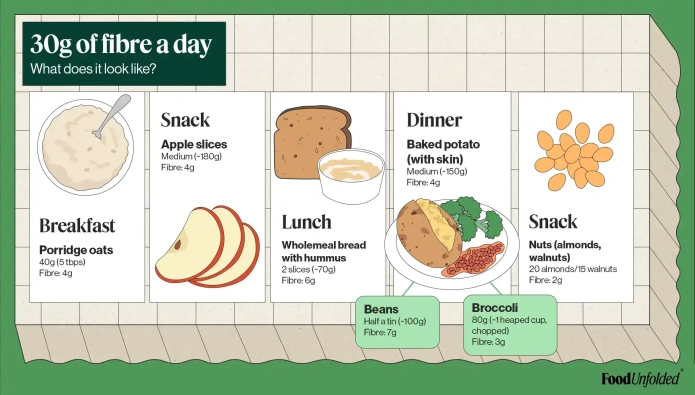
Getting to 30g: what it actually looks like in a day
It's one thing to know how much fibre you need, but what does that actually look like in real food? Here's an example of how you can reach 30g of fibre in a day—with familiar, everyday food.
Eating enough fibre shouldn’t feel like a chore
Eating enough fibre shouldn't feel like a daily chore—especially when fibre-rich foods are delicious, affordable, and easy to find. By making small, conscious choices, you can build habits that make a high-fibre diet effortless and enjoyable. Here are some practical ways to get more fibre into your daily diet in ways that feel natural and sustainable.
- Replace with whole grains: Swap white bread, rice, and pasta for whole grain versions like brown rice, oats, or quinoa. Check the label carefully: terms like “multigrain” or “made with whole grains” can be misleading—look for ingredients like “whole wheat” or “100% whole grain” listed first in the ingredients list.10
- Pile on the vegetables: Add an extra serving to each meal, whether it’s leafy greens in your sandwich or roasted veg with dinner.
- Eat more legumes: Beans, lentils, and chickpeas are fibre-rich powerhouses—stir them into soups and salads, or try them in dips like hummus.
- Choose whole fruits over juice: An apple with the skin provides far more fibre than a glass of juice.11
- Snack smart: Swap processed snacks for a handful of nuts, seeds, or air-popped popcorn.
Want to go deeper?
Check fibre content using tools like Open Food Facts or USDA’s FoodData Central. You can also browse this EUFIC fibre table to see fibre content per 100g of various foods.
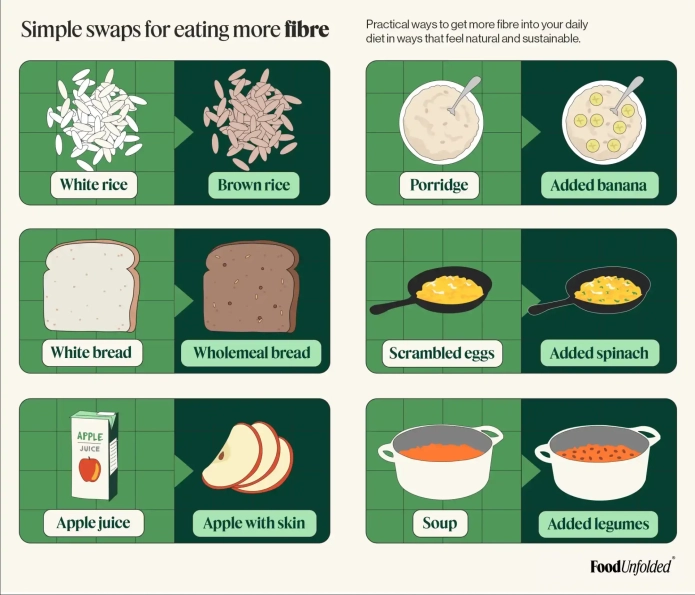
Quick Fibre Fix! Swapping refined grains (like white bread and pasta) for whole grains, adding extra vegetables to meals, and choosing fruit with the skin on are simple ways to boost fibre intake.
Common fibre mistakes and how to fix them
✗ Increasing fibre too quickly
- Why it matters: A sudden increase in fibre can sometimes cause bloating, gas, or discomfort as your digestive system adjusts.
- Solution: Introduce fibre gradually over a few days, and drink plenty of water.
✗ Not drinking enough water
- Why it matters: Fibre, especially soluble fibre, absorbs water. Staying hydrated helps it move smoothly through the digestive system and supports healthy digestion.
- Solution: Stay hydrated by drinking at least 6–8 glasses of water per day to help fibre do its job.
✗ Relying only on processed 'high-fibre' foods
- Why it matters: Processed foods may be fortified with fibre, but often lack essential nutrients found in whole foods. Processing can strip away vitamins, minerals, and beneficial plant compounds.
- Solution: Choose whole food sources of fibre—vegetables, whole grains, legumes, nuts, and seeds—to get a full range of nutrients.
✗ Not eating a variety of fibre sources
- Why it matters: Different types of fibre support digestion in different ways—soluble fibre slows digestion, while insoluble fibre keeps things moving.
- Solution: Include a mix of both soluble and insoluble fibre by eating a wide variety of plant-based foods.
Are you getting enough fibre?
Use this simple checklist to evaluate your daily fibre intake:
☐ Did I eat at least 5 portions of fruit and vegetables today?
☐ Did I include whole grains in my meals?
☐ Did I drink enough water to help fibre work effectively?
☐ Did I eat legumes, nuts, or seeds today?
☐ Did I choose foods with skin or peels intact when possible (like potatoes or apples)?
☐ Did I opt for whole food sources rather than processed "high-fibre" products?
This is a helpful reminder of how to incorporate fibre into your diet. Even adding just one or two of these habits can be a positive step toward better nutrition.
Remember, progress beats perfection when it comes to healthy eating habits!
Up for a FUN fibre challenge?
For the next 7 days, aim to add one extra fibre-rich food to each meal. This could be as simple as:
✓ Swapping white bread for whole grain
✓ Adding beans or lentils to soups and salads
✓ Choosing fruit with the skin on instead of juice
Keep track of how you feel throughout the week—you might notice more energy, better digestion, or feeling fuller for longer after meals. These small, sustainable changes can add up over time, making it easier to reach your daily fibre goals while enjoying delicious, satisfying foods along the way. By making simple swaps and mindful choices, you can easily boost your fibre intake and enjoy benefits from better digestion to steadier energy levels.
Remember, small changes add up—starting with just one fibre-rich choice each day can set you on the path to better health. Your body (especially your gut) will thank you for it!


Most viewed




References
- European Food Safety Authority (EFSA). "Scientific Opinion on the substantiation of health claims related to wheat bran fibre and increase in faecal bulk, reduction in intestinal transit time, and contribution to the maintenance or achievement of a normal body weight." EFSA Journal, 8(10), 1817.
- European Food Safety Authority (EFSA). "Scientific Opinion on the substantiation of health claims related to dietary fibre and maintenance of normal blood cholesterol concentrations."
- EPIC-InterAct Study. "Dietary fiber intake and the risk of type 2 diabetes in the European Prospective Investigation into Cancer and Nutrition (EPIC)-InterAct study." PubMed Central, 2015.
- Aune, D., Chan, D.S., Lau, R., Vieira, R., Greenwood, D.C., Kampman, E., & Norat, T. (2011). "Dietary fibre, whole grains, and risk of colorectal cancer: systematic review and dose-response meta-analysis of prospective studies." BMJ, 343, d6617.
- Stephen, A.M., et al. (2017). "Dietary fibre in Europe: current state of knowledge on definitions, sources, recommendations, intakes and relationships to health." Nutrition Research Reviews, 30(2), 149-190.
- European Commission (2023). “Dietary Fibre.” Health Promotion Knowledge Gateway. Accessed 9 April 2025.
- The Guardian (2025). “Are Whole Grains Healthy?” The Guardian Wellbeing. Accessed 9 April 2025.
- Harvard T.H. Chan School of Public Health. “Carbohydrates and Fibre.” The Nutrition Source. Accessed 9 April 2025
Do you care about thefood system?
Take part in our Annual Survey 2025
Take the survey