Are you lucky enough to stroll into a supermarket and choose fresh food at any time of year? Many of us take this for granted. But supermarkets only became common in Europe from the 1950s. Even today, many Europeans live in areas where healthy, fresh food is difficult to find (food deserts) or where there are far more unhealthy food options available than healthy ones (food swamps).
Let’s explore what causes “food deserts” and “food swamps,” and if there’s anything we can do to make nutritious food affordable for everyone.
Inside food deserts and swamps
A food desert hasn’t got anything to do with sand. It’s a place where it’s really hard to get healthy food.1 Imagine living somewhere with no supermarket nearby, and the only place to buy dinner is a petrol station. That might mean your “vegetable options” are a packet of crisps or a sad piece of lettuce in a stale sandwich. Even if there is a place to buy food nearby, the healthy options (like fresh fruit and vegetables) might be too expensive.
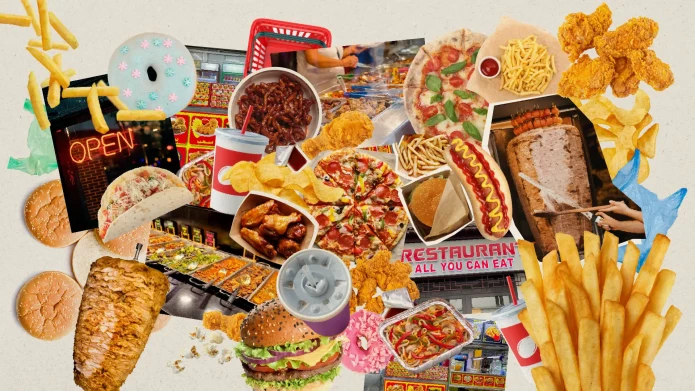
Now, a food swamp is a bit different. It’s when you’re surrounded by unhealthy options like fast food chains and snack shops. There might be a supermarket just around the corner, but to get there, you’ve got to pass all those amazing-smelling spots. The scent of sweet cookies and sizzling burgers practically follows you down the street, whispering, “Just one little bite…” In a food swamp, there are way more unhealthy foods than healthy options.2
Living in a food desert or swamp doesn’t always mean your belly is rumbling. But being unable to access fresh food does impact your health.
For some, being able to shop for food online is a real game-changer. It’s like having a supermarket show up right at your door. But it doesn’t work for everyone. In some areas, shops don’t deliver at all. Some people don’t have internet at home, or they’re not confident in using the internet for deliveries. And sometimes, the extra costs for delivery fees or big minimum orders can make online shopping feel more like a luxury than a lifeline.
Food deserts are often what experts call "obesogenic environments," which is a fancy way to say they’re places where it’s easier to gain weight and harder to stay healthy. These areas tend to nudge people toward unhealthy food and away from movement.
Are there food deserts in Europe?
Right now, we don’t have enough information to draw a clear map of food deserts and food swamps in Europe. Most of the research on this comes from the United States, where the topic has had a lot more attention and funding.3 4 But small studies from different corners of Europe tell us that many people here also have a hard time getting fresh, healthy food.5 6 From what we do know so far, food swamps, which are places overflowing with unhealthy food choices, seem to be more common in Europe than true food deserts, and they may be having an even bigger impact on how people eat and stay well.
Here are a few examples of where getting healthy food is tricky in Europe:
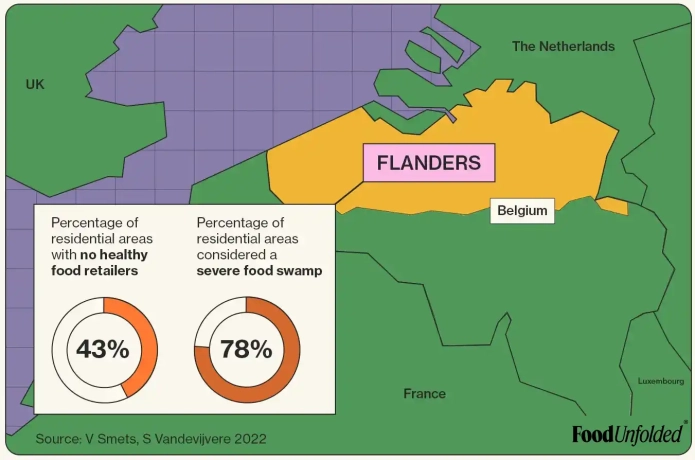
- A study in Flanders, Belgium, found that between 2008 and 2020, it got a little bit harder for people to reach supermarkets. On top of that, researchers found that about 74 per cent of residential areas in Flanders could be called food swamps.6 That means most neighbourhoods were packed with unhealthy food options, making it difficult for people to make nutritious choices.
- In the United Kingdom, a study from 2018 found that around a million people live in places where it’s really hard to get good food. These areas often don’t have big supermarkets or reliable public transport, and the few small shops around tend to be pricey. Many of these neighbourhoods are in large housing estates or inner-city areas where people are already facing financial struggles.7
- Research in Amsterdam found that people living in lower-income areas, where housing is cheaper, often have fewer affordable supermarkets nearby. This suggests food deserts could be an issue, even if no severe cases have been officially found yet. But the bigger concern is the flood of unhealthy food, which is linked to higher rates of obesity.8
What causes food deserts?
Finding fresh, healthy food isn’t always as easy as popping to the shop. There are a few bumps in the road that can get in the way, like:
Transport challenges
In rural areas, where buses are few and far between, getting to a supermarket without a car can feel like an impossible mission. Even in towns and cities, busy streets or concerns about crime and safety can turn a simple walk into a worry.
Access to appliances
You might be lucky enough to live near a supermarket, but without a freezer or oven, fresh food can be tricky to keep or cook. Not everyone has the kitchen space, the budget, or the energy bills to keep those appliances running.9 10
Household income
Fresh food can sometimes feel like a luxury, especially in places where most of it has to be imported. Take Iceland, for example. Since lots of fruits and veggies travel thousands of miles to get there, they can end up costing more per bite than the sugary breakfast cereals sitting on the shelf.11
Personal mobility
Getting to the shops can be a real challenge for older people or anyone living with a disability or illness. Many people solve this by shopping online, but not everyone feels comfortable clicking their way through grocery lists. And if you live in the countryside, supermarkets might not deliver to your door.
What can we do as citizens?
This isn’t something we can fix all by ourselves. To really solve the problem, we need support from governments, businesses, and planners. But while we work toward those bigger changes, there are still small things we can do to help make fresh food a little easier to find and enjoy.
Have a chat with your doctor
In places like the United States and the United Kingdom (UK), some doctors can actually prescribe vouchers for fresh food. For example, in the UK, the Alexandra Rose Charity collaborates with London councils to provide fruit and vegetable vouchers through prescriptions, making it easier for people to enjoy healthy food.12 If you have a nutrient deficiency related to your diet, your doctor could prescribe you some multivitamins until you find a longer-term solution.
Grow some fresh food
If you have a bit of outdoor space, gardening can be a fun and affordable way to bring fresh veggies onto your plate. It does take some time, skills, and a few tools, but the good news is you don’t have to go it alone. Joining a community garden lets you team up with neighbours, share the work, and enjoy the harvest together.
Share rides with neighbours
If you don’t have a car, getting to the shops can be tricky. But teaming up with friends or neighbours for a carpool can make life easier. You can share the fuel costs and turn a grocery run into something more social.
Join a co-operative shop
Nutritious food often costs less at co-op supermarkets because everyone pitches in. Members pay a small fee and help run the place, which means the co-op can buy in bulk and pass on the savings. It’s a win-win!
Get involved with Community Supported Agriculture (CSA)
It’s a bit like making a deal with your local farmer. You pay upfront for the year, and in return, you get a weekly box of fresh, local goodies delivered right to your door. In France, there’s a wonderful volunteer-run CSA network called AMAP that helps keep costs low. Farmers love it because they get paid in advance, making their income steadier, and buyers get to enjoy affordable food grown just around the corner.13
Speak up about what your community needs
We can also spark change by making our voices heard. Writing to your local council or having a friendly chat with the owner of your neighbourhood store lets them know that fresh, affordable food matters to your community.
How can we make healthy food more accessible?
Let’s take a quick moment to recap. For people to actually enjoy fresh and healthy food in their daily lives, they usually need:
- Healthy food to be available nearby
- A safe and easy way to get there, like a good bus route or a bike lane
- The time, skills, and know-how to prepare it
- Appliances and power to store and cook it, like a fridge, freezer, or oven
- Prices that fit their budget
- Food that tastes good, feels satisfying, and is appropriate for their culture
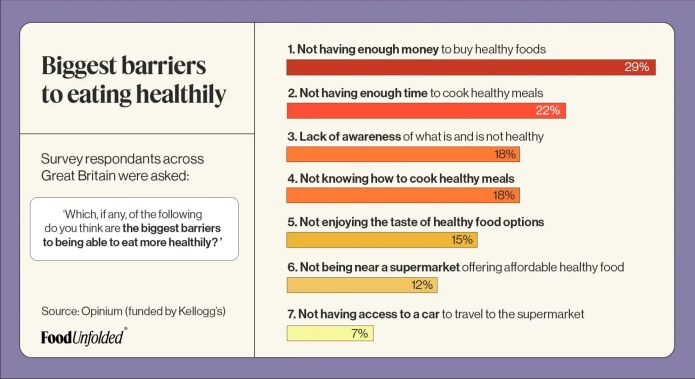
Access to healthy food isn’t just about willpower or good intentions. It’s shaped by the systems around us. By recognising that, we can stop blaming individuals and start supporting solutions that make good food a realistic choice for everyone.
Most viewed
References
- Beaulac, J., Kristjansson, E., & Cummins, S. (2009). A systematic review of food deserts, 1966–2007. Preventing Chronic Disease, 6(3), A105.
- Block, D. R. (2014). Food deserts. In P. B. Thompson & D. M. Kaplan (Eds.), Encyclopedia of Food and Agricultural Ethics (pp. 874–880). Springer.
- Ver Ploeg, M., Nulph, D., & Williams, R. (2011, December 1). Mapping food deserts in the United States. Amber Waves. U.S. Department of Agriculture, Economic Research Service.
- Karpyn, A. E., Riser, D., Tracy, T., Wang, R., & Shen, Y. (2019). The changing landscape of food deserts. UNSCN Nutrition, 44, 46–53.
- Janatabadi, F., Newing, A., & Ermagun, A. (2023). Social and spatial inequalities of contemporary food deserts: A compound of store and online access to food in the United Kingdom. Applied Geography, 163, 103798.
- Smets, V., Cant, J., & Vandevijvere, S. (2022). The changing landscape of food deserts and swamps over more than a decade in Flanders, Belgium. International Journal of Environmental Research and Public Health, 19(21), 13854.
- Corfe, S. (2018). What are the barriers to eating healthily in the UK? Social Market Foundation.
- Helbich, M., van Emmichoven, M. J. Z., Dijst, M. J., Kwan, M. P., Pierik, F. H., & de Vries, S. I. (2017). Food deserts? Healthy food access in Amsterdam. Applied Geography, 83, 1–12.
- Butler, P. (2023, November 14). Millions of UK households forced to unplug fridge or freezer amid rising bills. The Guardian.
- Turn2us (2020, January 17). Millions across the UK are living without household essentials.
- Repella, B. M., & Jakobsdottir, G. (2025). Dietary intakes among university students in Iceland: Insights from the FINESCOP project. Nutrients, 17(3), 432
Do you care about thefood system?
Take part in our Annual Survey 2025
Take the survey