You’re standing in the supermarket, holding two yogurts. One has added sugar, the other says “no added sugar” but lists unfamiliar sweeteners on the label. Which one is better for your health?
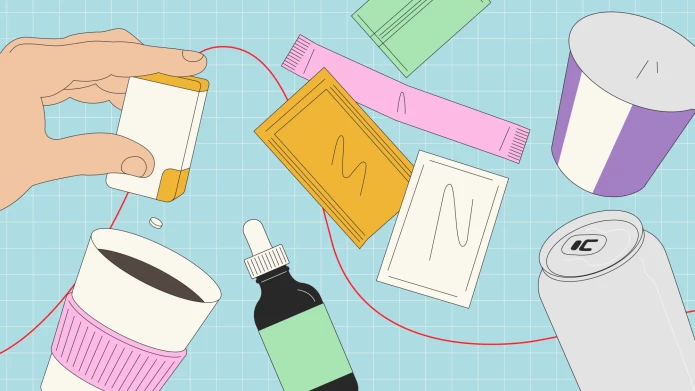
Artificial sweeteners, found in everything from diet soft drinks to sugar-free gum, have sparked debate for years. Once seen as an easy way to cut down on sugar, they are now being questioned for how they affect our bodies. Some studies suggest they may harm our gut, affect our mood, and even be linked to certain diseases, but others suggest various benefits to sweeteners, such as reduced blood sugar levels and weight control. So what exactly are they, and can they really be part of a healthy, balanced diet?
Let’s take a closer look.
What are artificial sweeteners?
In short, artificial sweeteners are substances used to sweeten foods and drinks without the calories of sugar. They're often described as non-nutritive or zero-calorie sweeteners because they contain little to no energy or nutrients.
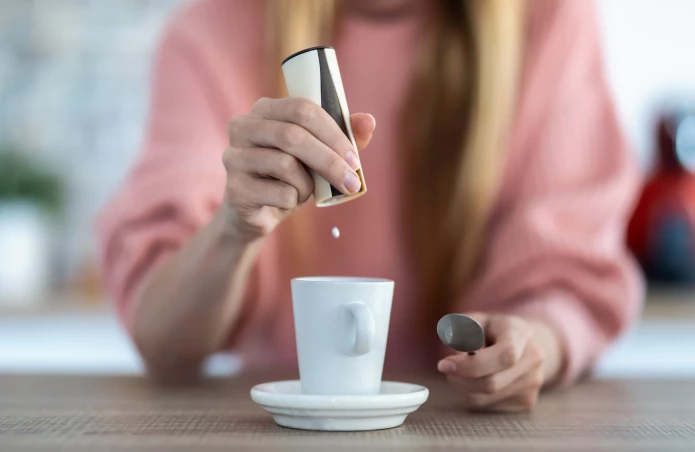
You’ll usually find them in “diet” or “light” versions of products, think low-calorie beverages, sugar-free desserts, or tabletop sweeteners added to tea and coffee.
Unlike sugar, which contributes to energy intake and affects insulin and blood glucose levels, most artificial sweeteners pass through the body without being digested or metabolised. This makes them popular amongst those looking to reduce their sugar intake or manage their weight.
Do you want to learn more about sugar, what it is, and why it matters? Read more here.
Types of artificial sweeteners you might know
There are 19 approved sweeteners in the EU, along with 3 additional sub-categories.1 But here are some of the most common ones that you may have heard of:
Aspartame: around 200 times sweeter than sugar. It’s found in many diet drinks and chewing gums.2
Sucralose: about 600 times sweeter than sugar. It’s actually made from sugar but is processed so that the body doesn’t absorb it. It’s heat-stable, which makes it a popular choice for cooking and baking.3
Saccharin: one of the first artificial sweeteners ever discovered. It’s roughly 300 times sweeter than sugar and is used in some tabletop sweeteners and canned fruit or vegetables. It was once linked to cancer in animal studies, but later reviews concluded it’s safe for humans in reasonable amounts.4
Stevia: often grouped with artificial sweeteners, but technically, it’s plant-derived. It comes from the Stevia rebaudiana plant and is used in many “natural” sugar-free products. It’s 200 to 300 times sweeter than sugar. It’s still classed as a zero-calorie sweetener, and functions much like the artificial types.5

The history of artificial sweeteners
Saccharin was the first artificial sweetener to become widely used. It was discovered in 1879 by Constantin Fahlberg, a scientist working at Johns Hopkins University in Baltimore.
While working with a chemical made from coal tar, Fahlberg accidentally got some on his hand and noticed an unexpectedly sweet taste. He traced it back to the chemical, and the rest is history - saccharin was born.
Saccharin became popular during World War I, when sugar was in short supply. Then, starting in the 1960s, it became popular again as a zero-calorie sweetener for people trying to lose weight.
Not long after saccharin was introduced, studies showed it caused bladder cancer in rats. This led to a mandatory warning label in 1977. But by 2000, scientists learned that our bodies process saccharin differently than rats do—so the label was dropped.6
Today, they’re used globally in a wide range of food and drink products as a lower-calorie alternative to sugar.
Are artificial sweeteners safe?
That’s the big question, and the one that’s been asked for decades.
Some early studies raised concerns about links to cancer, changes in metabolism, or impacts on gut health. But more recent reviews by food safety authorities—like the European Food Safety Authority (EFSA) and the World Health Organisation (WHO)—have concluded that artificial sweeteners are safe for human consumption when used within approved limits.78
How much is too much?
According to the European Food Safety Authority, it’s safe to have up to 40 milligrams of aspartame for every kilogram you weigh each day. But what does that actually look like?
A can of the most well-known diet soft drinks contains about 180 to 200 milligrams of aspartame.9 So if you weigh around 60 kg, you could safely have up to 2,400 milligrams a day. That works out to about 13 cans.
Of course, that doesn’t mean drinking 13 cans a day is a good idea. It’s still much healthier to stick with water or drinks like herbal tea most of the time.
It’s worth noting that research is ongoing.1 Some studies suggest that certain sweeteners might influence gut bacteria or change the body’s response to food in subtle ways, especially when consumed regularly over time.10 But overall, current evidence shows no clear harm for most people when used in moderation.
Nutrition misinformation online
Still, headlines and online debates continue to fuel confusion. Platforms like Instagram, TikTok, and even some news outlets often promote nutrition claims that lack scientific backing. These posts may exaggerate risks or oversimplify findings. Always consult a qualified nutritionist, dietitian, or doctor before making changes to your diet based on what you read online.
Want to learn more about gut bacteria and the link between your gut and health? Read our Gut health 101 article to discover everything you need to know about gut health and top tips on how to improve it.
Potential benefits of artificial sweeteners
There’s a reason artificial sweeteners became popular—and why many people still use them. When used mindfully, they can offer a few potential upsides:
- Lower energy intake: since they’re low or zero-calorie, artificial sweeteners can help reduce overall calorie intake, which may support weight management.
- Tooth-friendly: unlike sugar, artificial sweeteners don’t contribute to tooth decay.11
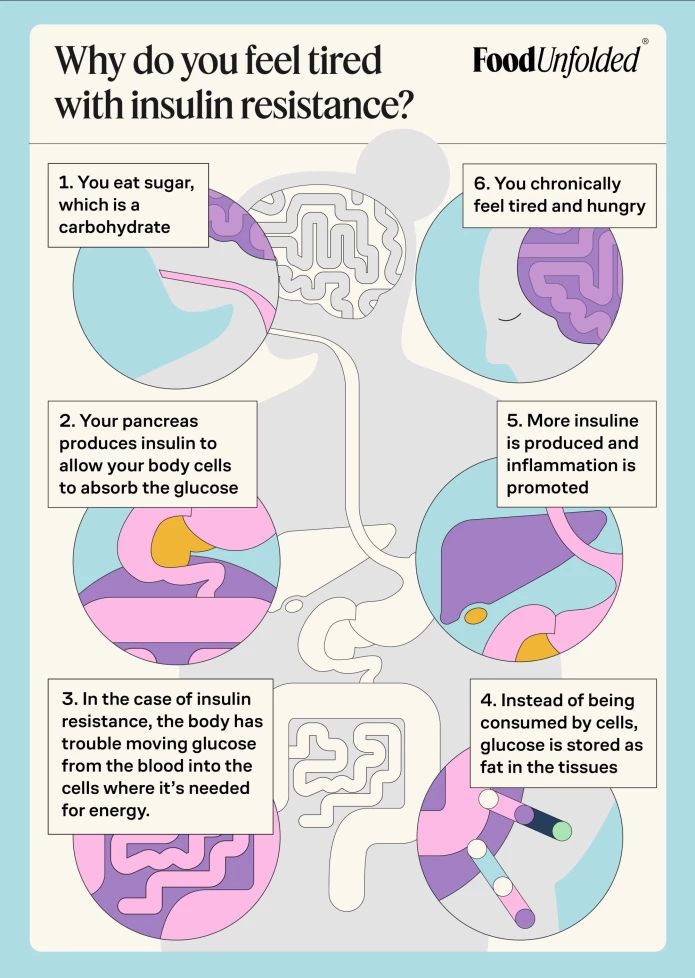
- Blood sugar stability: some studies show that artificial sweeteners can provide a sweet taste without affecting blood sugar levels, which is a great benefit for people with diabetes.12 However, others suggest that artificial sweeteners might cause insulin resistance among people with type-2 diabetes because the body reacts to their sweet taste like it would to real sugar.13 High insulin resistance can leave you feeling chronically tired and hungry.
Some things to keep in mind
While sweeteners might sound like a win-win, they aren’t a perfect solution, and they’re not a free pass to eat unlimited amounts of sugar-free foods.
- Not the solution to obesity: many experts say that even though artificial sweeteners can help with weight management, they cannot be seen as the solution to obesity.1415 Why? Because the science is still evolving, and there’s no solid proof that these sweeteners lead to long-term weight loss. Plus, obesity is caused by many factors, including diet, physical activity, genetics, and environment. Focusing on just one thing—like sweeteners—oversimplifies a much more complex problem.
- Gut reactions: certain sweeteners (especially sugar alcohols, which are sometimes grouped with artificial ones) can cause digestive discomfort in some people.10
- Mistaken for sugar: as mentioned above, the body can mistake it for sugar, leading to insulin resistance.13
- Ultra-processed foods; many foods that contain artificial sweeteners are also ultra-processed—think diet fizzy drinks or sugar-free snack bars. While the sweetener itself might be safe, relying too heavily on processed products can crowd out more nutrient-rich, whole foods.
Ultra-processed foods are heavily modified foods, often made with ingredients you wouldn’t use in home cooking, such as artificial flavours, colours, and preservatives. Examples include crisps, fizzy drinks, instant noodles and packaged biscuits.
The problem is, these foods don’t really give your body much of what it needs. They’re usually low in important nutrients and vitamins, which is why people call them “empty calories.” They might give you energy, but not the kind that helps build muscle, support your brain, or keep your gut happy.
So… should you use artificial sweeteners?
Artificial sweeteners are low-calorie, non-nutritive ingredients that can be a helpful alternative to sugar, especially for people looking to cut calories, manage blood sugar, or for short-term weight control. However, they’re not a nutritional necessity, nor a long-term solution for weight loss.
They’re considered safe when following recommended amounts, but like any additive, they work best when used in balance, not as a substitute for a varied and nourishing diet.
If you enjoy a little in your tea or occasionally drink a diet soft drink, that’s fine. Just keep in mind that a healthy, sustainable diet is still built around whole foods, variety, and moderation.