Sugar gives us the sweet taste that we all know and love, and it also acts as a preservative to keep food fresh for longer in food production. But what are some alternative sugars and sweeteners commonly used today?
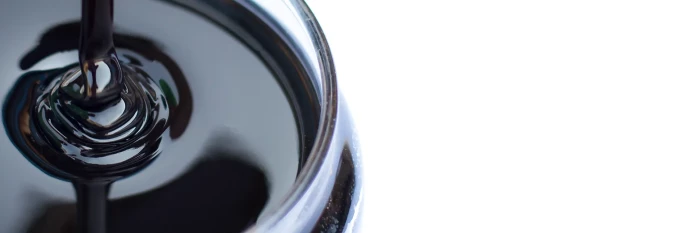
Table sugar (or sucrose) is usually produced from sugar cane or sugar beets and has a calorie content of around 4 kcal/gram.1,2 With an increasing demand for alternatives to replace sugar, we’ve seen many sugar alternatives appear in the market. While some are still technically sugars, others are called sweeteners and can be over 400 times sweeter than sugar.
So, what are these sugar alternatives, how are they made, and how sweet do they taste compared with the sugar we know?
Alternative Sugars
1. Molasses
Molasses, like sucrose, is made from sugar cane or sugar beets. After juicing the crop, the juice is boiled. As the water evaporates, the juice is spun to produce a thick syrup, similar to treacle, which is then crystallized to obtain sucrose and molasses. Despite containing the same calories per gram as sucrose, molasses tastes 25-50% less sweet than table sugar.3
2. Agave Syrup
Agave syrup is made by crushing the core of the agave plant to extract the sap. After filtering and heating, the agave juice is processed by an enzyme which helps convert fibre into simple sugars (mainly fructose). Thanks to its high fructose content, agave syrup is 30-40% sweeter than sucrose. It’s also slightly higher in calories, with an average of 6 kcal /gram.4
3. Date Sugar
Date sugar is made from the fruit of the date palm. Dates are mixed with water, and the resulting juice is extracted, filtered and concentrated to produce a dark syrup known as date syrup. Granulated date sugar can also be made by dehydrating dates and grinding them into a fine powder. In addition to its sucrose content, date sugar also contains some fibre, which makes it less sweet than table sugar and lower in calories, with an average of 3 kcal/gram.5
4. Coconut Sugar
From the tropical coconut palm tree, coconut sugar is actually made from coconut tree sap rather than the coconut itself. This tree sap is boiled and caramelized into a syrup and then crystallized into a dark-coloured sugar. Coconut sugar has the same sweetness and calorie content as sucrose, at 4 kcal/gram.6
Sweetener Alternatives
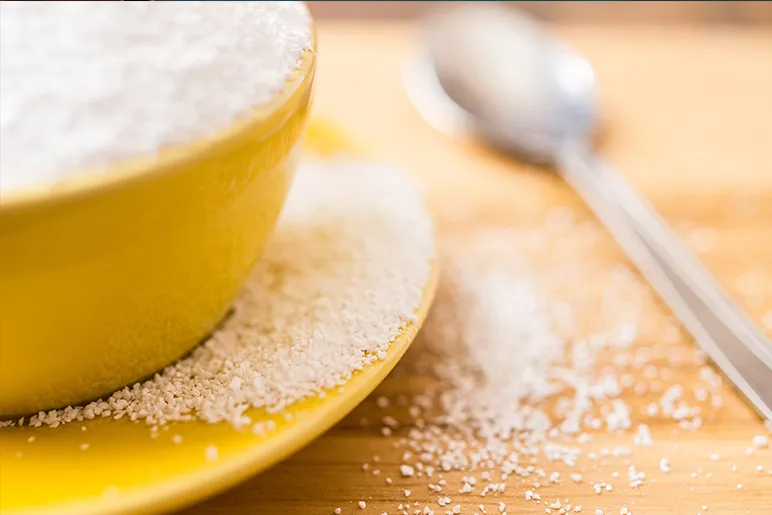
5. Aspartame
The artificially manufactured no-calorie sweetener aspartame is 200 times sweeter than sucrose. Aspartame is made by chemically bonding two sweet-tasting amino acid molecules together.7
6. Stevia
Stevia is a natural sweetener derived from the stevia plant. It is also a no-calorie sweetener, but is up to 400 times sweeter than sucrose. By boiling and washing the plant in alcohol, the naturally occurring sugars found in the stevia leaves are released and then crystallized to obtain commercial stevia.8
7. Sucralose
Sucralose is a no-calorie sweetener 400-800 times sweeter than sucrose. It is produced by artificially modifying the natural sugars in sugar cane or sugar beet to create a far sweeter sugar substitute.9,10