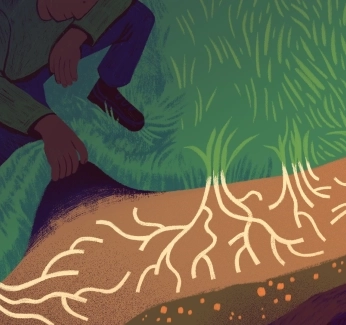
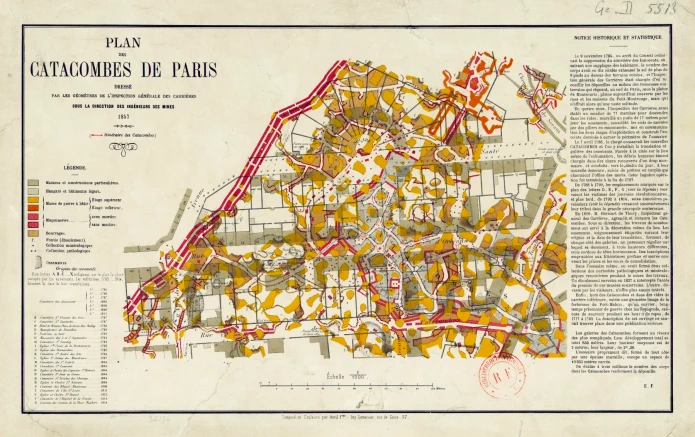
47 million years ago, when the sea covered the north of France, limestone banks started to form in the area where Paris now stands. From the 14th century, this same limestone would be mined. As a result, the operations created vast underground quarry networks, a subterranean city which birthed the buildings above until a number of sinkholes and collapses in the city centre caused the Paris quarries to be closed by decree on September 15, 1776.
From Quarries to Catacombes
As the city expanded and outgrew existing cemeteries in the 18th century, the story of the subterranean world below the City of Light moved on, and the former quarries became the final resting place for many of Paris’ citizens.1
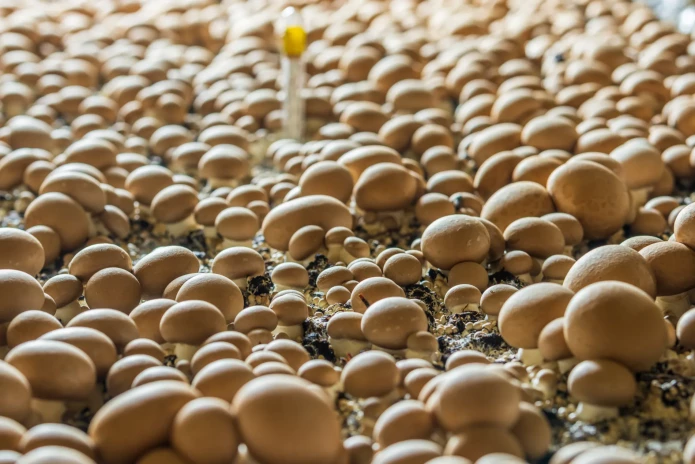
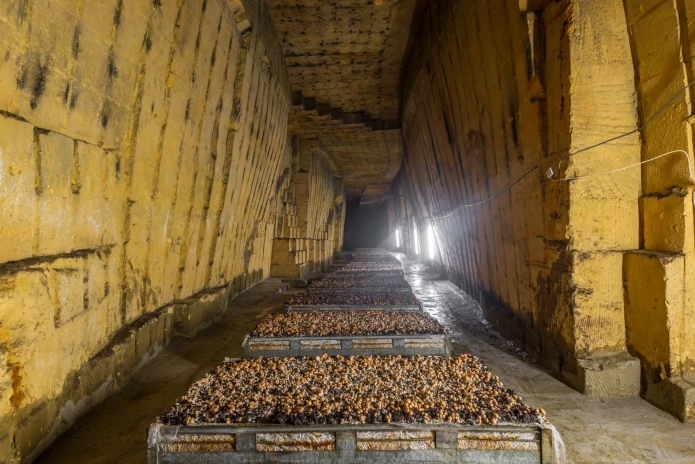
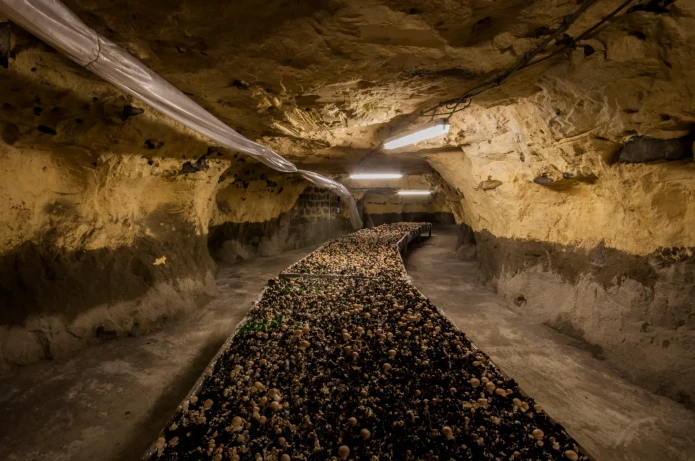
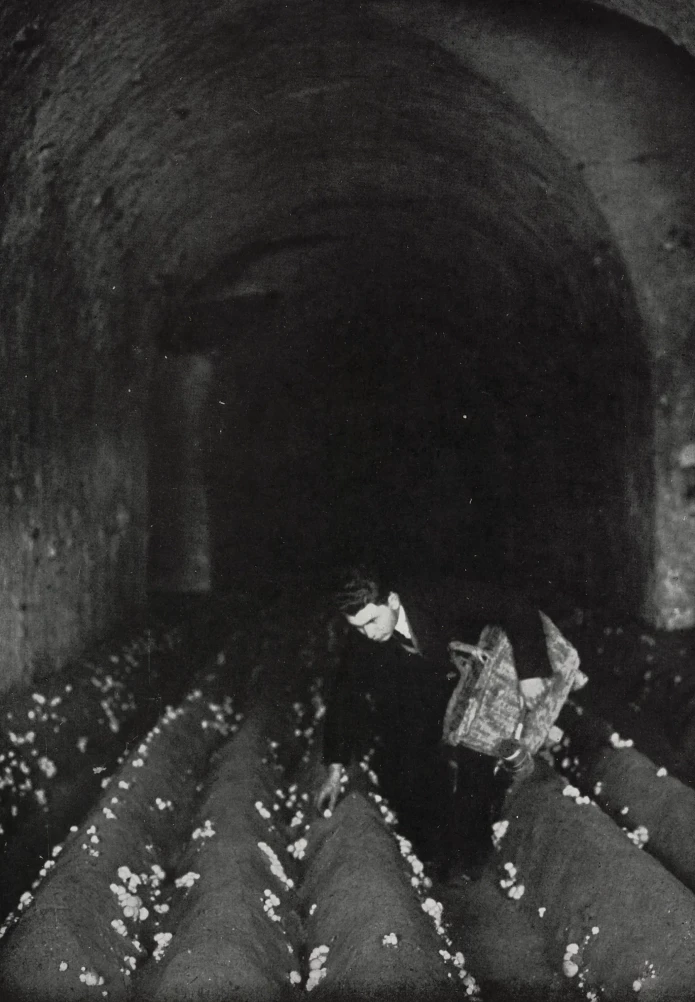
While this continued through the 19th century, in 1820 another industry was born in the catacombs; mushroom farming. The constant temperature, humidity and darkness of the quarries were ideal growing conditions for growing fungi, which grew on rows of nutrient rich horse manure. Quarrymen became farmers, and they cultivated a button mushroom that became famous well beyond the city limits; les Champignons de Paris.2 At the height of the industry, there were estimated to be around 2000 farmers working below the city’s streets.3
With the development of the Paris metro tunnels and the original quarries falling into disrepair, the cultivation of Paris' catacomb mushrooms declined, and very few producers remain today; none operate within the original quarries below the city.2 However, both in France and around the world, mushrooms continue to be cultivated in unusual subterranean locations; from historic natural caves, to abandoned underground urban carparks, and disused quarries. Those in the know believe the flavour of mushrooms grown in these locations is superior; the constant temperature and humidity as well as the fact that they grow 50% slower underground gives them a richer, more concentrated taste, with less water loss during cooking.4 Take a virtual trip with us below the surface to explore more…
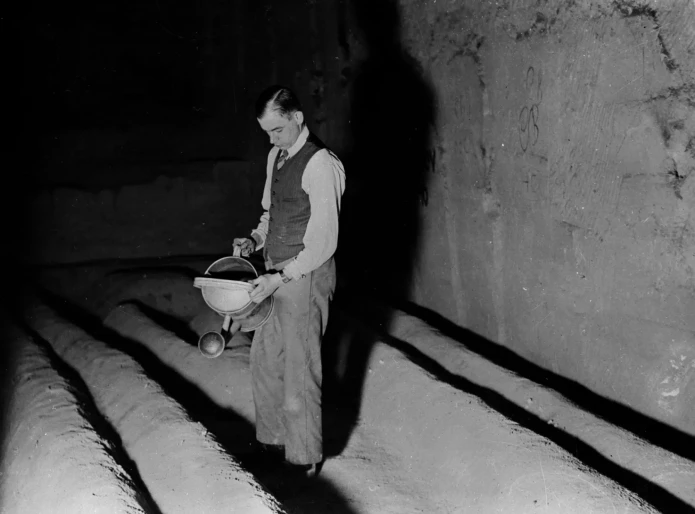
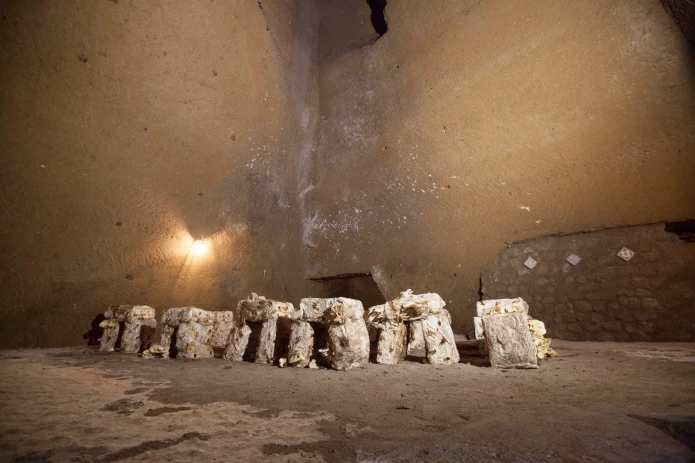
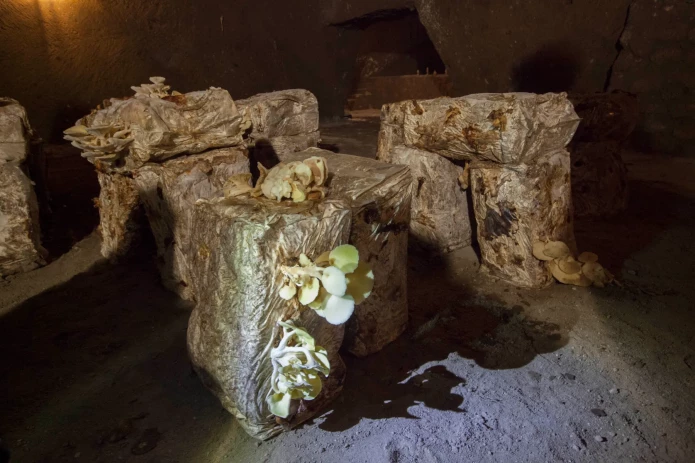
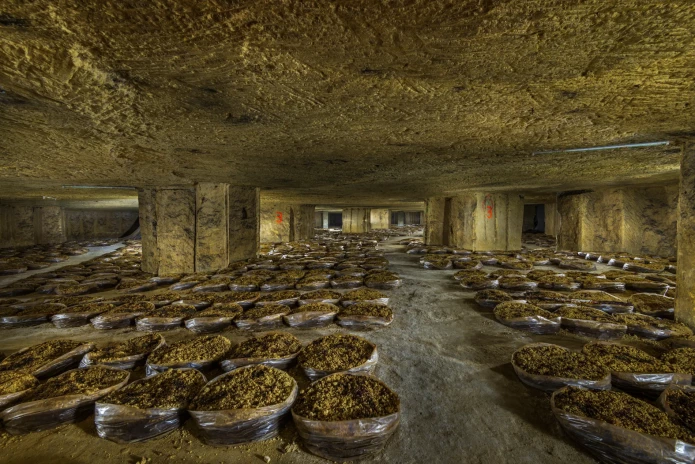
During the 20th century, the underground mushroom farming industry spread from Paris to Belgium and The Netherlands. The area of Riemst - Maastricht has countless (+200) underground limestone quarries, and most of these quarries were used as a mushroom farm at some point in time. The industry grew so big that Riemst became one of the largest European providers for underground mushrooms.4
A tragic quarry collapse in the De Roosburg mushroom farm, once the largest mushroom nursery in Western Europe, and advances in mushroom growing techniques has meant that today only two underground producers remain in the area; Theo Jennen in Wallonia, and Dirk Jackers in Flanders, Belgium. Both grow their mushrooms in quarries using iron raised beds. The manure is prepared by a composting factory nearby and gets delivered together with the iron beds.4