Beyond the familiar fields of wheat, rice, and maize lies a forgotten realm of diverse crops that might help us tackle some of today's biggest food challenges. Rediscovering their diversity isn't just a journey back in time – it's a crucial step towards a sustainable and nutritious future.
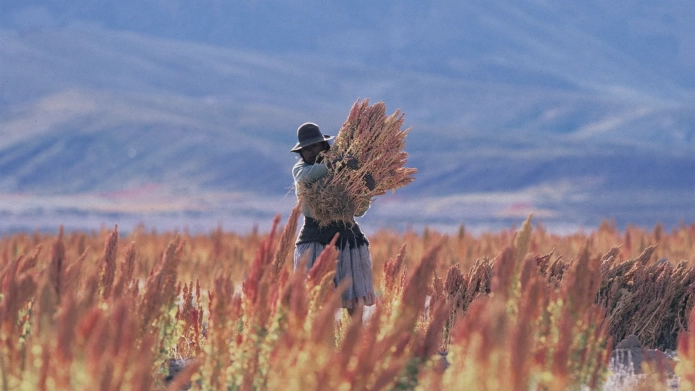
Unearthing agricultural treasures
Today, just a handful of crops dominate our diets. More precisely, less than fifteen crops make up 90% of the world’s daily caloric intake, and just three of them – wheat, rice and maize – account for almost half of it.1,2 Yet, scientists say that a rich tapestry of over 7,000 edible plant species exists, largely overlooked, right in front of our eyes.3 The striking contrast between our heavy reliance on a few species and the abundance of edible plants available in nature unveils a critical issue in modern agriculture, which goes well beyond a matter of culinary diversity.
Increasing homogeneity in food systems raises concerns about food and nutritional security, food sovereignty and environmental sustainability. Furthermore, such systems have proved to be unsustainable in the long term. Scientific evidence shows that our food production and consumption practices account for up to a third of global anthropogenic greenhouse gas emissions.4 With global food demand expected to increase between 35% and 56% by 2050, the need to rethink our agricultural paradigms calls for urgent actions.5
Recent trends in food and environmental science might give us a glimpse of hope, such as the revitalisation of what we now call 'forgotten' crops. These crops, once cornerstones of ancient diets, offer a repository of nutrition and resilience that could be key to future sustainability.6,7,8 However, while they present a promising solution capable of addressing multiple challenges within the global food system, the reality is that implementing such a solution on a wider scale is not without its complexities.
The disappearing
Forgotten crops go by many names: “indigenous,” “lost,” “native,” “orphan,” “traditional,” or “underutilised” are just some of the ways we refer to these ancient staples that once populated our agricultural landscapes, as well as our plates.
Throughout the course of history, people from all around the world relied on a wide range of such crops for their subsistence. Originating from the domestication of wild species, these crops trace back to the early days of human civilisation, where agriculture once represented the most intimate relationship between people and the environment.9 They were deeply rooted in the many and various terrains of our planet - from the grains of ancient Mesopotamia to the hearty tubers of the Andes – and diversified over millennia, both naturally and through selective cultivation, into a broad spectrum of varieties, each adapted to its unique ecological niche.
In a nutshell, humankind has played a critical role in the evolution of these plants.10,11 Contrary to natural selection, which favours plant traits that enhance their chances of survival in nature, the practice of agricultural selection is intentional. Over generations, farmers have carefully chosen and bred plants that exhibited characteristics they liked, such as more abundant yields, sweeter fruits, or resistance against pests, gradually reinforcing these traits within the crop population.

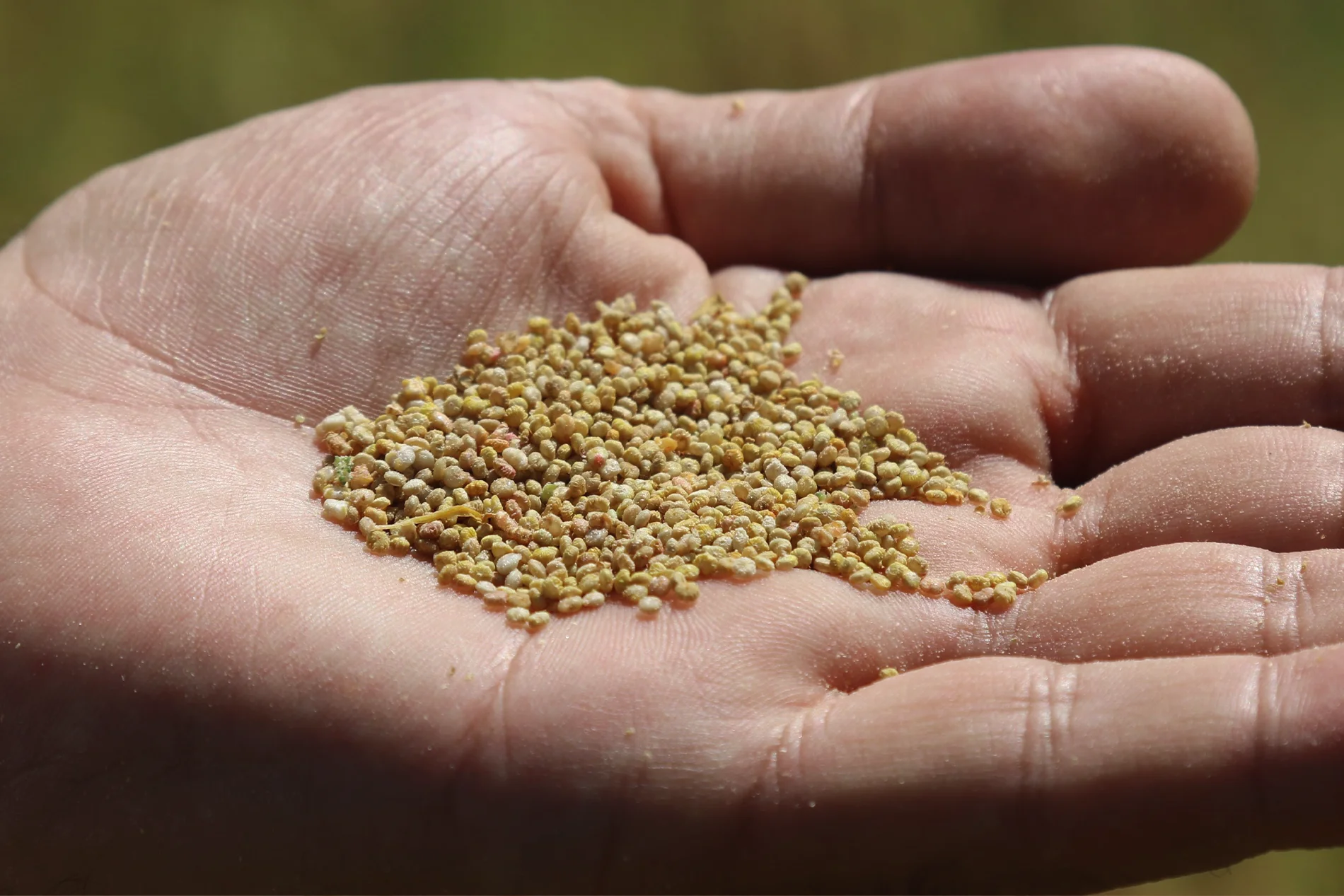
Amaranth is an 8,000-year-old crop, indigenous to Mesoamerica, where it was cultivated by both the Aztecs and Mayans. Recent studies have confirmed ancient knowledge about the crop’s tolerance to droughts, high soil salinity and frost. In addition to its climate resilience, it is nutritionally dense, high yielding with short production cycles. (Photo by Aydin Arik/Anadolu via Getty Images)
These locally adapted and nutritious crops formed the foundation of many community diets, economies, and cultures. Yet, despite their importance, they have rapidly and progressively slipped into obscurity, displaced by the rise of modern agriculture.12 Since the Green Revolution of the mid-20th century, the advent of industrial farming culminated in a significant reduction in agricultural diversity.13 With the promise of fighting hunger through enhanced productivity, a narrow range of high-yielding commercial varieties began to replace the traditional ones, quickly leading to a diminished genetic palette of cultivated crops.
And this has not come without consequences: the increasing reliance on a limited selection of crops has progressively undermined the resilience of our food systems. The more homogenous a system is, the more vulnerable it becomes to pests, diseases, and environmental stresses.14,15 On top of that, overlooking the usefulness of traditional crops has progressively eroded the knowledge related to their cultivation and culinary use, threatening the collective agronomic heritage that sustained communities for generations and disconnecting peoples from the roots of their cultural identity.16,17,18
It’s hard to find precise data about the loss of crop diversity, but the scientific community almost unanimously agrees on the alarming rate of this decline.19
Environmental and nutritional benefits
But why is the disappearance of these crops a threat to the health of our food systems, and what are the benefits of their rediscovery?
There is broad evidence that cultivating forgotten crops could offer abundant environmental and nutritional benefits. First, these plants are often resilient to adverse climate conditions, such as droughts and poor soil quality – an ability not to be underestimated in the face of the climate crisis.20,25 The science behind it is as simple as this: having spent centuries evolving and adapting to the fluctuations of nature in their native habitats, their genes are well-equipped to handle conditions that might cause modern hybrid crops to struggle. This means they can grow without many external inputs such as water, fertilisers, and pesticides, making farming easier on natural systems, keeping the soil’s structure intact and boosting its fertility.6,21 Notably, the very soil that supports them, often rich and untapped, directly impacts their nutritional makeup - healthier soils typically yield crops with better nutritional profiles.22,24
From a health perspective, forgotten crops are real treasure chests of vitamins, minerals, and essential nutrients.23 This is due both to the quality of the soil they grow in and to their genetic heritage, which has been largely preserved through traditional farming methods. The slow agricultural selection over centuries and constant adaptation to their natural environment allowed them to maintain a more complex set of nutrients compared to the more modern hybrid varieties, selectively bred with an emphasis on maximising yield and extending shelf life, often at the expense of their nutritional content.26
From ancient grains like teff and fonio to leafy greens like moringa and amaranth, these crops are not just naturally robust but also nutritionally rich.2,8 They could be critical in addressing micronutrient deficiencies, especially in some of the world’s most vulnerable regions, where access to diverse foods is limited and nutritional insecurity is peaking.27
Challenges and misconceptions
Although forgotten crops represent a valid solution to some of the multi-faceted issues affecting our current food systems, several challenges prevent the widespread revitalisation of these hidden gems from the past.
One of the greatest limitations is represented by the lack of awareness and knowledge about these plants, both among farmers and consumers. The major decline in their cultivation over the past century, together with the progressive loss of traditional ecological knowledge related to their use, has created a profound disconnect between these time-tested solutions and the way we grow and distribute food today. Bridging this divide is challenging, as it requires a systemic shift that not only brings these crops back to our fields but also realigns modern agricultural practices with the ancient wisdom that nurtured these crops and our societies for generations.
There are several misconceptions about the taste, cooking methods, and market appeal of these crops, which can prevent both farmers from growing them and consumers from buying them. Although creating a market demand for these species is imperative to effectively reintroduce them into our diets, it is easier said than done. Firstly, it requires educating consumers about the benefits and culinary characteristics of these crops, which are now long forgotten. Secondly, it requires supporting farmers throughout the transition to cultivate them. This is not an easy job: it requires providing access to seeds, economic incentives, and capacity building on sustainable farming practices.
These actions are not always straightforward to carry out. The limited availability of seeds and the lack of established supply chains can make it challenging to reintegrate these crops into modern agricultural systems.28 Additionally, agricultural and market policies still favour large-scale cultivation of commercial crops, which poses further challenges to the revitalisation of traditional ones. An example is represented by “novel foods” regulations: these legal frameworks, designed to ensure the safety of new or unfamiliar foods entering the market, can inadvertently create barriers for traditional crops that have been neglected for decades. While essential for consumers’ protection, the approval process often requires extensive documentation and testing, which can be prohibitive in terms of time and cost and can potentially deter reintroduction efforts.29
In addition to these challenges, there's a real risk of market-driven exploitation if these crops become trendy in wealthier countries. As seen with quinoa, avocados, and other 'superfoods', an increase in demand can quickly lead to over-cultivation and environmental degradation in the regions where these crops are traditionally grown.30 This not only stresses local ecosystems but can also lead to social and economic issues for local communities in growing regions.31 For instance, as these crops become more lucrative on the global market, local prices may rise, making them unaffordable for the people who have relied on them for generations.
How can we bring them back?
Reintroducing forgotten crops is a critical step towards consolidating more sustainable and resilient food systems. They can help us redesign more environmentally appropriate agricultural practices while boosting the nutritional profile of our modern diets. However, cultivating these crops is not just about planting their seeds; it is about cultivating a new market, a culture, and an appreciation for their unique value.
Effective change requires a holistic approach, which is laid out with clarity by documents such as the Global Manifesto on Forgotten Foods and backed up by international organisations such as Crops For the Future (CFF), the Alliance of Bioversity International and CIAT, and the Global Forum for Agricultural Research and Innovation (GFAR).28 Essential first steps towards re-integrating these valuable crops into our food systems and collective consciousness include policy-making that fosters agrobiodiversity both at the farm and the market level, scientific research that deepens our understanding of these crops, and educational outreach that informs and empowers us as consumers.
To learn more about regenerative agriculture, you can watch our documentary and read policy suggestions from grass-root organisations like The European Alliance for Regenerative Farming.