Many banana plantations are known for their high water consumption and intensive use of chemical pesticides. But is there a way to produce one of our favourite yellow fruits more sustainably?
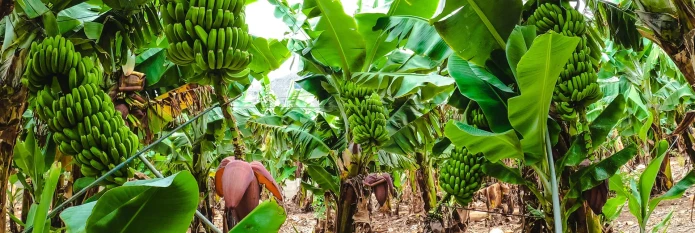
Here are three sustainable practices used by banana producers in the Canary Islands.
1. Biodiverse Soil
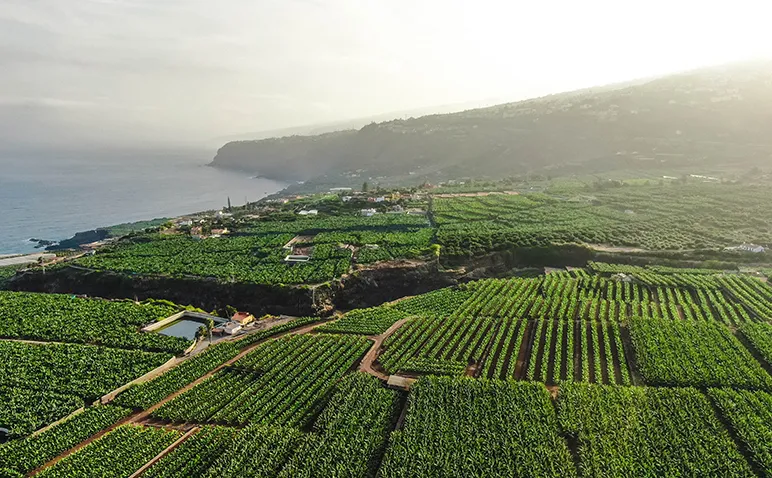
Why is biodiverse soil so important? As the Panama Disease is a soil-borne fungus that attacks the roots of the banana plant,1 the more biodiverse the soil is, the more difficult it is for soil diseases to spread. While Panama Disease (Tropical Race 4) is more serious in East Asia, Central America and the Caribbean, it’s well contained in the Canary Islands.2 So, what do banana producers in the Canary Islands do differently?
Instead of discarding banana plants after their fruit is harvested, Canary Island banana farmers use them to cover the ground of the plantation. The banana plants eventually dry out and break down into organic material that adds to the soil’s biodiversity. Other organic material is also used from around the island, like “pinocha” or pine leaves.
Bananas don’t grow on trees. Bananas are giant herbs, and their “trunk” is actually leaves tightly bunched together.
2. Drip Irrigation
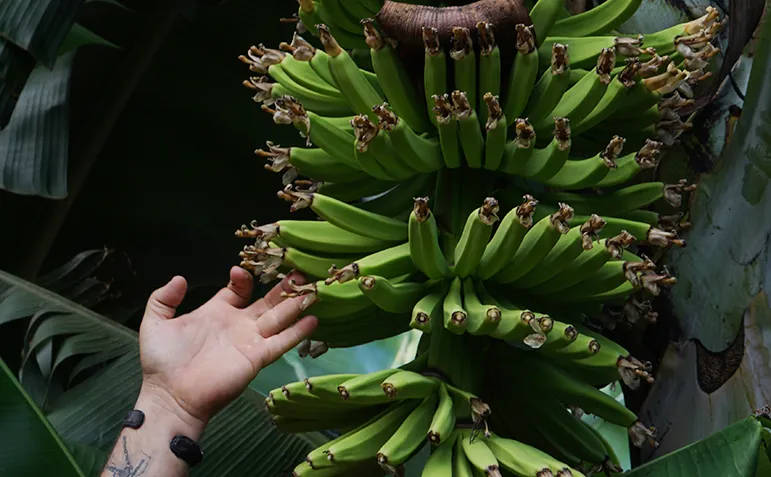
As bananas consume a lot of water,3 smart irrigation is necessary to ensure water isn’t wasted. In the Canary Islands, banana farmers use a common sustainable water management practice called drip irrigation. It’s exactly as it sounds: water is dripped directly onto the plant and its roots. This method of irrigation minimises wasteful water use while ensuring the plant is given enough water to grow.
3. Biocontrol
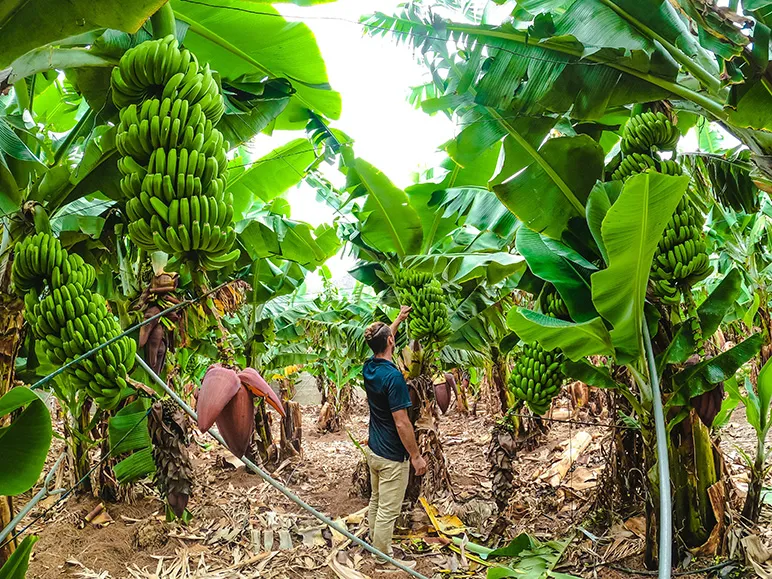
Many banana plantations in Latin America use small planes to release chemical pesticides to ward off pests.4 This is often done because the plantation fields are vast, making this the most cost-efficient pest removal method. However, this poses serious health and environmental concerns, as humans and wildlife can be exposed to pesticides through these aerial applications. These chemical pesticides can contaminate land if they leach into the soil, and they can also run off into streams and other water bodies.
With tighter chemical legislation in Europe, Canary Island banana farmers are increasingly relying on biocontrol to sustainably get rid of pests. Using the pests’ natural enemies (predators), banana farmers are able to keep pests out of their banana plants while minimising the use of chemical pesticides. Because banana farmers have smaller plantations (below or around 1ha of land), they can implement such pest management systems more easily.
It’s important to note that the predators used in Canary Island plantations are native species and will disappear once their food (the pests) are gone, as the pests are their only food source.