Whether you like it or not, you probably have an opinion on GMO. But how much do you actually know about it? Find out which knowledge nuggets might have gone under your radar!
1. GMO - the process
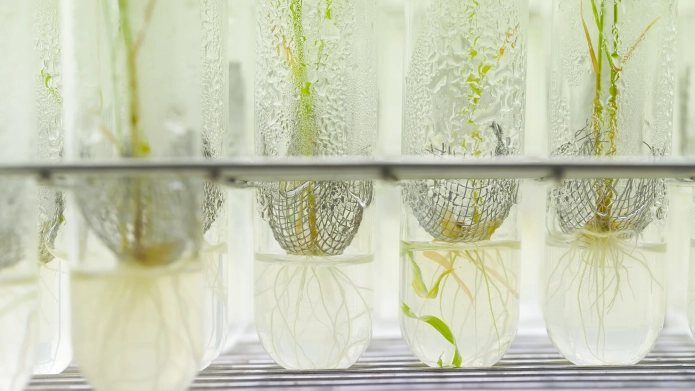
We know the term, GMO, and know it has something to do with genetics, right? But what do we actually know about the process itself? The exact details are as follows *drum roll*. GMO stands for genetically modified organism, and it is a bioengineering technique.1 It extracts the foreign DNA of one organism and inserts it artificially into the DNA of a completely different organism altogether. And they don’t even need to be of the same species.2 If it has genes, it’s possible. For a step-by-step guide on the process, read on here.
2. GMO has been around for ages
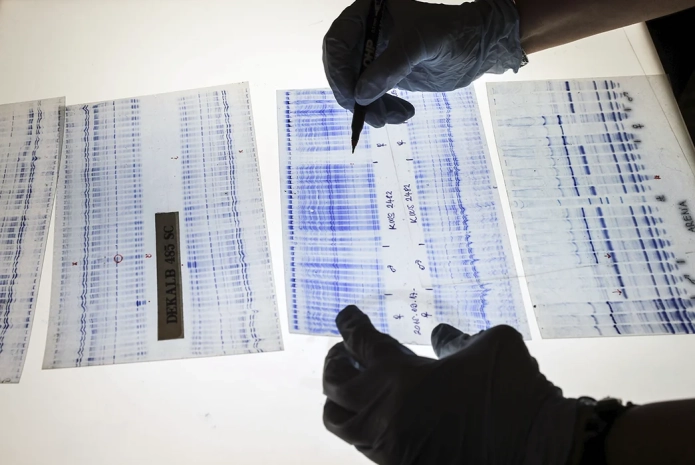
As crazy as it sounds, a lot of what we already eat is genetically modified - we might just not know it. For centuries, we’ve been Nature’s matchmaker through farming, and in the process, we’ve played a hand in genetically modifying a lot of what we’d define as 'normal' today.3 For example, a wild carrot looks more like a potato that’s been on a torture rack than any carrot we’ve ever seen (the poor things).
3. GMOs can actually help out small farmers
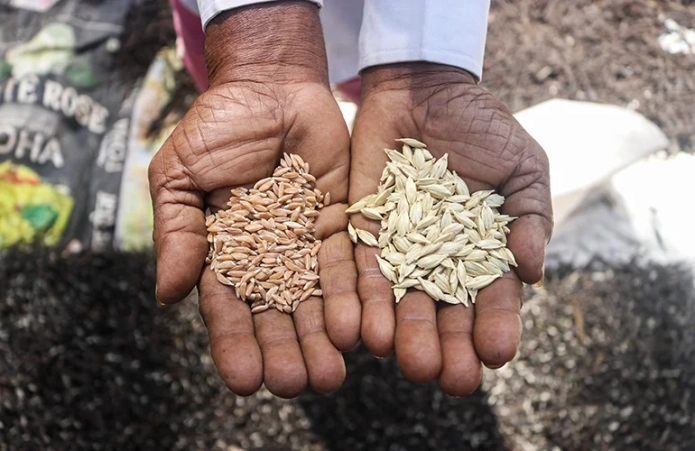
A farmer’s job can be pretty tough sometimes. For a farmer to bring home the bacon (aside from the pigs on the farm, of course) everything depends on how mean Nature is feeling that year. Crop yields can plummet in bad weather conditions, which can be catastrophic for a small farmer.4 Inbuilt resistance in GMOs, however, can really help fight this, and when your harvest is already small, every little helps! On the other hand, some ancient varieties of crops are also being brought back thanks to their incredible resilience to drought. So GMOs aren't always the best choice for climate-resilient farming.
4. GMOs aren’t just in your food
Cotton can also be ‘GMO’d’, and as a result, a whole tonne of other everyday items have GMO ingredients in them.5 Sheets, towels, clothes, you name it. It doesn’t stop at cotton, though. GMOs can be found in a bunch of other products. Alcohol can be made from GM corn and soy, so GM can be found in toiletries, hand sanitiser, ink, and gasoline - the list is as surprising and diverse as it comes.
5. Some countries really don’t like GMO. Seriously.
In 2015, 38 countries had a ban on the cultivation of GM crops,6 and with new laws and technologies always developing, such regulation is constantly under review. This distrust can be traced back to uncertainty. As mentioned earlier, even our definition of GMO can vary, so it can all become quite messy. Even scientists are divided in their opinions and do not wish to assert GMOs as definitively safe or unsafe.7 The official scientific consensus may back GM,8 but people like certainty across the board when it comes to matters this important, and this is where division can arise.
6. The US was the first country to invent GMO crops
Their investment goes further, with 93% of soy and 88% of corn in the US being GM.9 That’s a big number for two big products. Corn is used to thicken food such as porridge and soup, sweeten thousands of food products, and feed farm animals.10 Soy also feeds farms, is a significant source of food oil and can actually be used as a biofuel.11 To top it off, between 60-70% of all processed food in US grocery stores has some form of GMO ingredients in them.12 Phew.
7. GMO is also known as… Frankenfoods
Get it? Because it’s the Frankenstein of foods?13 There are actually multiple names GMO goes by, so it’s good to know the list in case you ever want to impress your friends at a party (I go to some fun parties). There are transgenic organisms, Frankenfoods and living-modified organisms.14 You’re welcome.
8. GMOs can allow for fewer pesticides to be used
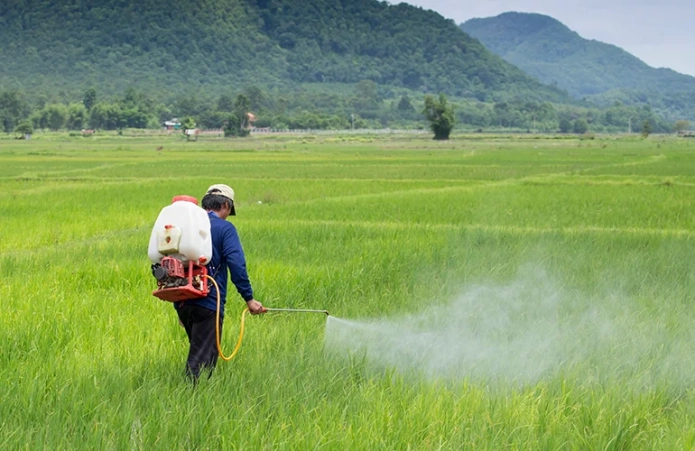
Pesticides are used to eliminate those pesky critters eating all our grub. But one form they can come in is damaging chemicals, which the less we use the better. One use of GM is to do the job of pesticides for them. For example, some crops have been given the Bt gene, which produces Bt bacteria - harmless to the plant but deadly to the specific insects who enjoy a nibble of that crop.15 These crops have turned into some tough cookies, I mean vegetables.
9. There are multiple generations of GMOs
GMOs have been around since the early 90s,16 and in plant years, that’s ages (I’m sure there’s a wizened old vegetable out there mumbling, ‘Back in my day…’). As a result, enough time has passed for there to be multiple generations of the reasoning behind GM.17 The first centred around the farmer and delivering better yields and reducing costs. The second was consumer-centric, with better taste and shelf life. Only time will tell what the next will be…
10. GMO may one day be outmuscled by CRISPR
There’s a new kid on the genetic block, and its name is CRISPR. It edits genes that already exist in an organism rather than inserting new foreign ones. It’s cheaper, easier, and may end up being the future of genetic engineering.18 Just don’t tell GMO I said that, OK?