As the weather heats up, many of us might find ourselves enjoying a more "Mediterranean diet", borrowing cuisine and recipes from our European neighbours. Discover 5 Mediterranean foods commonly eaten across the Mediterranean basin.
What Is Considered Mediterranean Food?
The ‘Mediterranean diet’ is rich in fruits and vegetables, cereals, nuts and fish, and light on meat and dairy products.1 UNESCO defines the Mediterranean diet as ‘the intangible culture of Cyprus, Croatia, Spain, Greece, Italy, Morocco and Portugal’, implying that Mediterranean foods would be those that are traditionally associated with these countries.2 But geographically, ‘the Mediterranean’ includes all 22 countries that border the Mediterranean Sea.
Though the traditional foods of easterly Mediterranean nations like Egypt, Turkey and Israel might seem at first quite different from the UNESCO-defined ‘Mediterranean diet’, much of their food shares many characteristics with that of Spain, Greece or Italy, and so can be seen as another kind of ‘Mediterranean food’.
5 Common Mediterranean Foods
While the foods eaten in the Mediterranean are similar, each produces and prepares those foods in subtly different but culturally important ways!
1. Olives
Olive Oil
Olives are one of the first things that spring to mind when thinking about Mediterranean food, and for a good reason: olive oil is the primary source of fat in all Mediterranean cultures, so much so that it’s considered a ‘central feature’ of the diet.3 Olive oil is, therefore, often a key ingredient in traditional Mediterranean foods, but it’s also widely used in foods from nations all around the basin: think of crudités with dips from France, hummus from Israel, and zeytinyağlılar (olive-oil dishes) from Turkey.
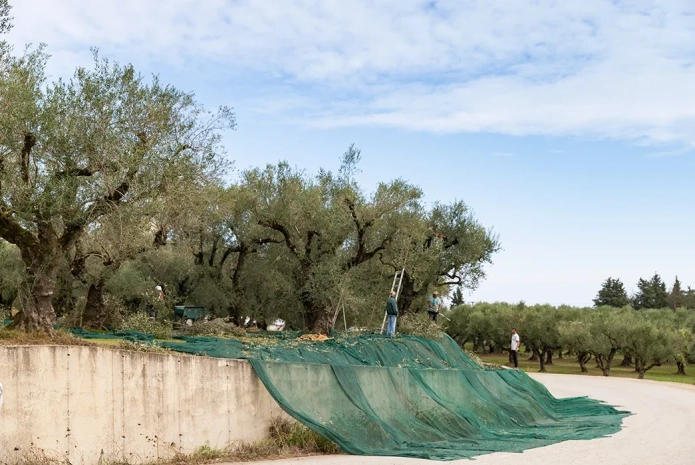
Olive harvest in Greece, Zakynthos island. © 2018 CC by 2.0
Local Olives
Each Mediterranean nation, and even each region within a nation, also has its own favourite variety of local olive: for example, the Nocellara from Sicily,4 Italy’s most popular bright green snack, and the Kalamata, large black olives native to Greece.5 The Mediterranean enthusiasm for olives has spread to their neighbours too. In France, for example, the black and herbal Niçoise olive (mostly grown near the city of Nice) has become an essential ingredient in typically French dishes like Niçoise salad and tapenade.
Fresh olives are bitter, have a strange texture and are almost inedible! Only after they’ve been cured, fermented or soaked in brine does their taste soften enough to be enjoyable.6
2. Pasta & Bread
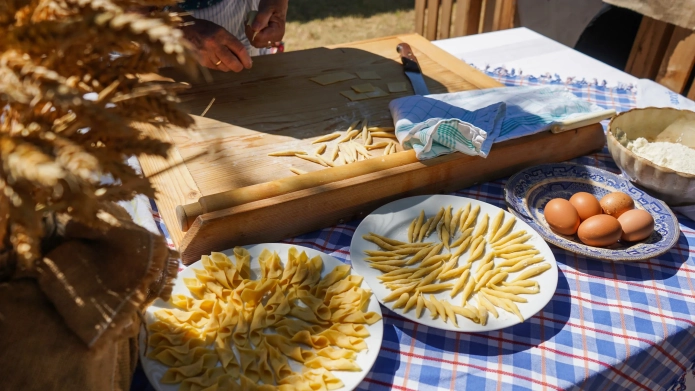
Cereals and grains are the main sources of carbohydrates in a traditional Mediterranean diet. Still, there are a huge range and variety of ways in which Mediterranean foods use crops like wheat - such as turning it into pasta. Italian pasta may be world-famous, but many other Mediterranean nations also enjoy something very similar of their own: Greek islands have their own local pastas, such as kritharaki and skioufihta, while couscous, a very close relative to pasta, is ubiquitous in Morocco and other North African countries.
Bread is another hugely important Mediterranean food: think of Italian’s focaccia, the airy bread often topped with herbs and oil, or the Greek flatbread pita, which is also hugely popular across the Middle East – only with a flatter, less fluffy texture.
3. Fish
Fish is eaten far more regularly than meat in almost all Mediterranean cultures, partly due to their shared coastline. Mediterraneans don’t really mind which fish they eat - provided it’s fresh, locally caught and cooked simply, often in soups or stews like the Italian cacciucco or the Greek psarosoupa or just roasted in the oven with potatoes. Here is where the differences across the basin become more apparent, as meat generally plays a much larger role in North African and Eastern Mediterranean foods.
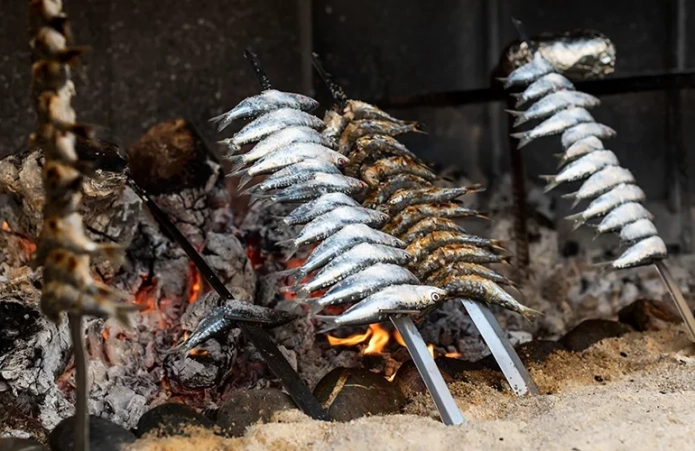
The sardine "espetos" (sardine skewers) cooked next to the embers are a typical food from Malaga in the south of Spain.
4. Cheese
The Mediterranean diet includes relatively little dairy, but this hasn’t stopped Mediterranean countries from making some world-famous cheeses, such as iconic cow's-milk cheeses like mozzarella or Parmigiano Reggiano from Italy, or delicious sheep and goat milk cheeses like feta and halloumi from Greece. Other Mediterranean cheeses haven’t garnered international fame but remain an important part of the local diet, such as the unusual fermented mish from Egypt or the many fresh white cheeses of Turkey (known locally as beyaz peynir) - both of which are traditionally served with breakfast.
5. Meat
Despite the relatively minor role of meat in Mediterranean diets, many popular dried, salted or cured meats originate in Mediterranean cultures. From the salame and prosciutto of Italy to the chorizo of Spain, and from the saucisson sec of France to the sujuk of Turkey, most European nations lay claim to a popular cured and dried meat. Similar meat products are also traditionally popular across North Africa in places like Egypt, Algeria, and Morocco, though these are less well-known outside local communities.
Bonus Mediterranean “Foods”: Onion & Garlic
No matter what you’re cooking up in the Mediterranean, garlic and onion will surely be included. These two paragons of flavour are almost as central as olive oil to Mediterranean food, and any true Mediterranean recipe will almost certainly include garlic and onion, whether crushed raw into a salad, sauteed in a pan of vegetables or baked inside the belly of a fish. A Mediterranean fridge is never short of onion and garlic!
The Mediterranean Diet: More Than Just Food
While Mediterranean foods like these are a key part of the Mediterranean diet, there are other shared characteristics in how food is produced, prepared and eaten that run through many countries bordering the Mediterranean Sea. For example, in many Mediterranean communities, traditional methods of growing and cooking food remain an essential part of the ‘Mediterranean diet’.
But an integral part of Mediterranean culture is eating together – according to UNESCO, “eating together is the foundation of the cultural identity… of communities throughout the Mediterranean basin.”2 So if you’re planning on cooking a Mediterranean meal, bringing people together and welcoming them into your home is just as important to making your food authentic as the ingredients you choose.
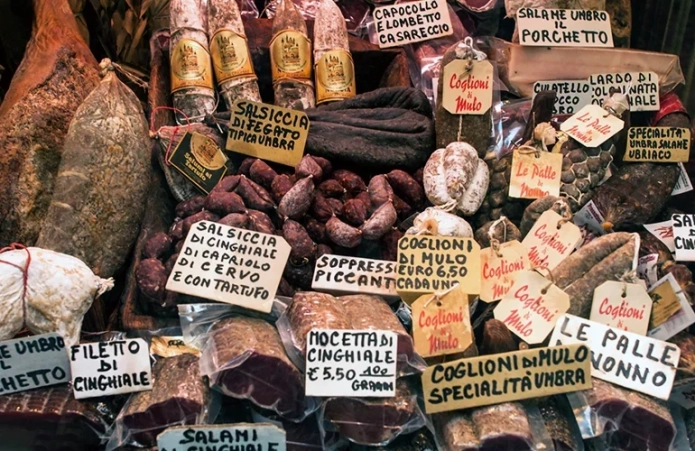
Salumi, sasiccia, prosciutto, all types of cured meat in Orvieto market, in Umbria, Italia. © 2013, Michelle R. Lee CC BY-NC-ND 2.0
More Mediterranean foods (that you probably didn’t know about!)
There’s more to Mediterranean food than you might think. Here are some examples of Mediterranean foods you might not have heard of.