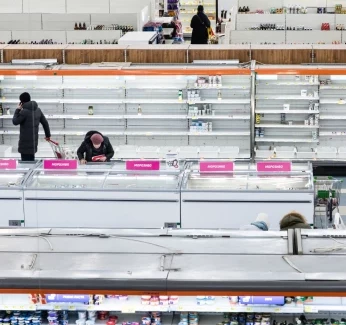
If you're from a Scandinavian country like me, you might eat fish once a week; maybe even more. You probably know that fish can be cultivated on farms or caught in the wild. But do you know about the methods and tools used to get fish from the ocean to your plate? Read on to find out about common fishing techniques in Europe, and how they impact the environment.
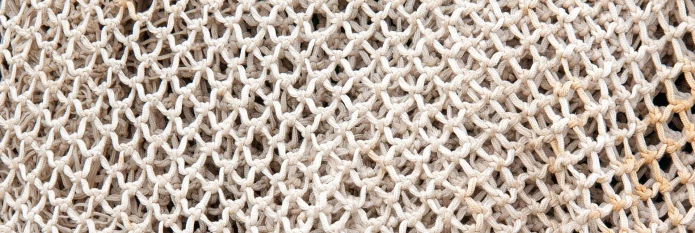
All fishing techniques affect the environment to some extent. Damage to the sea bed can destroy precious habitats, and unwanted species are frequently caught as by-catch. But when it comes to fishing, some techniques are more harmful than others.
3 Common Fishing Techniques in Europe
The European Commission has grouped the different gears according to three major fishing techniques depending on how they are used. In the EU, fishing techniques are classified under three gear groups:1
1. Towed gear
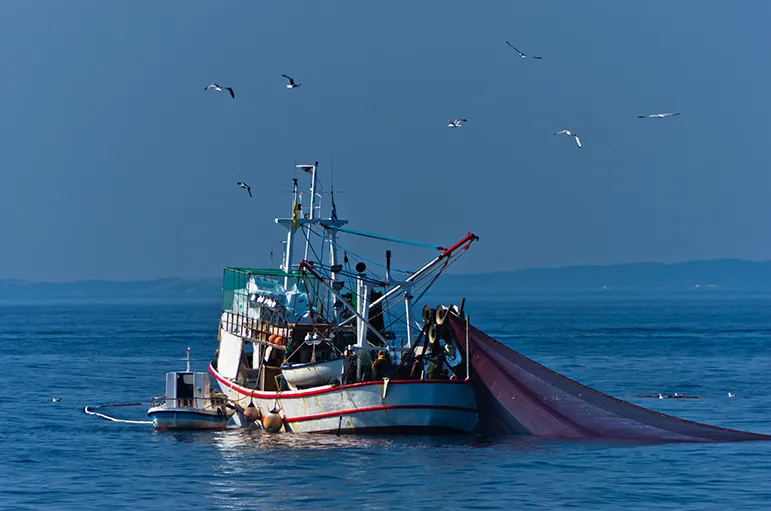
Towed gear literally drags a net “bag” across the bottom of the ocean floor. We typically call this gear trawls and dredges. These are used for capturing bottom-dwelling sea life (e.g. flatfish, mussels, and some cod species), which is why the net has to be in contact with the ocean floor. Essentially, fishermen are “towing” their catch.
2. Mobile gear

Types of mobile gears include seines, longlines and trolling lines (which are either nets or lines with hooks). Unlike towed gear, mobile gear is not actively towed, although it involves the movement of the fishing vessel. Mobile gear is usually used in the open water column. Techniques like these are effective for schooling fish species like sardines, herring or mackerel.
3. Passive gear
Passive gear (e.g. gill nets, trammel nets, traps, longlines) use traps, nets or lines with hooks anchored or left to drift in the water. This technique is widely used in European waters. Essentially, this technique passively catches fish rather than actively drawing them in.
But how do each of these techniques impact the environment? Scroll through the galleries below to find out.
Gear impact on the environment

Towed Gear
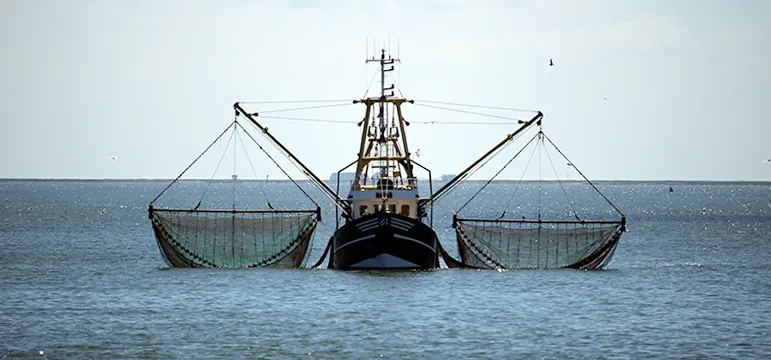
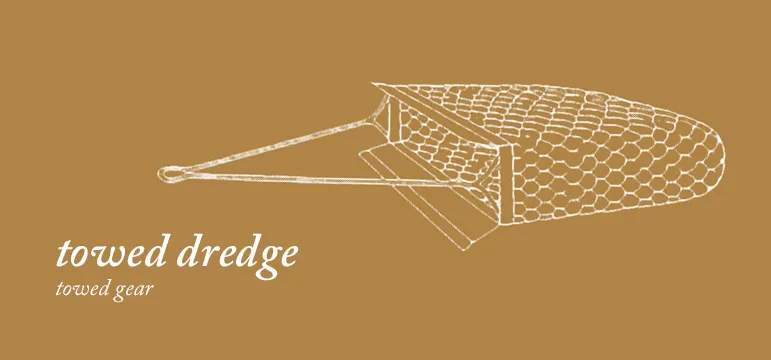
All towed gear can be quite fuel intensive since fishing boats actively drive to pull their net-bags. And since this technique involves contact with the ocean floor, they can impact habitats.
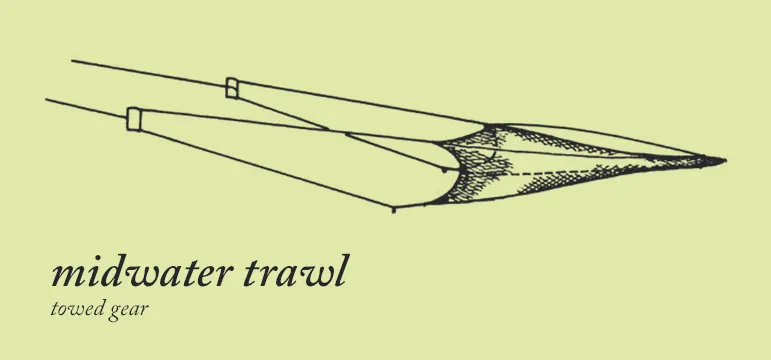
The gear with the least habitat impact is the midwater trawl, since this net-bag is dragged mid-water without touching the ocean floor.
Original Photo: FAO
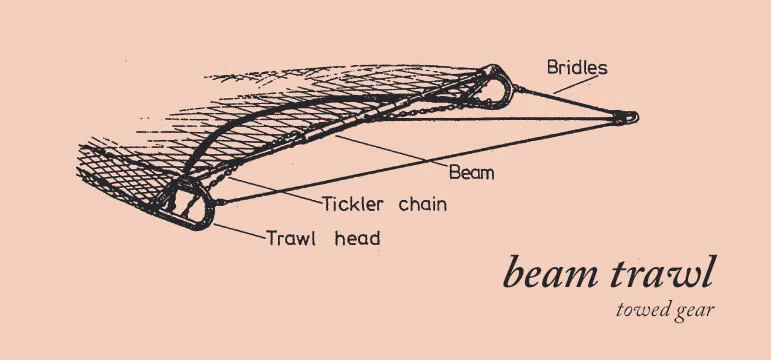
Generally, towed gear is not species selective, since a variety of species live on/in the bottom sediment. Catching unwanted fish means that fishermen have to throw them back into the ocean, but most fish do not return alive and is just wasted. When fishing for a specific size, it becomes tricky with trawls because mesh net sizes must be small enough to catch small organisms (like shrimp).
Original Photo: FAO
The towed gear that can catch specific-sized fish is the demersal seine. And, the demersal seine has a low bottom impact since it has no heavy parts scraping the sediment. However, unfortunately demersal seines may not reduce by-catch, since they are limited in catching specific species.
Original Photo: FAO
Mobile Gear
The benefit of mobile gear is that you can catch specific fish species, which helps reduce by-catch. The most selective gear is the purse seine, which is used for tuna. Purse seine is a huge net that closes around a school of tuna from underneath. Before the 1980s, purse seining had caught thousands of dolphins as bycatch each year, but with management actions and economic pressures entailed a massive decline. Today, the annual by-catch of dolphins is less than 0.1%.2
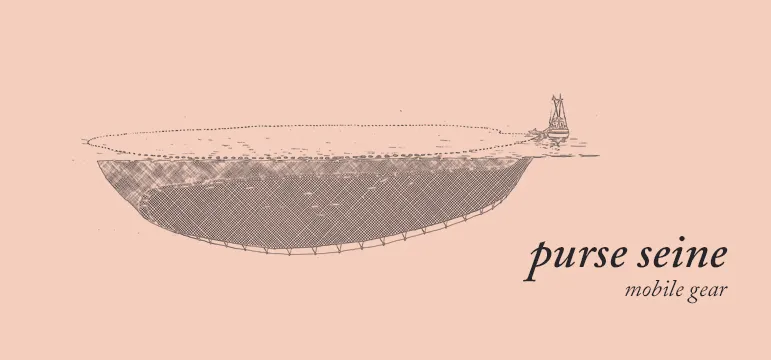
This type of gear is selective and has almost no impact on the bottom habitats, since it occurs in the pelagic water zone. But, purse seines have small mesh sizes and cannot catch fish based on size.
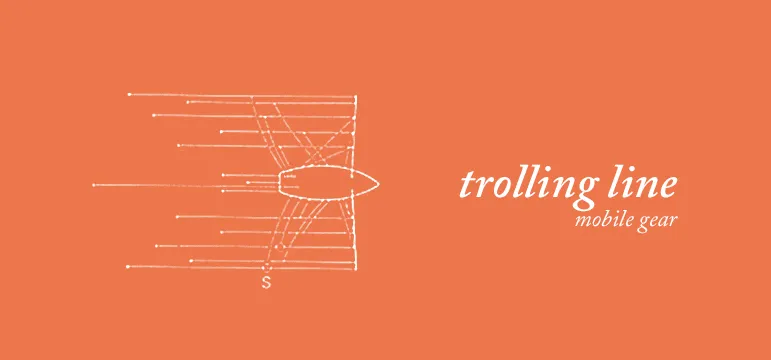
The most unselective gear (with the most by-catch) is the trolling line. Trolling lines can be unselective since these are lines with hooks and bait, which can attract sharks, turtles, and birds as well.
Original Photo: FAO
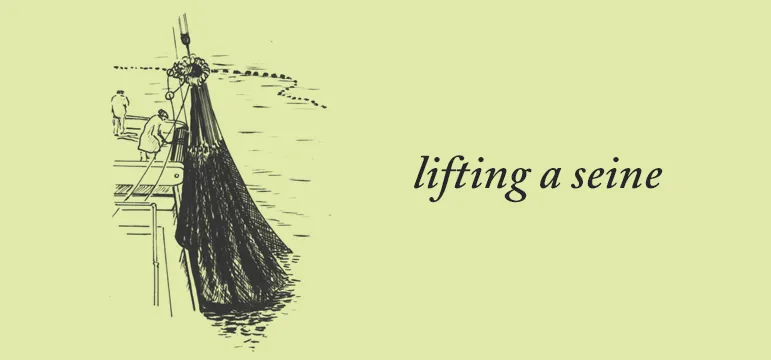
In terms of fuel consumption, mobile gear varies due to the different travel times to find schools of fish.
Passive Gear
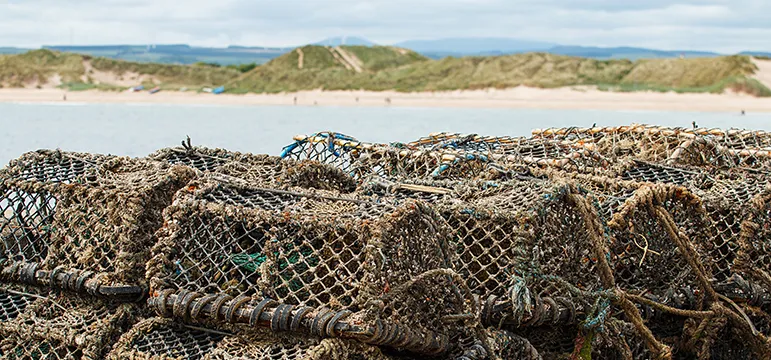
Passively gear includes nets, lines or traps. These types of gears have little to no impact on habitats, because most of them are not in contact with the bottom.
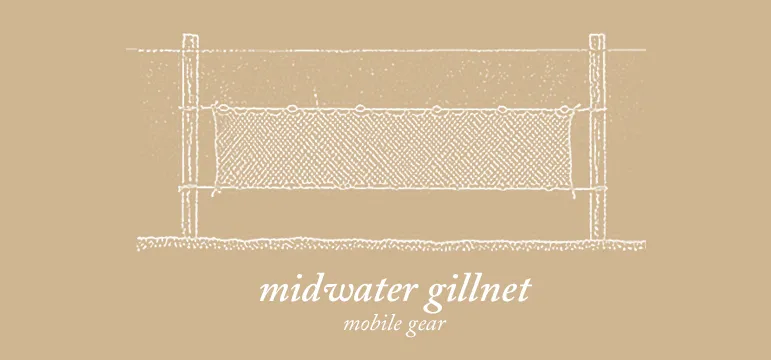
However, passive gear can also accidentally catch other kinds of fish. For example, gillnets are anchored or left to drift in the water column. Fish are captured when they swim through the net, which catches their gills (hence the name gillnets). But, larger animals such as cetaceans (whales, dolphins, and porpoises) are at times unable to detect the nets and become entangled.
Original Photo: FAO
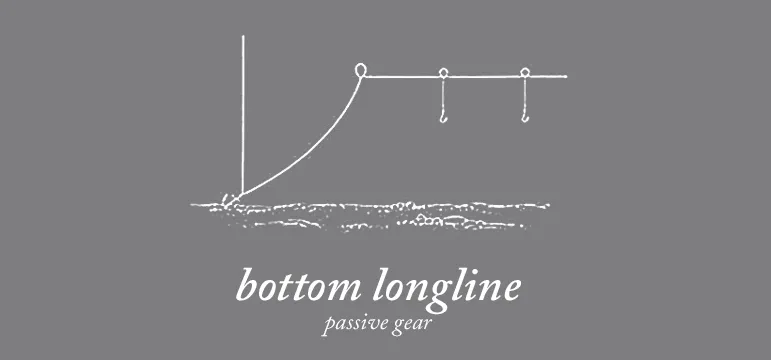
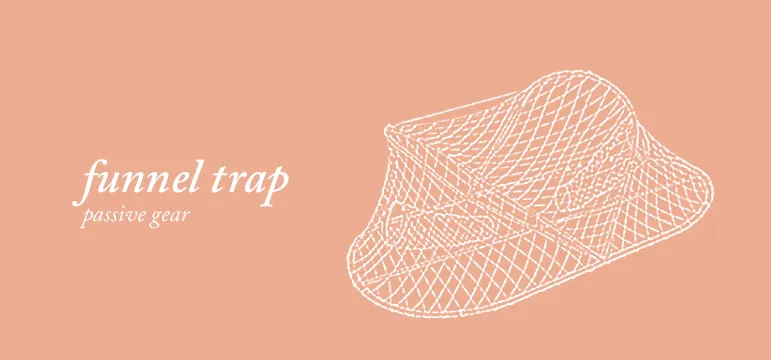
Traps and lines, on the other hand, are able to catch fish by species and size. For traps, fishermen can manage size well, as small fish can swim straight through and fish that are too big simply cannot enter. Lines are size-selective due to hook sizes, so small fish cannot bite on bigger hooks.
Original Photo: FAO
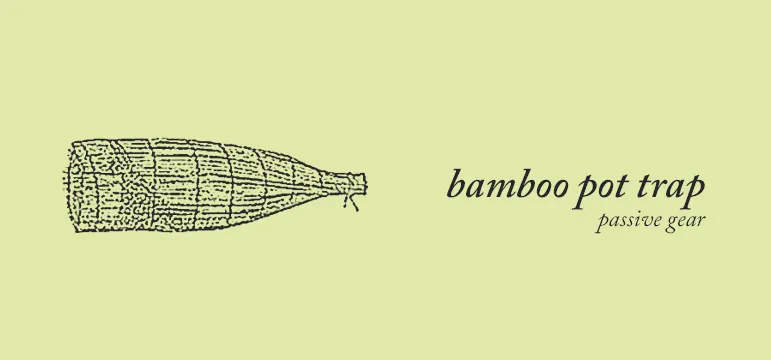
Habitat damage is low with traps—though, they have small impact when deployed since traps come in contact with the bottom. Lines have basically no impact since these are lines simply hanging in the open water.
Original Photo: FAO
An added bonus with passive gear is that most bycatch is returned to the ocean alive. All the passive gears are relatively fuel-efficient since fuel is only used for deploying and retrieving the gear.
Original Photo: FAO
So, which fishing gears have the highest environmental impact?
Well actually, there is no complete consensus on this, as different gears affect the environment in different ways. But, the gear with the highest habitat impact are dredges and demersal trawls. They have more by-catch, especially trawls, since they are the least species- and size-selective gear. The more sustainable gear to look for are traps and lines.
It is also important to understand that as long as we want to eat certain species of fish or seafood, some fishing techniques are unavoidable. You cannot, for example, catch flatfish with passive or mobile gear—at least not yet.
So when buying fish, the most sustainable fish choice is to go for open-water living species because the gear used to catch them seem to only be impacting vulnerable species caught as by-catch and not habitat on top.
The bottom line
While no techniques have zero impact (at least not yet), some gears have more sustainable methods than others. So do not give up hope on your search for sustainable choices for fish-eating! Scientists and fishermen are working hard together to create innovative fishing gear to try and overcome these impacts.
For now, you can look for MSC (Marine Stewardship Council) markings on packaging as guidance to more sustainable fish. There are also several websites where you can look up a fish species to see if it is sustainably fished. Different websites have different criteria, but most are based on how they are fished, where and if the fish stock is healthy (and not declining). Take a look at seafoodwatch.org and eumofa.eu, as both have detailed descriptions of various fish species.