When you think of aquaponics, you might imagine a cutting-edge, modern farm. This can be true, but aquaponic systems have actually been around for thousands of years! Aquaponics offer a sustainable way to grow fish and vegetables in the same system without the need for chemicals, pesticides or even energy from fossil fuels. Read on to find out more.

The face of farming is changing. With over half of the global population now living in concrete jungles, urban farming can help mediate issues related to food production.
As urban farming grows in popularity and practicality, techniques like aquaponics become more important to help sustainably ensure food security.
But what is aquaponics? In short, aquaponics is a hybridisation of the fish farming of aquaculture with the soilless growing of plants through hydroponics.1
An ancient technique

Original Photo Credit: Karl Weule
Modern aquaponics can be done almost anywhere given the right set-up, but the idea for a mutually beneficial system of fish and plants isn’t new at all. In fact, the Aztecs built chinampas, which were a sort of island platform for plants to grow in shallow lakes.2
Throughout Asia, it’s common to find fish swimming in and amongst growing paddy rice fields. Chinese written records show this practice dates back as far as 2,000 years ago3 and has been shown to naturally reduce numbers of pests and weeds in rice fields.4 Researchers drew on these historical techniques and added improved technology to develop a more efficient and productive form of aquaponics.
What’s inside an aquaponics system?
A typical modern aquaponics structure includes a network of pipes connecting a fish tank, a water pump, and a plant bed where vegetables can be planted in gravel as water is pumped through it.
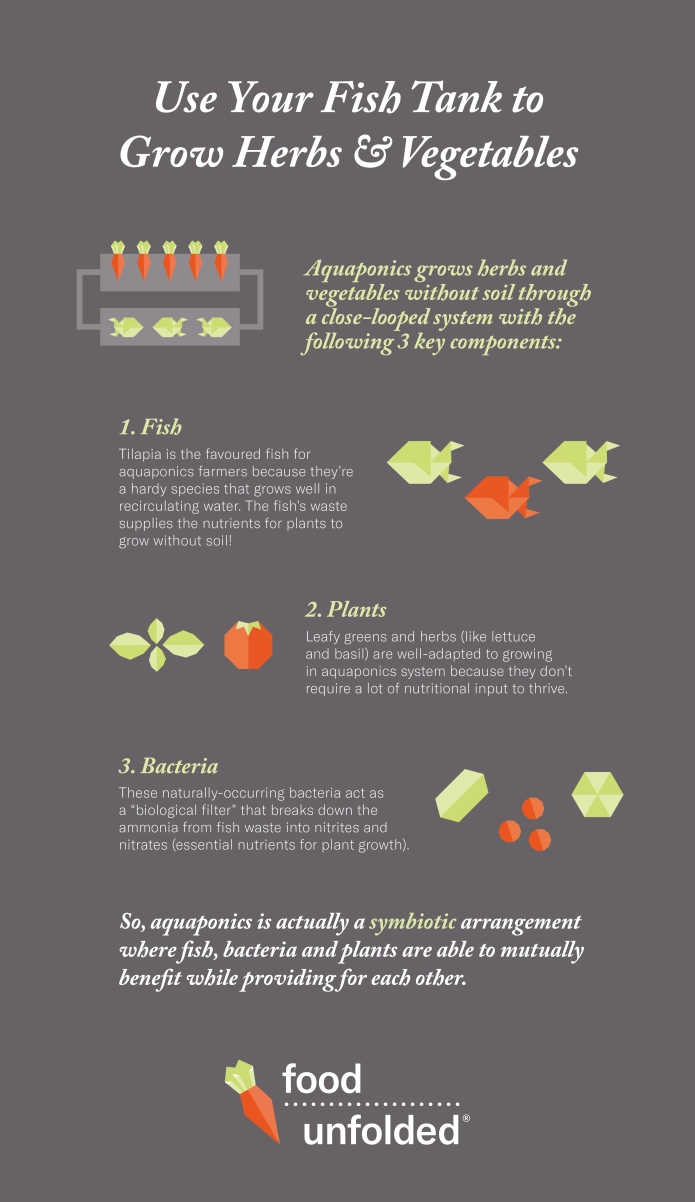
There are three main components in a closed-loop aquaponics system:
- Fish
Tilapia is the favoured fish for aquaponics farmers because they’re a hardy species that grows well in recirculating water. - Plants
Leafy greens and herbs (like lettuce and basil) are well-adapted to growing in aquaponics systems because they don’t require a lot of nutritional input to thrive.5 - Bacteria
These naturally occurring bacteria act as a “biological filter” that breaks down the ammonia from fish waste into nitrites and nitrates (essential nutrients for plant growth).
So, aquaponics is a symbiotic arrangement where fish, bacteria and plants can mutually benefit one another.6,7
Aquaponics sustainable benefits
A major advantage of aquaponics is that you can grow a full meal without using any chemical fertilisers or pesticides.
These systems can even go fossil-fuel-free by utilising solar panels to power their pumps, and aquaponics uses minimal water because water is continually recycled through the pipe system with only a small amount evaporation.
There is a lot of flexibility in the design of aquaponics system, so they can be adapted for places like rooftops, basements or brownfield land. Farmers in underdeveloped rural communities can even use aquaponics to grow crops all year round in a limited space, despite water often being a precious commodity in remote areas.8
Make your own aquaponics tank
You can also try making use of your own fish tank at home - there are many guides and starter kits available online for people interested in aquaponics.
Future of aquaponics
In the future, newer technology can be incorporated into aquaponics systems to enhance their function. Think sensors that autonomously monitor various key components of the system like water temperature, pH or volume or an alert system that tells you if the water pumps aren’t working.10,11
As the technology for aquaponics improves, so will its efficiency and who knows? Maybe we’ll all be growing our own fish and veggies someday.