Do you also get excited when discovering colourful flowers in your fresh salad? Or do you feel extra hyped when you spot a fancy flower drifting on your mocktail? Nature gives us such beauty. But wait a second, is this flower even edible!? *Carefully reaches for flower, puts it on the edge of the glass, and carries on sipping*
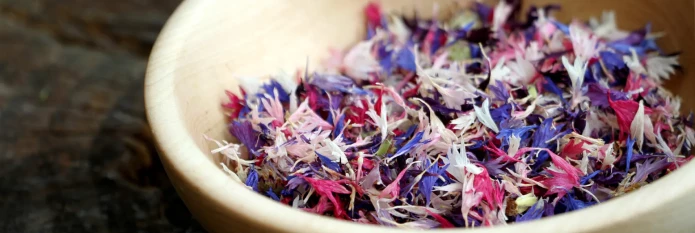
Décor or Delicious?
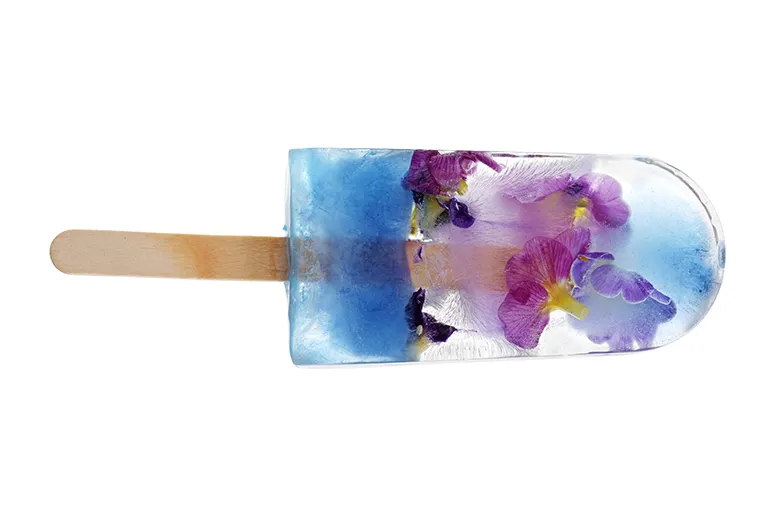
You probably have seen flowers in your salad before.1 What did you do? Did you eat them, or did you just remove them to the side, thinking they were just for decoration?
Let's explore how to distinguish edible from non-edible flowers.
Mm, Delicious: Oh, the Flowers You’ll Taste
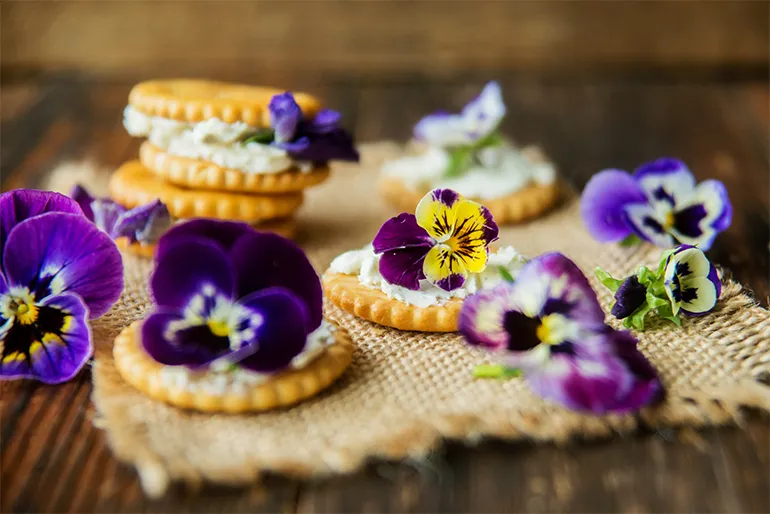
Edible flowers add a unique taste to a variety of dishes. This explains their wide use in salads, soups, cakes, ice-cubes, teas, jams, dressings and drinks.
The tasty bit of the flowers usually comes from the petals. You should avoid eating the stalk as it could contain unpleasant juice or can be difficult to chew. And remember: if you are allergic to pollen, make sure to remove pistils and stamens.1,4,5
The taste varies widely from flower to flower. Chamomile can taste like apples, Begonia has a sharp citrus flavour, Calendula’s aroma goes from peppery to bitter, Daylilies have a melon, cucumber-like taste and Nasturtium’s flavour is sweet and peppery.5
But which flowers are edible?
The location can already give you a clue. In restaurants and bars, you can be more confident that the flower on your dish is edible (as they abide by HACCP rules1).
Unfortunately, there are no specific characteristics to determine the edibility of a flower.3 The only certainty is in the Latin or botanical name of the flower. Once you know the name, you can easily determine the possible hazards in botanical books.3 Naturally you can also search by the flowers’ commonly used English names, but Latin gives you more certainty.
So, best to go and consult a flower expert in your midst or rely on your own advanced flower power Sherlock skills.
Then which flowers aren’t edible?
.webp)
Eating a Lily of the Valley can evoke vomiting, stomach ache and diarrhoea
But first, what is the worst that can happen when you eat an inedible flower?2,3
- Possible poisoning
- Allergic reactions
- Creates oversensitivity to sunlight
- Vomiting, stomachache, diarrhoea
- Induce lower blood pressure
- Effect heart rate, weakened pulse in wrist
Editor's Note: If you ate hemlock flowers, you could even die. That's how historians think Socrates died - having chosen to accept capital punishment by poison. (You were allowed to choose your preferred means of death in those days).
Wild Flowers
In the wilderness, it’s hard to spot non-edible flowers. You need to be extra careful because the leaves and stems of flowers can be poisonous. Keep in mind that there are no specific characteristics that indicate poisonous flowers or plants.3 But there are a few signs that you can’t (and shouldn’t) eat certain flowers:
- A big no go are shiny, thick leaves2
- Stay away from umbrella-shaped flowers2
- If a flower gives you minor skin irritation, it might give you gut irritation, too.2,6
That said, this general advice isn't enough to go by out there in the wild. You need to be absolutely sure of what you are foraging before eating it. Use books, websites, and talk to experienced friends.
Store-bought Flowers
Do not eat flowers in bouquets purchased from florists or garden centres—they might contain pesticides!4,5 Pesticides are generally used to keep the flowers from being damaged by weeds, insect plaques or microbial diseases carried by animals.7
Finally, don’t be fooled by Instagram or Pinterest food images with flowers8. Aesthetically pleasing? Yes. But edible flowers? Not really.
Below, you will find lists of common edible and inedible flowers.1,5,6,8
So now you’re ready to decipher delicious from décor. And next time you see an edible flower, I dare you to try and taste it!