Plant-based alternatives are regularly assigned the title of 'milk' by suppliers and consumers, but are government bodies correct in ruling that they now be named 'drink' rather than 'milk'?
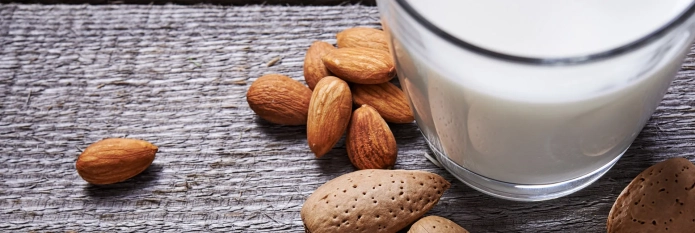
You've probably seen almond milk recipes on Instagram or Pinterest and heard about it as a popular alternative beverage. But did you know that, in some countries, it's now legally required to be labelled as a drink rather than milk?2,3 This is because, technically, countries like the U.S.A. have a legal definition of milk, which is defined as something that comes from a mammary gland.4 (That’s a breast for humans, or an udder for a cow, goat, or sheep).
Although the names might change, these lactose-free drinks are nothing new and are only growing in popularity. From almond to soy, it’s expected that the global market for these alternative beverages will hit $16.3 billion in 2018.5 This may pale in comparison to the estimated dairy market value of $442 billion for 2019,6 but it shouldn’t be underestimated either – this value has more than doubled since 2010.5
You’ve probably seen the alternative milk options on coffee shop menus, in grocery stores, or in a variety of recipes shared on YouTube and other platforms. The recipe for the homemade version of almond milk is easy to find on healthy eating blogs. But why are people using non-dairy alternatives to make concoctions like almond smoothies?
.webp)
Why look for alternatives?
So, first of all, you may be wondering why alternatives to milk are being sought out to begin with. Why look for an alternative to a product we already have?
The rise in the milk-free trend is largely about animal welfare and/or climate change. Some people are concerned about cruelty to animals in the farming industry, and others are worried about the greenhouse gases emitted from cows, with projections suggesting that livestock emissions will one day even overtake the oil industry.7 On the other side of the argument, alternatives aren’t perfect. For example, making almond milk requires large quantities of water to grow the almonds - often in water-scarce regions.8 And if those almond groves are created on deforested land, can we really say they are more sustainable?
It’s a complicated business, but with such a cloud over dairy in terms of the health of the environment and the animals involved, it’s not surprising that almond lattes are on the rise.
.webp)
How almond milk is made
It’s not exactly logical to imagine ‘milking’ an almond as you would a cow. But, the process is simple enough and if you’ve ever made homemade almond milk yourself, you’d likely agree.
Essentially, in its most basic form, it comes down to soaking almonds in water and grinding them in a blender or bowl (sometimes with some vanilla extract for flavour), before straining out the almond ‘pulp’ via a cheesecloth or nut milk bag. This creamy mixture can be stored in a jar in the fridge.When mass-produced, almond milk is often pasteurised for safety and prolonged shelf life before packaging.10 Leftover almond pulp can be used in a variety of ways, such as making almond meal for other recipes.
Alternatives to the alternative
Almond drink isn’t alone in the world of non-dairy alternatives. Soy, rice, oat, coconut, even hemp, all of these plants are becoming legitimate substitutes for the cow-based original.11 And all have the very simple fundamental method of production – wash, blend, strain, pasteurise, package.
With the rise of new tech, strides are being taken to make the alternative industry more efficient and nutritious. For example, the straining process provides a flavoursome liquid, yes, but it removes some crucial proteins at the same time,12 which is bad news for a product that can sometimes be low on such nutrients to begin with.13 However, developments have been made so that, via presses, all the fibres can be trapped and removed whilst still retaining the nutritious proteins.12
.webp)
Technological advancement hasn’t stopped there. The biotech company ProLupin has been extracting proteins from the seeds of the flowering plant lupine. This extract, Lupine Protein Isolate (LPI), has an incredibly high protein percentage,14 and is being used as a real dairy alternative, making not only alternatives to milk, but yoghurt also.15
And then there’s yeast-produced milk. What? I know. This is actually the milk as we know it, just created from a different source. The DNA of the yeast in question is manipulated so that once it’s fed certain nutrients, it starts producing all the key proteins found in your everyday cow’s milk, all with the same functionality and flavour.16 Sounds weird, but it’s not too dissimilar to how we make our craft beers of today.
.webp)
Homemade Almond Milk Recipe
This recipe yields approximately 4 cups of almond milk.
Ingredients:
- 1 cup raw almonds
- 4 cups filtered water
- Pinch of salt (optional)
- Sweetener of choice (dates, maple syrup, honey, agave) to taste (optional)
- 1/2 teaspoon vanilla extract (optional)
Equipment:
- Blender
- Nut milk bag or cheesecloth
- Bowl
- Jar or bottle for storage
Instructions:
- Soak: Soak almonds in filtered water overnight (8-12 hours), or for a quicker method, use boiling water for 1-2 hours.
- Rinse: Drain the soaking water and rinse the almonds thoroughly.
- Blend: Combine the almonds and 4 cups of fresh, filtered water in a blender. Add a pinch of salt if desired. Blend on high speed for 1-2 minutes until smooth and creamy.
- Strain: Place a nut milk bag or cheesecloth over a bowl and pour the almond milk mixture into it. Squeeze or wring out the bag to extract all the liquid. (Save the leftover almond pulp for use in baked goods or smoothies!)
- Flavour: Add your desired sweetener and vanilla extract (if using) to the almond milk and stir well.
- Store: Transfer the almond milk to a jar or bottle and store it in the refrigerator for up to 4-5 days. Shake well before each use, as separation may occur.
Tips:
- For a creamier texture, use less water (3 cups instead of 4).
- Experiment with different flavours by adding cinnamon, cocoa powder, or berries when blending.
- You can use the leftover almond pulp to make almond flour or crackers or add it to smoothies for extra fibre.
Enjoy your fresh, homemade almond milk in smoothies, lattes, cereal, or baked goods!